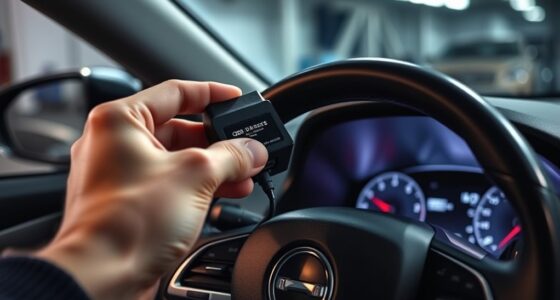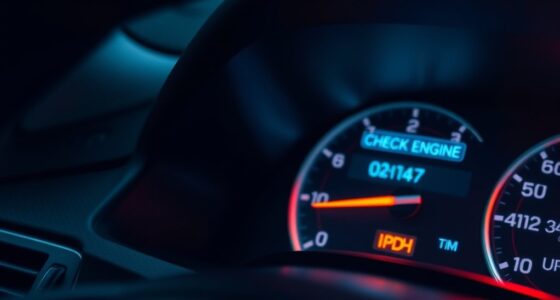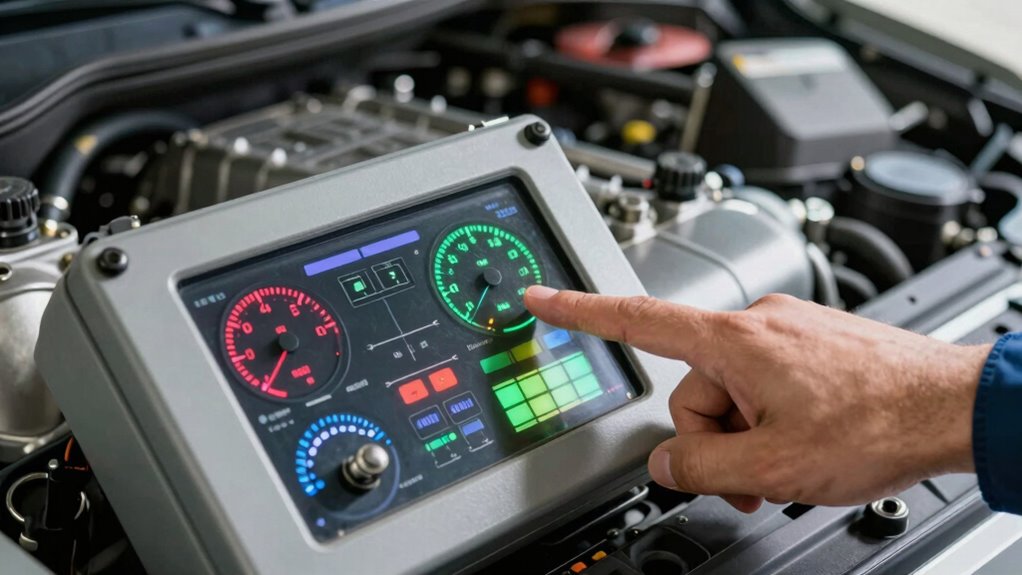
To avoid misreading engine data as a beginner, guarantee you understand what each sensor measures and follow proper calibration procedures. Regularly verify sensor outputs and consider the context of multiple parameters rather than only focusing on individual readings. Develop a routine to analyze trends over time and recognize normal ranges and early warning signs. Staying informed about sensor technology and common errors is essential. Keep exploring to uncover more ways to interpret engine data accurately.
Key Takeaways
- Ensure sensors are properly calibrated according to manufacturer instructions before interpreting data.
- Understand what each sensor measures and its normal operating range.
- Look at data in context, combining multiple parameters to identify genuine issues.
- Regularly verify sensor outputs to prevent false readings from uncalibrated or faulty sensors.
- Develop routine trend analysis to spot gradual changes indicating potential engine problems.
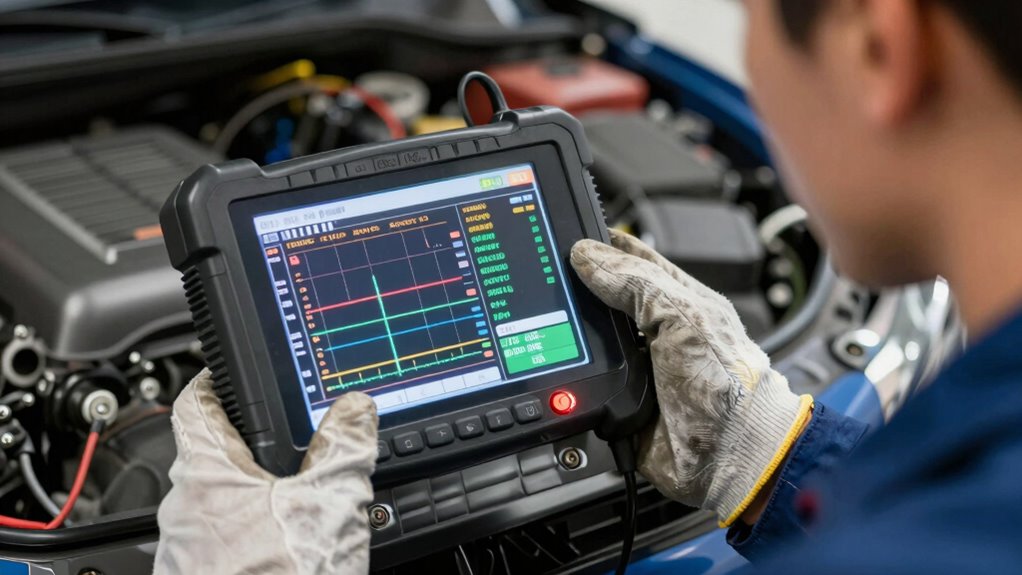
Misreading engine data can lead to costly mistakes or even engine failure, so it’s crucial to interpret the information accurately. As a beginner, understanding how to properly read and analyze engine data starts with verifying your sensors are correctly calibrated. Sensor calibration is essential because improperly calibrated sensors can give false readings, leading you to make incorrect decisions about engine health or performance. Always follow manufacturer instructions for calibration procedures, and double-check sensor outputs regularly. Proper calibration ensures that the data you see reflects the real conditions within your engine, reducing the risk of misinterpretation. Additionally, accurate data interpretation is vital for making informed maintenance decisions and avoiding unnecessary repairs. When you’re looking at engine data, it’s tempting to focus on individual readings, but you need to develop strong data interpretation skills. Look at the bigger picture—how different parameters relate to each other. For example, a spike in temperature combined with a drop in oil pressure might indicate a serious issue, but viewing these data points in isolation could lead you to overlook the problem or misjudge its severity. Over time, you’ll learn to recognize normal ranges for your engine and spot anomalies quickly. Remember, context is key; data should always be considered alongside other performance indicators. It’s also important to familiarize yourself with your engine’s specific sensors and what each reading means. Some sensors might require specific attention, like verifying the coolant temperature sensor is functioning correctly, or ensuring that the air intake sensor isn’t contaminated. Misreading data often happens when you don’t understand the source of the information. Take the time to learn what each sensor measures and how its readings influence your engine’s operation. This knowledge helps prevent unnecessary repairs and keeps you from chasing false alarms caused by sensor errors. Additionally, developing a routine for data interpretation will serve you well. Don’t just glance at the readings; analyze trends over time. Is a particular parameter gradually increasing? That might signal a developing issue. Using diagnostic tools that provide visual charts or logs can help you see patterns and trends, making it easier to identify potential problems early. Regularly updating your understanding of sensor technology can further improve your accuracy when interpreting data. Investing in training or consulting manuals can also sharpen your understanding of engine data, so you’re less likely to misread critical information. Being aware of common sensor errors can further improve your accuracy when interpreting data. Additionally, staying informed about sensor calibration techniques can help you maintain precise readings and prevent misdiagnoses.

EVRBUL Throttle Position Sensor Adjustment & Testing Tool, 5V Adjustable TPS Tester Compatible with Motorcycle & Car Engines, Includes All Adapters and Carry Case
【Wide Compatibility】:Compatible with most adjustable 5V TPS systems commonly found on power-sports, performance motorcycles, and automotive engines, making…
As an affiliate, we earn on qualifying purchases.
As an affiliate, we earn on qualifying purchases.
Frequently Asked Questions
What Tools Are Best for Monitoring Engine Data Accurately?
You should use reliable engine diagnostics tools like OBD-II scanners that prioritize sensor accuracy for monitoring engine data. These tools give real-time insights into your engine’s performance, helping you spot issues early. Opt for models with high sensor accuracy to guarantee your readings are precise. Regularly calibrate your tools and keep software updated to maintain accuracy. This way, you’ll confidently interpret engine data and avoid misreading critical information.
How Often Should I Calibrate Engine Sensors?
You should calibrate your engine sensors regularly, ideally every 3 to 6 months, to avoid misreading data. Ironically, the more you ignore sensor calibration, the more you’ll struggle with accurate readings. Focus on proper sensor placement and stick to a consistent calibration frequency to guarantee your engine data stays reliable. Regular calibration keeps your engine running smoothly and helps you catch issues before they become costly problems.
Can Temperature Affect Engine Data Readings?
Yes, temperature can affect engine data readings. Fluctuations in temperature may cause sensor placement issues or increase data noise, leading to inaccurate readings. To prevent this, guarantee sensors are properly installed and protected from extreme heat or cold. Regular calibration helps, but understanding how temperature impacts your sensors allows you to interpret data more accurately, reducing misreadings and improving engine performance monitoring.
What Are Common Signs of Misinterpreted Data?
You’ll notice signs of misinterpreted data through inconsistent readings, sudden spikes, or drops that don’t match engine behavior. Always perform data validation to confirm readings, and consider sensor accuracy—faulty sensors can lead to errors. If data seems off, double-check the sensor connections and calibration. Recognizing these signs helps prevent misinterpretation, ensuring you make informed decisions based on reliable engine data.
How Do I Troubleshoot Inconsistent Engine Data?
Think of troubleshooting inconsistent engine data like tuning a musical instrument—you need precise sensor placement and careful data interpretation. Start by checking sensor connections, ensuring they’re secure and correctly positioned. Then, compare readings with known normal ranges, and look for patterns or anomalies. If data still fluctuates, recalibrate sensors or replace faulty ones. Consistent, accurate readings depend on proper sensor placement and accurately interpreting the data you collect.

ANCEL AD310 Classic Enhanced Universal OBD II Scanner Car Engine Fault Code Reader CAN Diagnostic Scan Tool, Read and Clear Error Codes for 1996 or Newer OBD2 Protocol Vehicle (Black)
CEL Doctor: The ANCEL AD310 is one of the best-selling OBD II scanners on the market and is…
As an affiliate, we earn on qualifying purchases.
As an affiliate, we earn on qualifying purchases.
Conclusion
By paying close attention and double-checking your engine data, you’re like a captain steering through foggy waters—each reading a guiding star. Avoid rushing, trust your tools, and stay curious. Over time, you’ll build a clear map of your engine’s heartbeat, turning confusing signals into a symphony of understanding. With patience and practice, you’ll navigate confidently, transforming uncertainty into mastery—charting a smooth course through the engine’s intricate dance.

KEJSTED 2 Pack Engine Oil Pressure Sensor Sender Switch & Coolant Temperature Sensor 5149062AA 5149077AB Compatible with Chrysler Aspen Pacifica Jeep Grand Cherokee Dodge Avenger Ram 1500 2500 3500
Compatible With: Oil Pressure Sensor Sender Switch & Coolant Temperature Sensor fit for Chrysler 200 300 Aspen Town…
As an affiliate, we earn on qualifying purchases.
As an affiliate, we earn on qualifying purchases.

Waekon 20560 ABS Sensor Pinpoint Tester
Works on old and new style wheels speed sensors
As an affiliate, we earn on qualifying purchases.
As an affiliate, we earn on qualifying purchases.