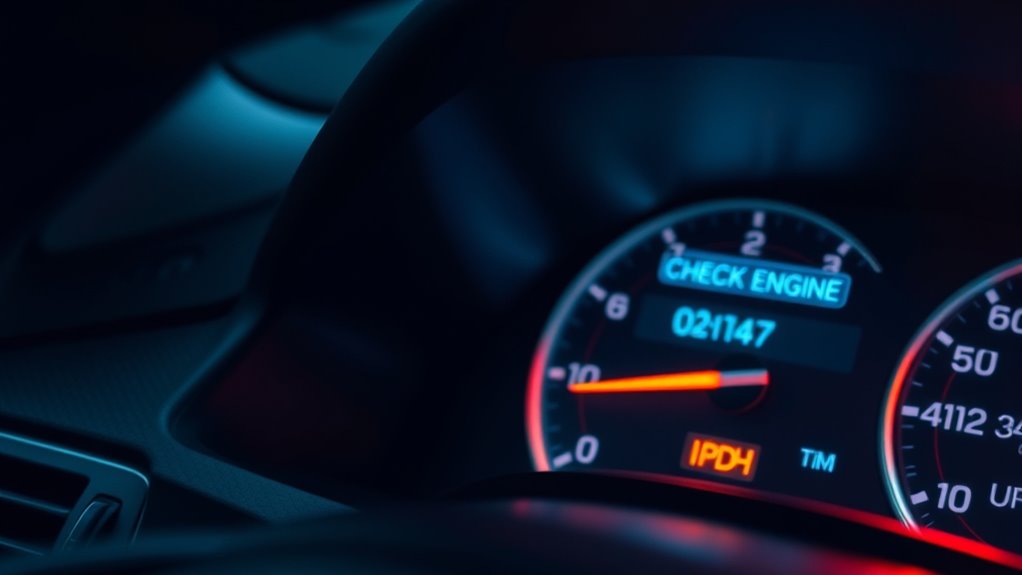

If your check engine light keeps returning, it’s likely caused by faulty sensors or damaged wiring that send incorrect data to the vehicle’s computer. Even if you clear the codes, these issues can cause them to come back. Start by inspecting sensors and wiring for damage or dirt, then repair or replace as needed. Continuing to explore these troubleshooting steps can help you identify and fix the root cause efficiently.

Get business pricing on garage and car supplies
- Business-only prices and quantity discounts
- Tax-exempt purchasing
- Multiple users, one account, clear invoices
Key Takeaways
- Identify and repair underlying sensor faults or dirt buildup to prevent false or persistent error codes.
- Inspect and test wiring connections for damage, corrosion, or loose contacts that may disrupt sensor signals.
- Use a diagnostic scan to pinpoint specific trouble codes before performing physical inspections or repairs.
- Avoid clearing codes prematurely; fix all identified issues to ensure the check engine light stays off.
- Consider consulting a professional technician if the codes persist after basic troubleshooting efforts.

When your check engine light stays on despite multiple resets, troubleshooting persistent codes can be frustrating. Often, the underlying cause isn’t immediately obvious, but common culprits include sensor failures and wiring issues. These problems can cause the vehicle’s onboard diagnostics system to register errors repeatedly, even after attempts to clear the codes. Recognizing how these issues manifest and knowing how to investigate them can save you time and money. For example, ear wax odor can sometimes be mistaken for other problems if you’re not attentive to subtle clues, similar to how sensor issues might be overlooked initially.
Sensor failures are a frequent reason why your check engine light might keep coming back. Modern vehicles rely heavily on sensors—like oxygen sensors, mass airflow sensors, or coolant temperature sensors—to monitor engine performance and emissions. When these sensors malfunction or send inaccurate data, the engine control unit (ECU) receives faulty signals. This can trigger persistent trouble codes that won’t clear until the faulty sensor is replaced or repaired. Sometimes, sensors fail gradually, giving inconsistent readings before completely failing, which can make troubleshooting more confusing. It’s important to remember that even a small malfunction or dirt buildup on a sensor’s contact points can cause false errors, so inspecting and cleaning sensors should be part of your initial checks.
Sensor malfunctions often cause persistent check engine lights; inspect and clean sensors before replacing them.
Wiring issues are another common cause of recurring check engine codes. Over time, wires and connectors can become damaged due to age, vibration, or exposure to the elements. Frayed wiring insulation, loose connections, or corroded terminals can disrupt signals between sensors and the ECU. This disruption leads to intermittent errors, causing the check engine light to turn on repeatedly. Diagnosing wiring problems requires a careful inspection—look for visible damage, corrosion, or disconnected plugs. Using a multimeter to test for continuity can help identify broken wires or poor connections that aren’t immediately visible. Fixing wiring issues often involves repairing or replacing damaged wires, re-securing connections, or applying dielectric grease to prevent future corrosion.
It’s worth noting that troubleshooting persistent codes isn’t just about replacing parts. Sometimes, the root cause is a combination of sensor failures and wiring issues, which can be tricky to isolate. Always start with a thorough diagnostic scan to identify the exact trouble codes, then follow up with physical inspections. Clearing codes without fixing the underlying problem will only lead to the light returning. Patience and methodical troubleshooting are your best tools here. If you’re unsure, consulting a professional technician can help ensure you’re addressing all potential causes thoroughly. Remember, persistent check engine codes are signals from your vehicle that something needs attention—ignoring them can lead to more serious problems down the road.
OBD2 scanner for check engine codes
As an affiliate, we earn on qualifying purchases.
As an affiliate, we earn on qualifying purchases.
Frequently Asked Questions
Can a Faulty Sensor Cause the Check Engine Light to Stay On?
Yes, a faulty sensor can cause the check engine light to stay on. Sensor malfunctions, such as a failing oxygen sensor or mass airflow sensor, send incorrect data to your car’s computer. Wiring issues can also disrupt signals, triggering the light. If you notice persistent alerts, get your sensor and wiring checked. Fixing these issues usually clears the light and restores proper vehicle performance.
How Long Should I Drive After Resetting the Check Engine Light?
You should drive for at least 50 to 100 miles after resetting the check engine light to guarantee the reset procedures are successful. Studies show that about 30% of drivers ignore this step, leading to repeated issues. During this driving duration, the vehicle’s onboard computer checks if the problem has truly been resolved. If the light comes back, consider having your vehicle inspected again to prevent further damage.
Are There Risks in Ignoring a Persistent Check Engine Code?
Ignoring a persistent check engine code can jeopardize your vehicle’s emissions system, leading to increased pollution and potential fines. It may also cause further damage, resulting in costly repairs. Using diagnostic tools, you can identify the root cause and prevent these risks. Don’t delay addressing the issue—disregarding it could compromise your vehicle’s performance and safety. Regular maintenance and prompt diagnosis ensure your car runs efficiently and stays compliant with emissions standards.
Can Aftermarket Parts Trigger Ongoing Engine Warning Lights?
Yes, aftermarket parts can trigger ongoing engine warning lights if they aren’t compatible with your vehicle. Poor aftermarket compatibility or installation pitfalls may cause sensors to malfunction or misfire, leading to persistent check engine codes. To avoid this, verify the aftermarket parts are designed for your vehicle and installed correctly. Otherwise, you risk false warnings and potential damage, making it essential to choose quality parts and proper installation for reliable performance.
What Are the Signs That a Persistent Code Is a False Alarm?
Think of your engine’s warning light as a lighthouse guiding you—if it flickers without real danger, it’s likely a false positive. Signs of a false alarm include diagnostic errors, inconsistent readings, or if the check engine light stays on despite recent repairs. Trust your intuition and get a second opinion if the code doesn’t match your car’s behavior. Always verify with thorough diagnostics before acting on false positives.
As an affiliate, we earn on qualifying purchases.
Conclusion
When that check engine light keeps blinking back, it’s tempting to give up. But remember, every persistent code is a clue—your vehicle’s way of telling you something’s amiss. Don’t ignore it; instead, see it as a map guiding you toward solutions. Keep troubleshooting, stay curious, and you’ll uncover the root cause. After all, isn’t it better to solve the mystery now than face bigger problems later? Your car’s secrets are waiting—are you ready to discover them?
As an affiliate, we earn on qualifying purchases.
As an affiliate, we earn on qualifying purchases.
Fall Picks
fall essentials
As an affiliate, we earn on qualifying purchases.