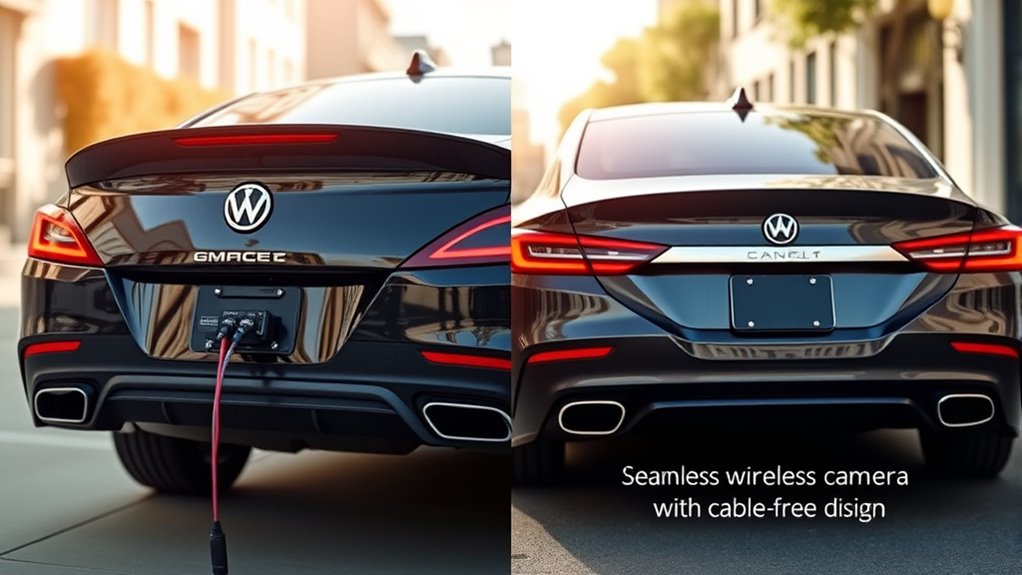

If you want a reliable and stable backup camera, a wired system is your best choice because it offers consistent signals and fewer technical issues. Wireless cameras are easier to install and offer more flexibility, making them appealing if you want quick setup or don’t want to deal with cables. To find out which option suits your vehicle and safety needs best, keep exploring the details below.

Get business pricing on garage and car supplies
- Business-only prices and quantity discounts
- Tax-exempt purchasing
- Multiple users, one account, clear invoices
Key Takeaways
- Wired backup cameras offer more reliable signals and consistent performance, ideal for safety-critical applications.
- Wireless systems are easier and faster to install, providing greater flexibility and convenience.
- Wired cameras are less susceptible to interference, ensuring clearer images in complex electronic environments.
- Wireless options allow for easier upgrades and mobility but may experience signal stability issues.
- The choice depends on your priority for reliability versus installation simplicity and convenience.

When choosing a backup camera for your vehicle, understanding the differences between wired and wireless options is essential. One of the first things you’ll notice is the installation complexity. Wired backup cameras typically require running cables from the camera mounted at the rear of your vehicle to the display unit inside. This process can be time-consuming and may involve removing panels or trim to hide wires neatly, especially if your vehicle’s interior is tight or complex. On the other hand, wireless cameras usually involve less physical effort, as they connect via Wi-Fi or a dedicated radio frequency. You just need to mount the camera and connect the receiver to your display, making the setup faster and less invasive. However, while wireless options seem straightforward, they come with their own set of challenges, particularly concerning signal reliability.
Wired backup cameras offer reliable, stable signals but require complex installation; wireless options are easier but prone to interference.
Signal reliability is a major factor to contemplate with wireless backup cameras. Since these systems depend on transmitting data through radio signals, interference from other electronic devices, thick vehicle walls, or even weather conditions can disrupt the connection. This might result in laggy video, intermittent signal loss, or degraded image quality, which can be frustrating and potentially unsafe when reversing. Wired cameras, by contrast, offer a direct connection that isn’t affected by external interference. The signal remains stable, providing a consistent, clear view at all times. This makes wired systems particularly appealing for those who prioritize reliability and safety, especially in environments with lots of electronic noise or where a stable connection is critical.
Additionally, advancements in AI technology are increasingly used in some backup camera systems to improve image processing and obstacle detection, enhancing safety features. While wired cameras demand more effort during installation, they generally offer better signal consistency, making them suitable for users who want peace of mind and minimal technical issues. Wireless cameras, however, are attractive if you want a quick, less invasive setup and are willing to accept the possibility of occasional signal hiccups. It’s also worth noting that wireless systems often come with additional features like easier mobility or the ability to upgrade without rewiring, but these advantages can be overshadowed by concerns over signal stability.
In the end, your decision depends on your priorities. If you prefer a straightforward setup and maximum reliability, a wired backup camera might be the better choice. But if convenience and flexibility are more important to you, a wireless option could suit your needs. Just keep in mind that each has its trade-offs, and understanding these differences will help you pick the system that aligns best with your vehicle, lifestyle, and safety expectations.
As an affiliate, we earn on qualifying purchases.
Frequently Asked Questions
How Do Wired and Wireless Cameras Perform in Extreme Weather Conditions?
Wired cameras generally perform better in extreme weather because they offer superior weather resilience and signal stability, ensuring consistent operation despite rain, snow, or mud. Wireless cameras, however, can be affected by weather conditions, leading to signal interference or loss during storms or cold temperatures. If you live in an area with harsh weather, a wired system might be more reliable, providing steady visuals regardless of the elements.
What Is the Typical Installation Time for Each Camera Type?
Installing a wired backup camera often feels like threading a needle—it takes about 2-4 hours, depending on your car’s complexity, making it more time-consuming and challenging. Wireless cameras, on the other hand, are like launching a rocket—quick and straightforward, usually finished within an hour. While wiring adds to installation complexity and cost, wireless options save you both time and money, making setup a breeze for most DIY enthusiasts.
Are There Any Legal Restrictions on Using Wireless Backup Cameras?
You should know that wireless backup cameras can face legal restrictions related to privacy concerns and legal compliance, depending on your location. Some regions regulate surveillance devices, requiring you to respect others’ privacy rights. Before installing, verify local laws to ensure you’re compliant. This way, you avoid potential legal issues, and your camera use remains within privacy guidelines, making your driving experience both safe and lawful.
Which Camera Type Offers Better Durability and Lifespan?
Wireless backup cameras generally offer better durability and lifespan due to fewer exposed wiring connections that can corrode or fail over time. In a durability comparison, wired cameras may be more vulnerable to damage from wear and tear, especially in extreme weather conditions. Factors affecting lifespan include build quality, weather resistance, and maintenance. Overall, wireless cameras tend to last longer with less upkeep, but quality varies across brands.
Can Wired and Wireless Systems Be Integrated With Existing Car Displays?
You can often integrate wired and wireless backup cameras with your existing car displays, but compatibility issues may arise depending on your vehicle’s system. Check if your display supports auxiliary inputs or has upgrade options for new camera feeds. Wireless systems might require adapters or additional modules, so verify compatibility beforehand. Upgrading your system can improve functionality, but guarantee all components work seamlessly to avoid connection problems or signal interference.
wireless car backup camera system
As an affiliate, we earn on qualifying purchases.
As an affiliate, we earn on qualifying purchases.
Conclusion
So, is one backup camera system truly better? The truth is, wireless cameras often get a bad rap for connectivity issues, but recent advancements show they’re just as reliable as wired options. Imagine never worrying about tangled wires or complex installations—sounds tempting, right? Ultimately, your choice depends on your needs and preferences. Don’t dismiss wireless cameras too quickly; technology’s evolving, making them a smarter, more convenient choice for many drivers today.
car backup camera with stable signal
As an affiliate, we earn on qualifying purchases.
As an affiliate, we earn on qualifying purchases.
easy install wireless backup camera
As an affiliate, we earn on qualifying purchases.
As an affiliate, we earn on qualifying purchases.
Fall Picks
fall essentials
As an affiliate, we earn on qualifying purchases.