
TL;DR

Get business pricing on garage and car supplies
- Business-only prices and quantity discounts
- Tax-exempt purchasing
- Multiple users, one account, clear invoices
A guide published by Charged EVs examines thermal runaway in lithium-ion batteries, the self-heating failure mode that can cause EV battery fires. It reviews causes, comparative fire risk versus combustion vehicles, and prevention and containment options including silicone syntactic foams.
A new industry guide on thermal runaway — the self-heating failure mode that can cause lithium-ion battery cells to catch fire or explode — has been published by Charged EVs, an EV engineering publication, laying out the causes of the phenomenon, its actual risk profile, and the prevention and containment technologies available to manufacturers. The whitepaper arrives as transport electrification accelerates and public attention to large-format battery safety intensifies.
According to the report, thermal runaway begins when a battery cell overheats and reaches a critical temperature, triggering a self-heating chemical reaction inside the cell. Once underway, that reaction can propagate without external energy input, leading to what the report describes as catastrophic failure, fires and even explosion. The risk is described as a growing concern specifically for large lithium-ion batteries, with electric vehicles named as the sector where the stakes are highest.
The guide addresses a question frequently raised by consumers: whether EVs are more dangerous than fossil-fuelled vehicles when it comes to fire. The report frames the answer as part of a broader risk comparison rather than a simple verdict, and examines the statistical and engineering evidence alongside the engineering countermeasures the industry can deploy. It does not present thermal runaway as an unsolvable problem; rather, it argues that the hazard can be managed through robust safety measures, cutting-edge materials and strong safety protocols.
On solutions, the whitepaper evaluates a range of options for both preventing thermal runaway from starting and containing it when a single cell fails. Its concluding focus is on silicone syntactic foams, materials the report says can reduce the likelihood of thermal runaway and mitigate its consequences — for example by limiting cell-to-cell propagation within a pack.
Why Battery Failure Modes Shape EV Trust
Thermal runaway matters because it is the failure mechanism behind the most publicized lithium-ion battery incidents, from EV fires to e-mobility device recalls. Unlike a conventional vehicle fire, a lithium-ion fire can involve cell-to-cell propagation, sustained high temperatures and the release of flammable gases, which complicates firefighting and vehicle design alike. As EV adoption scales, the report suggests, engineering countermeasures — not just public reassurance — are what determine whether the technology’s safety record keeps pace with its growth.
The guide’s focus on materials such as silicone syntactic foams also signals where supplier innovation is heading: passive barriers and thermal insulation designed to keep a single-cell failure from becoming a pack-level event. For manufacturers, engineers and fleet operators, understanding these options affects pack design, warranty exposure and regulatory compliance.
The Science Behind Self-Heating Cells
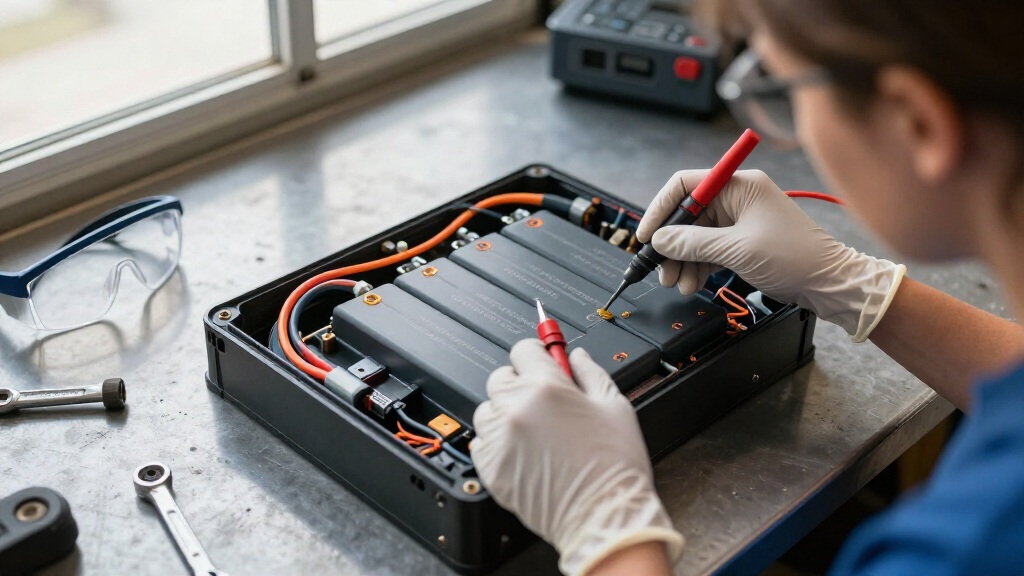
: “Lithium-ion cells store large amounts of energy in a compact volume and rely on stable internal chemistry within a defined temperature window. If a cell is damaged, overcharged, short-circuited or exposed to external heat, internal temperatures can rise to the point where the cell’s own reactions generate more heat than can be dissipated — the defining condition of thermal runaway. Larger batteries, such as those in electric vehicles, contain many cells in close proximity, which is why containment between cells is a central design consideration.
The Charged EVs whitepaper sits within a broader industry effort that includes cell-level safety testing, pack-level crash and thermal standards, and evolving regulations for EV battery safety across major markets. The publication also promotes an upcoming Virtual Conference on EV Engineering scheduled for September 14–17, 2026, with free registration for live or on-demand sessions.
“If a battery cell overheats and reaches a critical temperature, it can trigger a self-heating reaction that can lead to catastrophic failure, fires and even explosion.”
— Charged EVs whitepaper
Questions the Guide Leaves Open
The whitepaper’s summary does not publish specific statistics comparing EV and combustion-vehicle fire rates, so readers must consult the full report for the underlying data and its sources. The effectiveness figures for silicone syntactic foams — for instance, how much they reduce propagation risk, in which pack formats, and at what cost and weight penalty — are not quantified in the publicly available overview. It also remains unclear which prevention strategies the guide ranks highest, since the full evaluation is behind the report’s registration. Independent validation of the material-performance claims by third-party testing bodies is not referenced in the summary.
Where EV Battery Safety Heads Next
The Charged EVs Virtual Conference on EV Engineering, running September 14–17, 2026, is expected to cover adjacent engineering topics and is free to attend live or on demand. Readers can access the full whitepaper, including the detailed evaluation of prevention and containment strategies, through registration on the Charged EVs website. More broadly, as EV fleets grow, expect continued regulatory tightening around thermal propagation testing and wider adoption of barrier materials in pack design. EV owners concerned about recalls can check their vehicle’s status through the NHTSA recall lookup at nhtsa.gov/recalls.
Key Questions
What is thermal runaway in a lithium-ion battery?
According to the guide, it is a self-heating reaction that begins when a cell overheats past a critical temperature. The reaction can sustain itself and lead to fire, catastrophic cell failure or, in extreme cases, explosion.
Are EVs more likely to catch fire than petrol or diesel vehicles?
The whitepaper addresses this comparison directly but its public summary does not state a final verdict or cite specific statistics. Readers should consult the full report for the data and its sources before drawing conclusions.
How can thermal runaway be prevented or contained?
The guide evaluates a range of prevention and containment approaches, including robust safety protocols, engineering measures and silicone syntactic foams, which it says can reduce the risk of runaway and limit its consequences, such as cell-to-cell propagation.
What are silicone syntactic foams?
They are lightweight materials the report highlights as thermal barriers in battery packs. The whitepaper focuses on their ability to reduce thermal runaway risk, though the public summary does not quantify their measured performance or cost.
Where can I read the full guide?
The whitepaper is available through Charged EVs at chargedevs.com; the site requires free account registration to access the full text. The publication’s EV engineering virtual conference runs September 14–17, 2026.
Source: rss
Evergreen bestsellers Picks
bestsellers
As an affiliate, we earn on qualifying purchases.