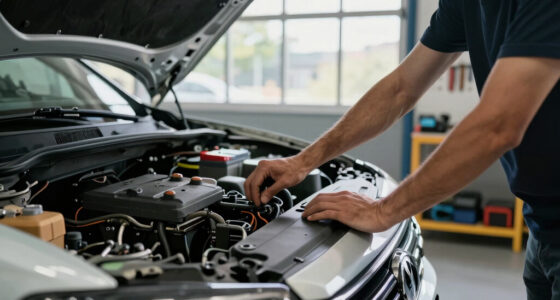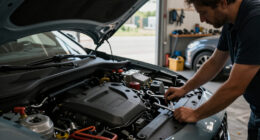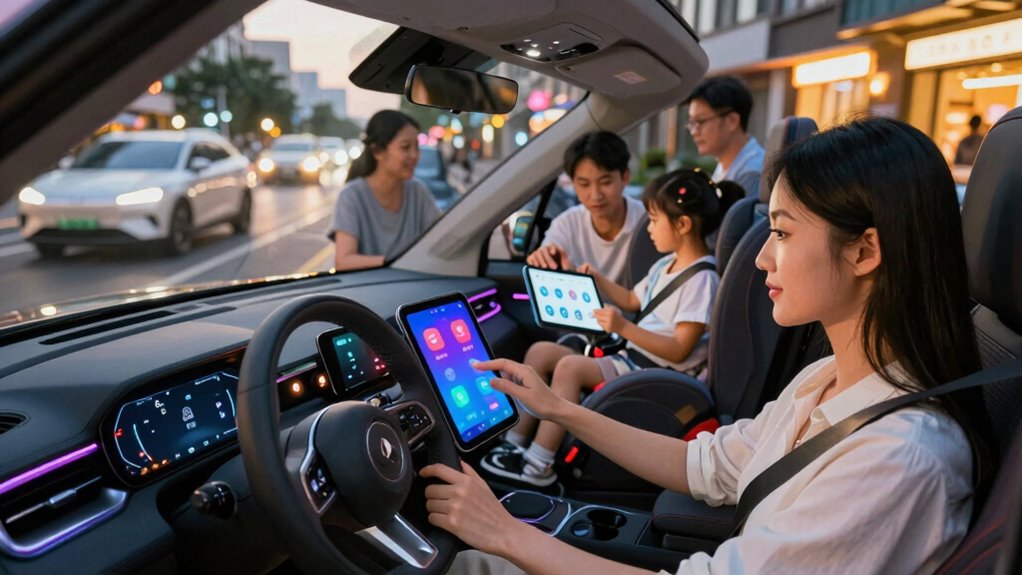

To match safety tech to your driving needs, focus on features that address your specific environment. For new drivers, prioritize systems with clear alerts like emergency braking and lane-keeping. Families benefit from AI-driven safety analytics, rear-seat alerts, and crash detection. Commuters should look for sensors that detect pedestrians and traffic, along with hazard prediction tools. By choosing tech tailored to your daily routines, you’ll boost safety and confidence—stay tuned to discover even more ways to customize your vehicle’s safety features.
Listen free for 30 days with Audible
Thousands of audiobooks and originals — cancel anytime.
As an affiliate, we earn on qualifying purchases.
Key Takeaways
- Assess user needs based on driving experience, family safety priorities, or commute environment for targeted safety features.
- Prioritize systems with immediate feedback and high-contrast alerts for new drivers to build confidence.
- For families, select AI-driven safety analytics and comprehensive sensor integration to monitor all occupants.
- For commuters, focus on advanced sensors and hazard prediction tools to enhance situational awareness during long drives.
- Ensure safety technology incorporates core innovations like real-time AI analytics and seamless sensor integration for optimal protection.
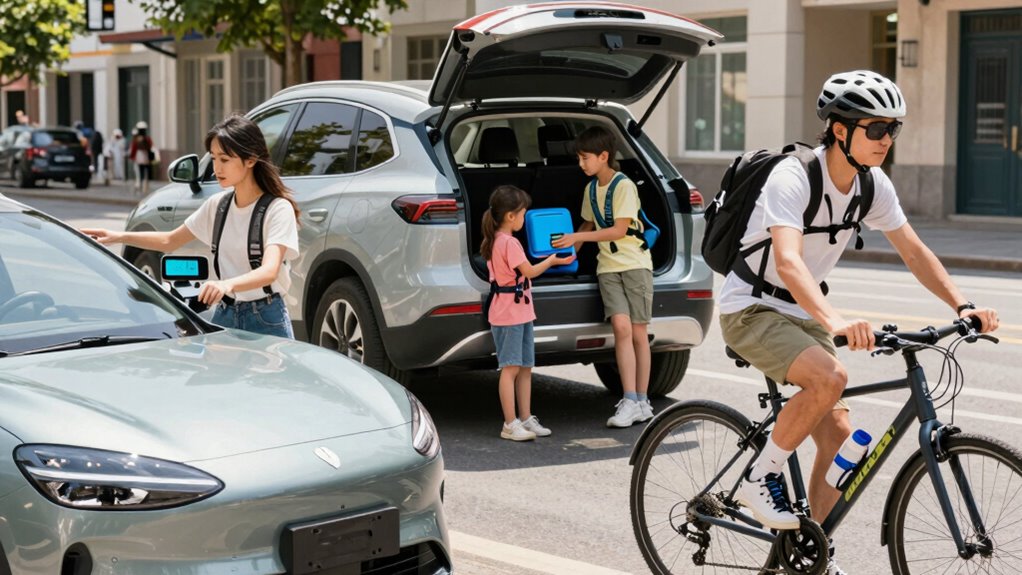
In today’s fast-paced world, finding the right safety technology for drivers, families, and commuters can feel overwhelming. With so many options available, it’s easy to get lost in the details. But understanding how to match safety tech to different needs starts with recognizing the importance of advanced sensor integration and AI-driven safety analytics. These innovations form the backbone of modern safety systems, providing real-time data and proactive responses that keep everyone protected on the road.
Modern safety tech relies on advanced sensors and AI analytics to protect drivers, families, and commuters effectively.
When selecting safety technology for new drivers, focus on systems that offer clear, immediate feedback. Advanced sensor integration is crucial here, as it allows the vehicle to detect obstacles, lane departures, or potential collisions with precision. For a new driver still building confidence, features like automatic emergency braking, lane-keeping assist, and blind-spot monitoring become essential. These sensors work seamlessly to alert or intervene without overwhelming the driver, fostering safer habits over time. Additionally, understanding the role of contrast ratio can help in choosing displays that clearly convey safety alerts without causing confusion.
Families with multiple drivers or young children need a different approach. Safety tech that emphasizes AI-driven safety analytics can help monitor driving behaviors and provide insights into patterns that may require attention. For example, AI systems can analyze acceleration, braking, and steering to identify risky behaviors, allowing families to address them proactively. Additionally, safety features like rear-seat alerts, child lock systems, and crash detection add layers of protection that are especially important for families. Incorporating sensor technology into the vehicle’s safety systems ensures comprehensive coverage and helps prevent accidents before they happen. The goal is to create a comprehensive safety environment that adapts to the needs of everyone in the vehicle, giving peace of mind during daily commutes or family trips.
Commuters, especially those covering long distances or navigating busy urban areas, benefit from advanced safety tech that enhances situational awareness. Here, advanced sensor integration can detect pedestrians, cyclists, or sudden changes in traffic conditions, while AI-driven safety analytics help predict potential hazards based on traffic patterns and environmental factors. These features work together to provide alerts or even automated responses, reducing driver fatigue and distraction. For daily commuters, simplicity combined with robust safety features makes all the difference—trusting the tech to handle complex scenarios so you can focus on the road.
In essence, matching safety tech to driver profiles involves understanding the unique requirements of each user. Whether it’s the confidence-building features for new drivers, the behavior monitoring for families, or the hazard detection for commuters, leveraging the latest in advanced sensor integration and AI-driven safety analytics ensures you’re choosing solutions that truly enhance safety. By focusing on these core innovations, you’ll be better equipped to select the right safety technology that offers peace of mind and keeps everyone safer on the road.

Yuirote Universal Car Motor Diagnostic Tool, EPB Emergency Release Tool Professional Electronic Parking Brake Reset Repair Tool for Car Engine System Troubleshooting and Emergency Road Rescue
- Universal vehicle system detection: Accurate diagnostics for most vehicle models
- EPB emergency release support: Reset and release electronic parking brakes
- Stable signal transmission: Reliable performance for brake issues
As an affiliate, we earn on qualifying purchases.
As an affiliate, we earn on qualifying purchases.
Frequently Asked Questions
How Do Safety Tech Features Differ for Teen Versus Senior Drivers?
Teen drivers often benefit from safety tech like collision alerts, lane departure warnings, and speed monitoring to prevent accidents. Senior drivers may prefer features such as adaptive cruise control, blind-spot detection, and emergency assistance, which enhance comfort and safety. As a user, you should consider the specific needs of each driver—teen drivers need proactive alerts, while senior drivers benefit from supportive, easy-to-use safety features to maintain confidence on the road.
Are There Budget-Friendly Safety Tech Options for New Drivers?
Think of budget-friendly safety tech options as your car’s quiet guardians, silently watching over your journey without draining your wallet. Affordable gadgets like backup cameras, blind-spot mirrors, and basic emergency alert systems act as cost-effective solutions that boost safety without breaking the bank. You can find these essentials at reasonable prices, giving new drivers peace of mind and helping you stay protected on every trip without sacrificing safety for savings.
How Can Safety Tech Help Reduce Insurance Premiums?
Safety tech can lower your insurance premiums by improving your risk assessment with features like telematics, which monitor your driving habits. Insurance discounts are often available for drivers who use advanced safety systems, such as collision avoidance or lane departure warnings, because they reduce accident risks. By investing in these technologies, you demonstrate responsible driving, potentially leading to significant savings on your premiums over time.
What Safety Tech Is Most Effective for Long-Distance Commuters?
For long-distance commuters, the most effective safety tech includes driver fatigue monitoring systems and road hazard alerts. Driver fatigue tech detects signs of drowsiness, helping you stay alert on extended drives. Road hazard alerts warn you about upcoming obstacles or dangerous conditions, allowing you to react promptly. Together, these features reduce fatigue-related accidents and improve overall safety, making your long commutes safer and less stressful.
Can Safety Technology Be Customized for Different Vehicle Types?
You might think safety technology isn’t customizable for different vehicles, but it actually is. Many safety systems offer vehicle compatibility and a range of customization options, allowing you to tailor tech like collision avoidance or lane assist to your specific car model. This guarantees you get the best fit and performance, regardless of your vehicle type. So, yes, safety tech can be customized effectively for various vehicles.

2Q0980653 Fourth Generation 4th Lane Keeping Assist Mount Camera Bracket for VW Passat B8 Tiguan MK2 4th
- Original specifications match: Ensures seamless performance
- Easy installation: Saves time and effort
- High-quality materials: Wear-resistant and durable
As an affiliate, we earn on qualifying purchases.
As an affiliate, we earn on qualifying purchases.
Conclusion
Choosing the right safety tech depends on your specific needs and driving habits. By understanding what features best support new drivers, families, or daily commuters, you can make smarter choices that enhance safety and peace of mind. Are you ready to invest in the tech that keeps you and your loved ones safest on the road? Remember, the right safety features aren’t just gadgets—they’re your best defense against the unexpected.

KIDZALERT Car Seat Sensor Alarm, 1 Alarm + 1 Sensor
- Safety Detection: Detects and alerts if child is left in seat
- Easy Installation: Plug-and-play into 12V cigarette lighter
- Automatic Functionality: Activates and deactivates automatically
As an affiliate, we earn on qualifying purchases.
As an affiliate, we earn on qualifying purchases.

EMX MRD-1P Radar Presence Sensor Kit Vehicle Pedestrian Detection 1 to 30 ft
- Detection Range: Adjustable from 1 to 30 ft
- Detection Targets: Vehicles and pedestrians
- Weather Resistance: Operates in rain, snow, fog, ice
As an affiliate, we earn on qualifying purchases.
As an affiliate, we earn on qualifying purchases.
College move-in / dorm season Picks
dorm essentials
As an affiliate, we earn on qualifying purchases.