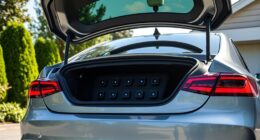

If you want better rear visibility, a backup camera is a great choice since it offers a clear, real-time video feed that helps you judge distances accurately. Parking sensors are simpler and provide audible alerts to avoid obstacles, making them ideal if you prefer easy installation and low maintenance. To decide which fits your old car best and suits your budget, consider the installation ease, compatibility, and maintenance requirements—exploring these options more deeply will help you make the right upgrade.
Key Takeaways
- Backup cameras offer clear, real-time visual assistance, ideal for detailed rear visibility and precise maneuvering in older cars.
- Parking sensors provide simple obstacle alerts, which are easier and cheaper to install, especially in vehicles with limited wiring options.
- Cameras generally require more complex wiring and calibration, making sensors a more straightforward retrofit for older vehicles.
- For long-term reliability and ease of maintenance, high-quality parking sensors tend to be more durable in older cars.
- The choice depends on your safety priorities: visual clarity with cameras or straightforward obstacle detection with sensors.
How Backup Cameras Enhance Rear Visibility

Backup cameras considerably improve your rear visibility by providing a clear, real-time video feed of what’s behind your vehicle. This technology enhances visual clarity, allowing you to see obstacles or pedestrians that might be out of your direct line of sight. Proper camera placement is vital; it should be positioned to cover the entire rear area without blind spots. When installed correctly, the camera’s angle offers a wide field of view, reducing the risk of accidents during reversing. Unlike relying solely on mirrors, the camera streamlines your awareness of what’s behind you, especially in tight spaces. This improved perspective helps you judge distances more accurately, making parking and reversing safer and more confident. Additionally, understanding the importance of camera technology can help you choose the best system for your vehicle. Proper installation and high-quality visuals greatly boost your rear visibility, ensuring safer maneuvers. Incorporating advanced features such as dynamic guidelines can further enhance your parking accuracy and overall safety. Recognizing the role of visual aids in modern vehicle safety can also assist you in making informed decisions when upgrading your vehicle’s reversing aids. Considering the reliability of the camera system can further ensure consistent performance and safety.
The Functionality and Benefits of Parking Sensors

Parking sensors use ultrasonic or electromagnetic technology to detect obstacles around your vehicle and alert you as you reverse. Their sensor sensitivity can often be adjusted, helping you fine-tune detection based on your driving environment. Different parking sensor types include ultrasonic sensors, which emit sound waves, and electromagnetic sensors, which detect changes in the magnetic field. When an obstacle is detected, sensors trigger audible beeps or visual alerts, giving you real-time feedback to avoid collisions. This system is especially useful in tight parking spots or when visibility is limited. By providing accurate obstacle detection, parking sensors enhance safety and reduce the risk of minor accidents or scrapes, making parking easier and more confident—especially for older cars that may lack advanced backup technology. Additionally, some systems can integrate with other smart‑home integrations, providing a more comprehensive approach to vehicle safety. The effectiveness of parking sensors can be influenced by factors like sensor placement, so proper installation is crucial for optimal performance. Proper calibration of these sensors can significantly improve their detection accuracy and reliability in various driving conditions. Regular maintenance and calibration can help ensure that the sensors remain reliable over time, especially as the vehicle ages. Moreover, understanding how sensor technology works can assist owners in troubleshooting potential issues and maintaining optimal system performance.
Cost Considerations for Upgrading Your Vehicle
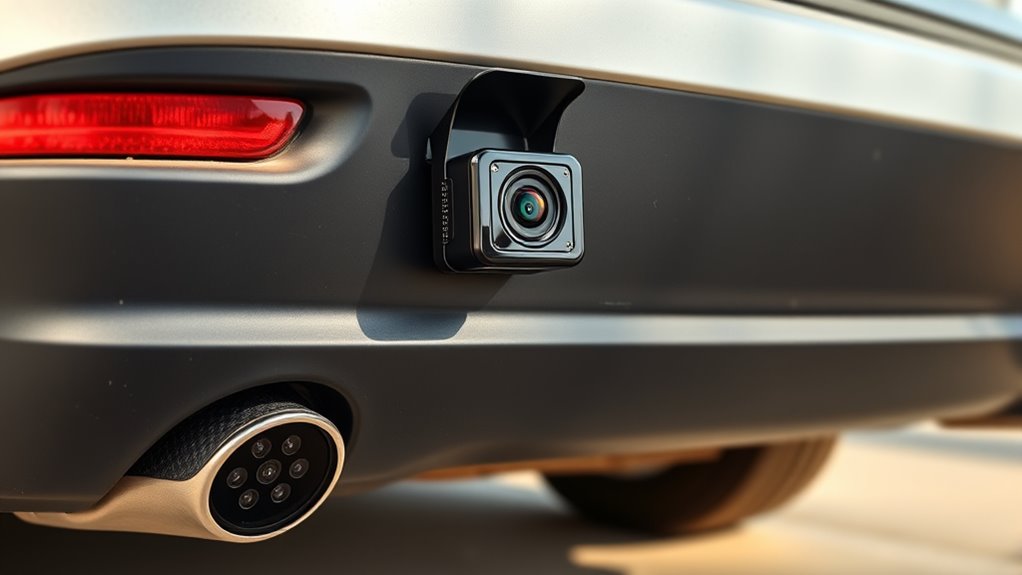
Upgrading your vehicle with a backup camera or parking sensors involves several cost factors to contemplate. You’ll want to look at installation expenses, ongoing maintenance costs, and affordable upgrade options. You’ll also want to consider the installation complexity, as some systems may require professional setup, affecting overall costs. When evaluating your options, it’s also helpful to assess the technological features offered by different systems to ensure they meet your safety requirements. For example, some systems offer integration with other vehicle safety features, enhancing overall protection and convenience. Additionally, understanding the user-friendliness of the system can influence your satisfaction and long-term usability. Considering the system reliability and durability can also play a role in your decision-making process to ensure long-lasting performance.
Installation Expenses Overview
When considering adding a backup camera or parking sensors to your vehicle, understanding the installation costs is essential for making an informed decision. Installation expenses can vary based on your car’s make and model, affecting brand compatibility and vehicle warranty. Typically, backup cameras cost between $200 and $600, while parking sensors range from $150 to $400. Professional installation may add $100 to $200, especially if your vehicle requires extra wiring or custom fitting. Some brands may have specific installation requirements that influence costs. Be sure to check if installing new tech affects your vehicle warranty. Vehicle compatibility can also play a significant role in determining installation complexity and costs. Here’s a quick overview:
| Feature | Estimated Cost |
|---|---|
| Backup Camera | $200 – $600 |
| Parking Sensors | $150 – $400 |
| Installation Fees | $100 – $200 |
Additionally, choosing energy-efficient vehicle upgrades can help reduce overall costs and environmental impact in the long run. Considering installation complexity when selecting your equipment can also help ensure a smoother upgrade process and better long-term satisfaction.
Long-Term Maintenance Costs
While installing a backup camera or parking sensors can improve safety, it’s important to contemplate their long-term maintenance costs. Over time, you may face price fluctuations for replacement parts or upgrades, especially if the brand’s reputation varies. Backup cameras tend to require occasional lens cleaning or camera replacement if damaged, which can be costly depending on the brand. Parking sensors, on the other hand, may need sensor recalibration or replacement, especially in harsh environments. Cheaper brands might save you money upfront but often have higher failure rates, leading to frequent repairs. Premium brands generally offer more reliable components, reducing ongoing costs. Additionally, Free Floating installation can sometimes complicate maintenance, potentially increasing service expenses. Consider how brand reputation influences long-term expenses, ensuring you choose a system that balances initial investment with manageable maintenance. Researching cultural heritage associated with certain brands or types can also help predict reliability and longevity. Furthermore, understanding the technological advancements incorporated into newer models can inform your decision about future upgrades and compatibility.
Upgrade Affordability Options
Considering the costs involved, upgrading your vehicle with a backup camera or parking sensors doesn’t have to break the bank. You can find affordable options that fit your budget, especially when factoring in battery life and warranty coverage. Some systems come with extended warranties, protecting you against potential repairs, while others may have shorter battery life, requiring replacements sooner. Here’s a quick comparison:
| Feature | Cost & Coverage |
|---|---|
| Backup Camera | Moderate price, longer warranty |
| Parking Sensors | Lower initial cost, shorter warranty |
| Battery Life | Varies; some last years, others need replacement |
| Installation Costs | Usually DIY or professional, varies |
| Maintenance | Minimal; warranty covers major issues |
Understanding installation requirements can help you choose the best system for your needs. Choosing wisely guarantees affordability and long-term reliability.
Installation Process and Compatibility for Older Cars
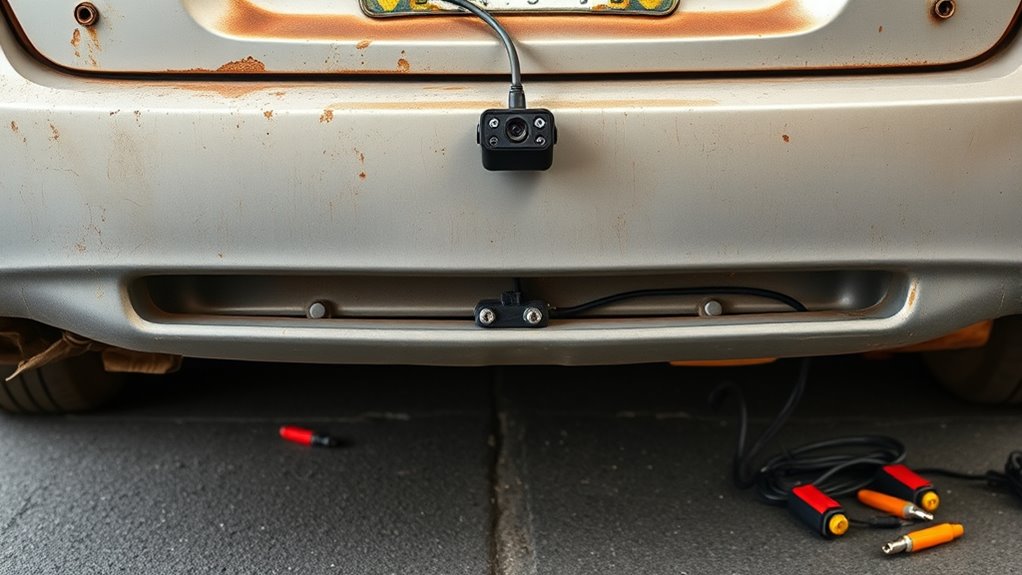
Installing backup cameras and parking sensors in older cars can vary in complexity, but both systems often require some modifications to fit non-compatible models. Retrofit compatibility is a key concern, as you might need adapters or custom mounts to guarantee proper fit. Backup cameras generally demand more extensive wiring, increasing wiring complexity, especially if your vehicle lacks existing camera wiring or a display screen. Parking sensors typically involve simpler installation, often plugging into existing electrical systems with minimal rewiring. You’ll need to carefully assess your car’s current wiring and space limitations before proceeding. For older vehicles, professional installation might be advisable to navigate compatibility issues and wiring challenges effectively. This ensures your new safety features function correctly without damaging your vehicle’s existing systems. Additionally, understanding your vehicle’s electrical system can help determine the most suitable installation approach.
User Experience and Maintenance Requirements
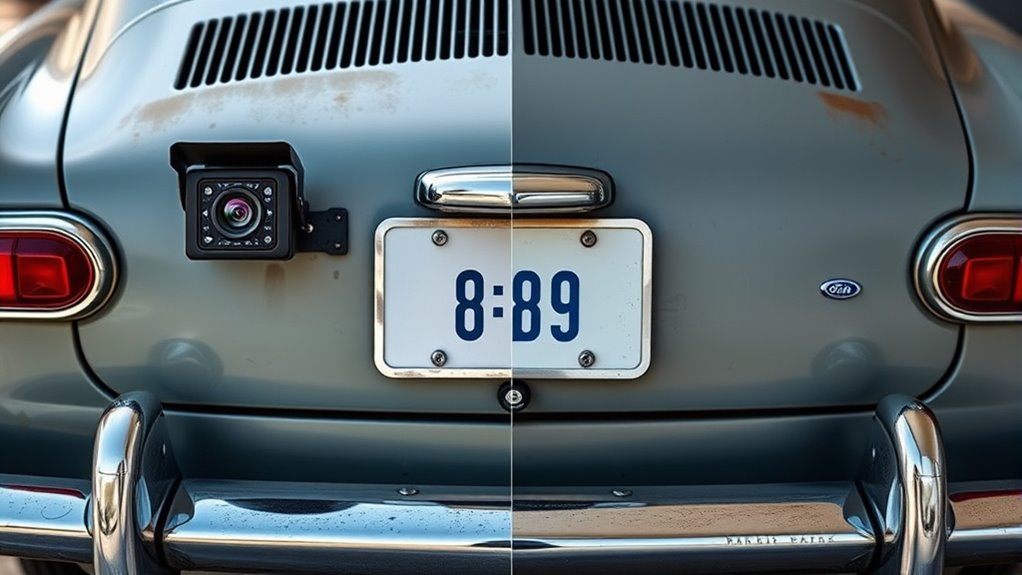
Backup cameras generally offer a more intuitive and seamless user experience, providing clear visuals that help you reverse with confidence. The high screen resolution ensures you see detailed images, reducing blind spots and improving safety. Maintenance-wise, backup cameras typically require minimal upkeep, but you should keep the camera lens clean for ideal visibility. Battery life is an important factor; wireless cameras depend on your vehicle’s power source or batteries, so you’ll need to monitor and recharge or replace them periodically. Parking sensors, on the other hand, are low-maintenance and rely on sensors embedded in the bumper, which rarely need attention unless they get dirty or damaged. Overall, backup cameras offer better visual feedback, but both systems are fairly straightforward to maintain if you keep them clean.
Making the Best Choice for Your Driving Needs

To choose the right parking aid, consider how easy it is to install and whether it fits your budget. Think about how each option can boost your safety and help prevent accidents. Your driving needs will guide you to the solution that offers the best balance of cost, convenience, and security.
Ease of Installation
When choosing between a backup camera and parking sensors, ease of installation plays a crucial role in making the right decision for your driving routine. Backup cameras usually require mounting the camera on the rear, connecting it to a display, and calibrating the sensor for proper alignment. This process can be straightforward if your vehicle has existing wiring, but may involve more work for older cars. Parking sensors, on the other hand, are generally easier to install, often plugging into your car’s existing wiring with minimal adjustments. Additionally, check if the system offers sensor calibration options and warranty coverage, which can simplify troubleshooting and ensure long-term reliability. Overall, parking sensors tend to provide a quicker, less complicated installation, making them ideal if you want a hassle-free upgrade.
Cost Effectiveness
Considering installation ease is important, but evaluating cost-effectiveness can help you choose the right safety feature for your budget. Modern technology advancements have made both backup cameras and parking sensors more affordable, but costs vary. To assess value, consider:
- The initial purchase price and installation costs
- Long-term durability influenced by brand reputation
- Maintenance and replacement expenses over time
- How well each system suits your driving needs and vehicle age
Backup cameras tend to have higher upfront costs but offer clearer visuals, thanks to reputable brands. Parking sensors are generally cheaper initially but might require more maintenance. Ultimately, weighing these factors ensures you get a cost-effective safety upgrade that fits your budget and driving habits.
Safety Enhancement
Choosing the right safety feature depends on your specific driving needs and how you use your vehicle. Backup cameras leverage smart technology to provide clear, real-time visuals, helping you avoid obstacles and reduce blind spots. They enhance safety by offering a wider field of view, especially useful when reversing in tight spaces. Parking sensors, on the other hand, use audible alerts to warn you of nearby objects, increasing awareness without distracting from your drive. Both options can improve safety, but backup cameras often add aesthetic appeal with sleek displays that integrate seamlessly into your dashboard. Ultimately, consider which feature aligns best with your driving habits and preferences. If you prioritize visual detail and modern tech, a backup camera might be the better choice. For straightforward alerts, parking sensors could suffice.
Frequently Asked Questions
Can Backup Cameras Operate Effectively in Low-Light Conditions?
Yes, backup cameras can operate effectively in low-light conditions if they have night vision capabilities and high sensor sensitivity. You’ll notice clearer images when your camera features infrared LEDs or low-light sensors, helping you see better in darkness. Ensuring your camera’s sensor sensitivity is high allows it to pick up more light, improving visibility. This way, you get safer and more reliable rearview assistance even during nighttime or poor lighting conditions.
Do Parking Sensors Work Well on Uneven or Rough Surfaces?
Parking sensors can work on uneven or rough surfaces, but their effectiveness depends on proper sensor calibration and surface material. If the sensors are well-calibrated, they can detect obstacles even on bumpy terrain, but loose gravel or uneven concrete might cause false readings or diminish accuracy. You should regularly maintain and calibrate your sensors to guarantee they perform well, especially when parking on challenging surfaces.
Are There Any Legal Regulations Regarding These Safety Devices?
Think of traffic laws as the guiding stars for safety devices. Yes, regulations do exist—some regions mandate the installation of backup cameras or parking sensors, especially for newer vehicles. These device mandates aim to enhance safety and reduce accidents. You should check your local laws, as regulations vary by jurisdiction, and guarantee your vehicle complies. Staying informed helps you avoid fines and keeps everyone safer on the road.
How Do These Systems Affect Overall Vehicle Resale Value?
Adding a backup camera or parking sensors can boost your vehicle’s resale value by making it more appealing to buyers. These safety features show you’re proactive about maintenance and upgrades, potentially reducing vehicle depreciation. Buyers often prefer cars with modern tech, which can give your older car a competitive edge. Investing in these systems may lead to a higher resale price and faster sale, making it a smart upgrade for your vehicle’s long-term value.
Which System Offers Better Coverage for Large or Wide Vehicles?
Think of your vehicle as a ship steering through foggy waters. Parking sensors are like vigilant lookout posts, offering better coverage for large or wide vehicles by alerting you to blind spots. They require proper sensor calibration to ensure accuracy. Backup cameras, like a periscope, give a clear view behind, but might not cover the full width. For larger vehicles, sensors provide broader coverage and safer maneuvering.
Conclusion
Ultimately, choosing between a backup camera and parking sensors depends on your driving habits and vehicle age. While cameras might seem more advanced, some say sensors provide quicker, more reliable alerts in tight spaces. notably, combining both often offers the best safety net, proving that technology’s true strength lies in integration. Trust your needs, but remember, no tech replaces cautious driving—sometimes, traditional skills still outshine gadgets.