Automatic crash response gadgets detect severe collisions using vehicle sensors and instantly call 911 if you’re unconscious or trapped. They monitor impact forces, vehicle orientation, and airbag deployment to identify accidents accurately. Once triggered, they send your location and crash details to emergency responders, ensuring help arrives quickly even if you can’t react. If you’re curious about how these life-saving devices work and what options are available, keep going to discover more.
Key Takeaways
- Vehicles equipped with sensors detect severe crashes and automatically alert 911 without driver input.
- These gadgets analyze impact force, angle, and vehicle orientation to determine crash severity.
- Emergency alerts include GPS location and crash details, ensuring rapid response from responders.
- Connected vehicle networks communicate with nearby cars and traffic systems to enhance safety coverage.
- They provide crucial assistance when drivers are unconscious or unable to call for help.
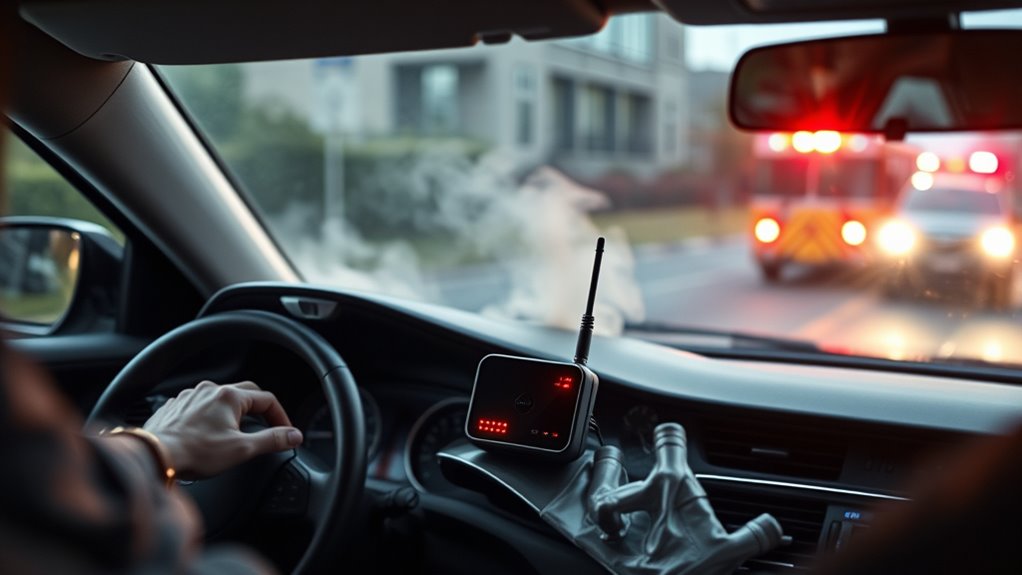
Automatic Crash Response technology detects severe vehicle collisions instantly and alerts emergency services without any driver intervention. When an accident occurs, your vehicle’s advanced systems kick into gear, using a network of vehicle sensors to determine the severity of the crash. These sensors monitor factors like impact force, vehicle orientation, and whether your airbags have deployed. Once a significant collision is detected, the system automatically initiates emergency alerts, sending your location and accident details to emergency responders. This rapid response can be essential, especially if you’re unconscious or unable to call for help yourself.
Automatic crash detection instantly alerts emergency services without driver input, providing critical location and crash details.
You don’t have to worry about manually dialing 911 or trying to communicate your location after a crash. The vehicle’s sensors work seamlessly in the background, constantly analyzing data to identify severe accidents. When one is detected, the system immediately contacts emergency services, providing critical information like GPS coordinates, the nature of the crash, and the number of passengers involved. This process happens within seconds, drastically reducing the time it takes for help to arrive, which can make a life-or-death difference.
The technology relies heavily on sophisticated vehicle sensors that are integrated into modern cars and connected vehicle networks. These sensors are designed to detect sudden deceleration, impact angles, and vibrations typical of serious crashes. Once triggered, the emergency alerts are sent via cellular networks, ensuring that help is dispatched even if you’re unable to communicate. Some systems also communicate with nearby vehicles or infrastructure to create a broader safety net, alerting other drivers or traffic management centers about the incident. Additionally, vehicle sensors play a crucial role in integrating these systems with smart infrastructure and connected networks to enhance overall safety.
Because of these innovations, you gain peace of mind knowing that even if you’re incapacitated, help can be on its way without delay. The automatic nature of this response minimizes the risk of delays caused by panic, confusion, or inability to speak. It’s especially beneficial in severe collisions, rollovers, or crashes where drivers might be knocked unconscious or trapped inside the vehicle. The instant communication with emergency responders ensures that they have the information they need to reach you quickly, potentially saving lives.
In essence, automatic crash response systems leverage vehicle sensors and emergency alerts to create a safety net that works when you need it most. They eliminate the need for manual intervention, ensuring that help is always just moments away, no matter the circumstances of the accident. This technology exemplifies how advancements in automotive safety are making driving safer and more secure, giving you confidence that aid is always within reach, even when you’re unable to reach out yourself.
Frequently Asked Questions
How Reliable Are Automatic Crash Response Gadgets in Different Weather Conditions?
Automatic crash response gadgets are generally reliable across various weather conditions, but weather impact can affect their performance. Extreme cold or heavy rain may impair device durability or signal strength, potentially delaying emergency calls. You should guarantee your device is weather-resistant and well-maintained to maximize reliability. Regular updates and proper placement can help mitigate weather impact, ensuring your gadget functions correctly when you need it most.
What Privacy Concerns Are Associated With Automatic Crash Response Devices?
While automatic crash response devices offer peace of mind, they raise privacy concerns you should consider. Your data might be collected, stored, or shared, often without clear transparency. To protect yourself, look for gadgets with robust data encryption and confirm you give informed user consent. Being aware of how your information is used helps maintain control over your privacy, even when safety features are in place.
Can These Gadgets Be Used in Non-Vehicle Emergencies?
Yes, these gadgets can be used in non-vehicle emergencies, enhancing your home safety and personal emergency responses. You can carry portable devices or install sensors that detect falls, fires, or medical issues, automatically calling 911 when needed. This technology provides quick assistance during health crises or accidents at home, giving you peace of mind knowing help is just a button press or automatic alert away, even outside vehicle crashes.
Are There Any Legal Restrictions on Using Automatic Crash Response Technology?
Like a guardian angel, automatic crash response tech faces strict rules. You might encounter liability issues if the device malfunctions or provides false alarms. Regulatory approval varies by region, so it’s essential to confirm your gadgets meet local standards. Always verify legal restrictions before relying on these devices, as unauthorized use could lead to legal complications. Staying informed helps you protect yourself and ensure the technology works when you need it most.
How Do These Devices Differentiate Between Minor and Severe Accidents?
These devices differentiate between minor and severe accidents through sensor accuracy and accident severity detection. They analyze data like impact force, vehicle orientation, and airbag deployment to assess crash seriousness. If sensors detect a severe impact, the device automatically calls emergency services. For minor bumps, it may just alert you or require manual confirmation, ensuring help is dispatched only when truly necessary, minimizing false alarms and prioritizing serious incidents.
Conclusion
As your car detects a crash, it springs into action, calling for help even before you can react. You sit helpless, waiting in uncertain silence, hoping assistance arrives in time. Will emergency responders reach you before it’s too late? With these gadgets, you’re never truly alone in a crisis. They stand guard silently, ready to save your life when every second counts. The question remains: are you prepared for what could happen next?