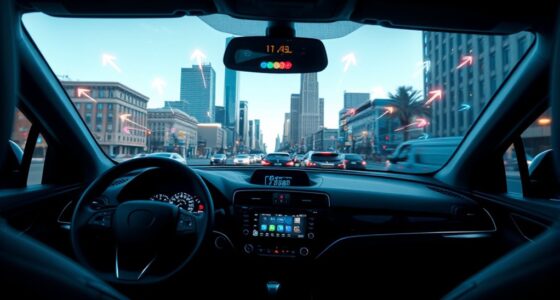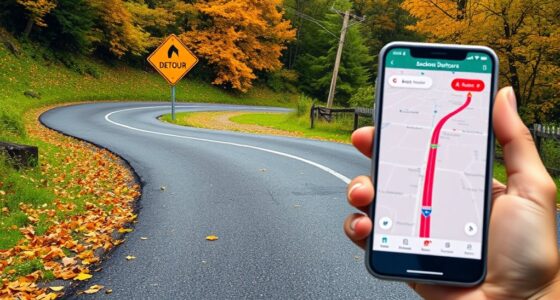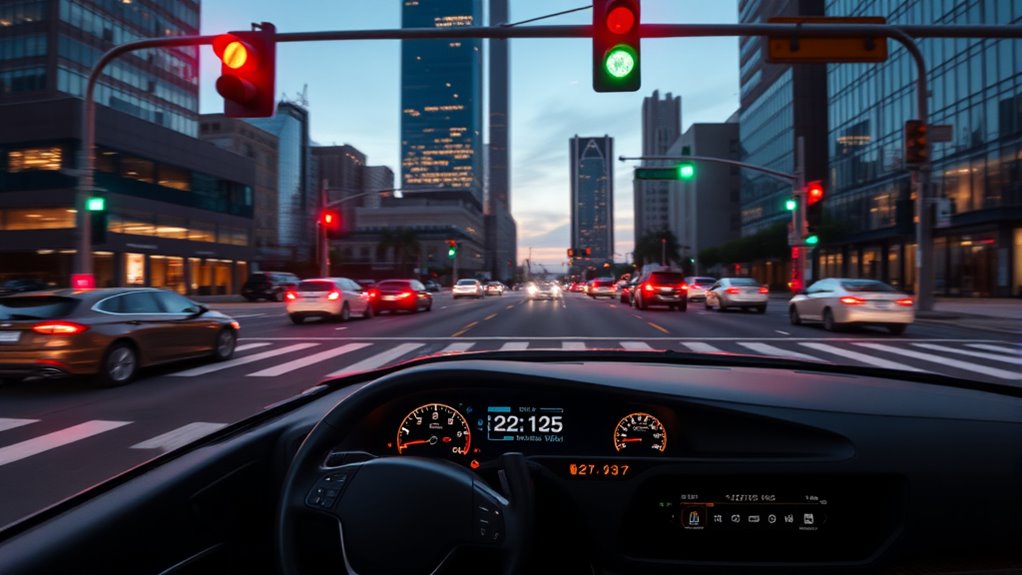
Smart traffic systems and vehicle connectivity are changing how you commute by helping you hit more green lights and avoid delays. Adaptive traffic signals respond in real-time to traffic flow, while automated vehicles communicate directly with management systems to optimize speeds. Urban designs now support smarter intersections that coordinate with connected cars. This seamless integration reduces stops and keeps traffic flowing smoothly. Keep exploring to discover how these innovations can make your drives faster and less stressful.
Key Takeaways
- Connected vehicle technology shares real-time data with traffic signals to optimize light changes.
- Adaptive traffic signals respond dynamically to current traffic flow, reducing red light delays.
- Vehicles receive advance alerts about upcoming light changes, enabling smoother acceleration and braking.
- Vehicle-to-infrastructure communication prioritizes certain routes, minimizing stops at red lights.
- Smarter urban planning integrates infrastructure to support seamless interaction between vehicles and traffic systems.
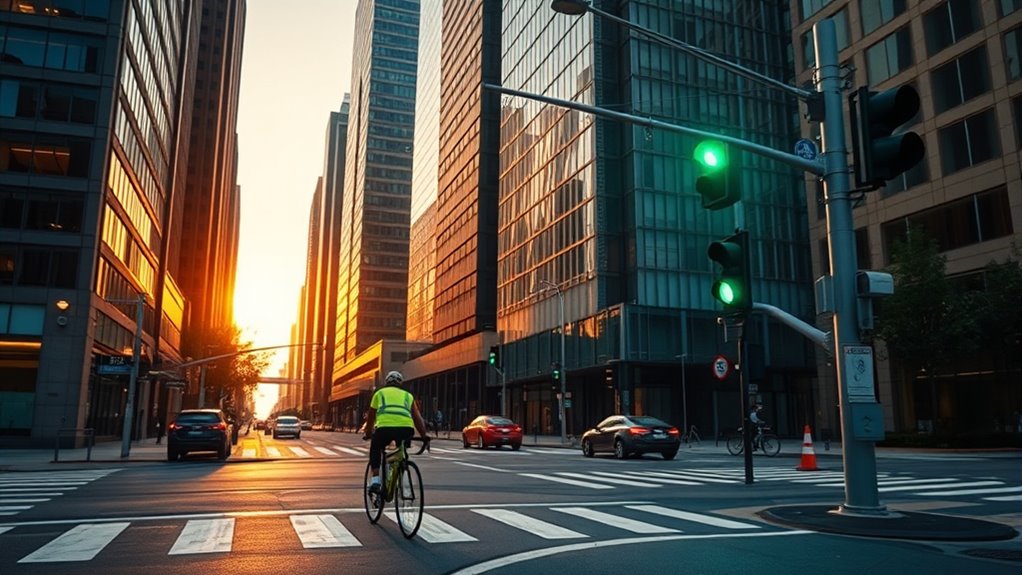
Getting stuck at red lights can be frustrating and time-consuming, but thanks to advancing technology, you can now improve your chances of hitting more green lights. Urban planning plays a vital role in this shift, as cities redesign traffic flow to accommodate smarter systems that work seamlessly with vehicle automation. Modern urban planning integrates intelligent traffic signals, sensors, and data analytics to create more efficient intersections. These developments allow traffic lights to adapt in real-time based on current conditions, reducing unnecessary stops and delays. When your vehicle interacts with this infrastructure, your commute becomes smoother and faster. Additionally, the use of energy-efficient infrastructure supports sustainable urban traffic management, further enhancing these benefits. Vehicle automation is transforming how you approach intersections. Automated vehicles can communicate directly with traffic management systems, receiving signals about upcoming light changes well in advance. This connection enables your vehicle to slow down or accelerate precisely, aligning perfectly with the timing of green lights. Instead of relying solely on visual cues or guesswork, automated systems use exact data to make split-second decisions, helping you avoid red lights altogether. As more vehicles become equipped with automation tech, the overall traffic flow improves, reducing congestion and wait times for everyone. The integration of urban planning and vehicle automation is making traffic management smarter. Traffic lights are no longer fixed timers but adaptive systems that respond to real-time traffic volume and vehicle movements. When your driver-assist or autonomous vehicle detects a nearby vehicle approaching an intersection, it communicates with the traffic signal to anticipate changes. This coordination ensures smoother acceleration through green lights and minimizes abrupt stops, which can cause traffic jams. The result is a more coordinated flow that benefits all road users and saves you time. Furthermore, the development of connected vehicle technology enhances this system. As vehicles share data about their speed, location, and route intentions, traffic signals can adjust dynamically, prioritizing certain flows and reducing unnecessary idling. This interconnected network optimizes traffic patterns, making it easier for your vehicle to hit green lights more often, especially during busy hours. Urban planners are increasingly designing cities with these connected systems in mind, emphasizing the importance of infrastructure that supports vehicle automation.
Frequently Asked Questions
How Accurate Are These Traffic Light Prediction Apps?
Traffic light prediction apps are generally quite accurate, thanks to advanced algorithms that analyze real-time data and traffic patterns. Your trust in these apps grows as their algorithm accuracy improves with more usage and data. While they can’t guarantee perfect timing every time, most users find that these apps considerably increase their chances of hitting green lights, making your commutes smoother and more efficient.
Do These Technologies Work in All Cities Worldwide?
You might stumble upon these traffic tech tools working differently worldwide due to variations in urban infrastructure and cultural differences. They work best in cities with advanced traffic management systems, but may struggle in areas with outdated infrastructure or inconsistent signal timing. While some apps adapt globally, their accuracy and effectiveness can vary, so you’ll want to check city-specific compatibility before relying on them. Expect varying results based on local traffic setups.
Are There Any Safety Concerns Using Such Apps While Driving?
Using such apps can pose safety concerns because they might increase driver distraction if you’re fiddling with your phone. Also, app reliability varies; some may glitch or provide incorrect signals, leading to unsafe situations. To stay safe, use voice commands or integrate the app with your car’s display, so you can keep your focus on the road. Always prioritize safety over convenience when relying on traffic apps.
How Do These Apps Access Real-Time Traffic Data?
These apps access real-time traffic data through various sources like GPS signals, traffic cameras, and government traffic sensors. They process this data to optimize your route and improve timing at lights. While doing so, they prioritize app data privacy by encrypting your location info and limiting data sharing. You can usually control what info you share, ensuring your privacy while benefiting from accurate, timely traffic updates.
Is There a Cost Associated With Using These Traffic Optimization Tools?
Most traffic optimization tools have app subscription costs, but some offer free versions with limited features. Be aware that using these apps might raise data privacy concerns since they collect your location and driving habits. You should review their privacy policies to understand how your data is used. If privacy is a priority, choose apps that prioritize data security or offer transparent data handling practices.
Conclusion
With these smart tech tools guiding your journey, you’re steering through the city’s heartbeat with a green-lit rhythm. Imagine your commute as a smooth river, effortlessly flowing without turbulent stops. Every green light becomes a victory dance, saving you time and fuel. Embrace these innovations and turn your daily drive into a symphony of efficiency. Because when technology lights your way, the road ahead is brighter, smoother, and entirely in your control.