
TL;DR

Get business pricing on garage and car supplies
- Business-only prices and quantity discounts
- Tax-exempt purchasing
- Multiple users, one account, clear invoices
Hyundai’s CEO revealed plans to accelerate the company’s shift into autonomous robotaxis, aiming to build thousands to offset recent EV sales slowdown. This marks a strategic pivot in Hyundai’s mobility approach amid industry challenges.
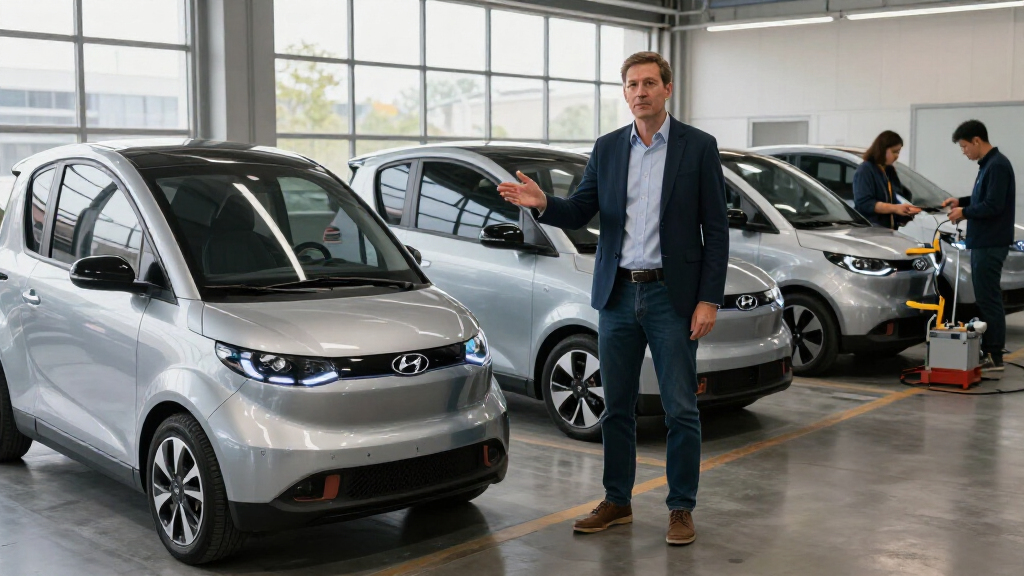
Hyundai’s CEO has revealed plans to build thousands of autonomous robotaxis as a response to the ongoing slowdown in electric vehicle sales. This strategic pivot aims to diversify Hyundai’s mobility offerings and capitalize on the emerging autonomous transportation market, which is seen as a key growth area amid industry challenges.
According to company sources, Hyundai intends to manufacture and deploy thousands of robotaxis over the coming years, focusing on autonomous technology and mobility-as-a-service (MaaS) platforms. The move is part of Hyundai’s broader strategy to shift away from solely traditional vehicle sales toward integrated transportation solutions.
The announcement comes amid a recent deceleration in global EV sales growth, with industry analysts citing market saturation, supply chain disruptions, and changing consumer preferences as contributing factors. Hyundai’s leadership believes that autonomous robotaxis can provide a new revenue stream and help the company maintain competitive momentum.
While specific timelines and production targets are still being finalized, Hyundai’s executives have indicated that pilot programs could launch within the next 12 to 24 months, with large-scale deployment expected within five years. The company is also exploring partnerships with tech firms and mobility providers to accelerate development and deployment.
Implications of Hyundai’s Shift to Autonomous Robotaxis
This announcement signifies a strategic shift for Hyundai, emphasizing autonomous mobility as a core growth area. As traditional EV sales face headwinds, Hyundai aims to position itself as a leader in robotaxi services, which could reshape its revenue model and competitive landscape. For consumers, this could mean increased availability of affordable, driverless transportation options in urban areas, potentially impacting car ownership trends and urban mobility.
Furthermore, Hyundai’s move highlights broader industry trends where automakers are increasingly investing in autonomous vehicle technology and mobility-as-a-service platforms, signaling a possible industry-wide pivot away from traditional car sales towards service-based models.
As an affiliate, we earn on qualifying purchases.
Industry Context and Hyundai’s Strategic Reorientation
The global automotive industry has been experiencing a slowdown in EV sales growth, with some markets reaching market saturation and facing supply chain issues. Industry analysts point to changing consumer preferences, increased competition, and economic uncertainties as factors dampening EV demand. Despite these challenges, the push toward autonomous vehicles remains a priority for many automakers.
Hyundai has historically focused on expanding its EV lineup, but recent industry signals suggest a growing interest in autonomous technology and mobility services. The company’s announcement aligns with broader industry trends where automakers and tech firms are collaborating to develop self-driving taxis and urban mobility solutions. Hyundai’s pivot toward robotaxis reflects a recognition that future revenue streams may increasingly come from mobility services rather than vehicle sales alone.
Prior to this announcement, Hyundai had invested heavily in autonomous driving research and partnered with several tech companies to develop driverless vehicle prototypes. This latest move indicates a strategic intent to accelerate commercialization and deployment of autonomous fleets.
As an affiliate, we earn on qualifying purchases.
Unconfirmed Details on Deployment Timeline and Scale
Specific timelines, production volumes, and deployment locations for Hyundai’s robotaxi fleet remain unconfirmed. While executives suggest pilot programs could start within a year or two, it is not yet clear how extensive the initial deployment will be or how quickly the company plans to scale up to thousands of units.
Additionally, details about partnerships, technological capabilities, and regulatory approvals are still emerging, leaving some uncertainty about the timeline for widespread commercial availability.
As an affiliate, we earn on qualifying purchases.
Next Steps for Hyundai’s Autonomous Mobility Strategy
Hyundai is expected to announce further details on pilot programs and partnership agreements in the coming months. The company may also begin testing autonomous robotaxis in select urban markets, with pilot launches potentially occurring within 12 to 24 months. Industry observers will be watching for official timelines, regulatory developments, and how Hyundai plans to finance and scale the deployment of its autonomous fleet.
As an affiliate, we earn on qualifying purchases.
Key Questions
Why is Hyundai shifting focus to robotaxis now?
Hyundai is responding to a slowdown in EV sales growth and sees autonomous robotaxis as a new growth avenue that can generate revenue through mobility services rather than just vehicle sales.
What challenges might Hyundai face in deploying thousands of robotaxis?
Challenges include regulatory approvals, technological reliability, safety concerns, and establishing infrastructure and partnerships necessary for large-scale deployment.
How does this move compare to other automakers’ strategies?
Many competitors are also investing in autonomous vehicle technology and mobility platforms. Hyundai’s focus on deploying large fleets of robotaxis aligns with industry trends toward mobility-as-a-service models.
Will Hyundai’s robotaxis be available in all markets?
It is too early to say which markets will see Hyundai’s robotaxis first. Deployment will likely start in select urban areas with supportive regulatory environments.
What impact could this have on consumers and urban transport?
If successful, Hyundai’s robotaxis could increase affordable, driverless transportation options, potentially reducing car ownership and easing urban congestion.
Source: rss
Columbus Day / Indigenous Peoples' Day Picks
long weekend sales
As an affiliate, we earn on qualifying purchases.