If you want reliable, precise navigation, a dedicated HUD is the better choice because it offers integrated hardware, more stable AR overlays, and durability for long-term use. A phone HUD is more affordable and flexible but may lack robustness and seamless integration. Consider your priorities: if you prefer seamless performance and durability, a dedicated unit is ideal. To learn about the pros and cons of each option, keep exploring the details below.
Key Takeaways
- Dedicated HUDs typically offer more precise AR overlays due to integrated hardware and refined calibration.
- Phone HUDs are more portable and cost-effective, ideal for flexible and short-term navigation needs.
- Dedicated units provide seamless vehicle system integration and durability for long-term, stable use.
- Phone HUDs rely on smartphone capabilities, which may limit AR accuracy and responsiveness.
- The choice depends on whether you prioritize hardware stability and precision or affordability and convenience.
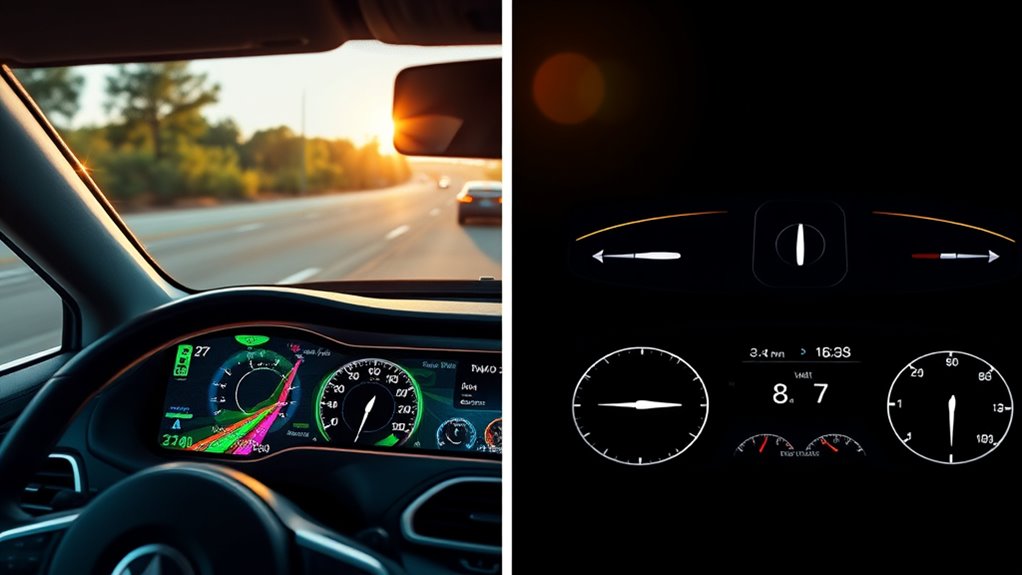
When it comes to enhancing your driving experience, choosing between a phone HUD and a dedicated HUD can be a tough decision. Both options aim to provide clear, real-time navigation data directly in your line of sight, but they do so through different approaches. A phone HUD typically projects your smartphone’s display onto your windshield via a reflective surface, often relying on augmented reality (AR) to overlay navigation cues onto the real-world view. This AR integration makes it easier to follow directions without taking your eyes off the road. Meanwhile, dedicated HUD units are purpose-built devices that often come with their own hardware and software, designed specifically for vehicle use. They usually feature seamless hardware integration, connecting directly to your car’s systems for a more cohesive experience.
The augmented reality aspect is a significant advantage for phone HUDs. Since your smartphone can leverage AR technology, it can project navigation prompts directly onto the windshield, aligning arrows or route markers with real-world objects like intersections or landmarks. This creates a more intuitive experience, helping you understand exactly where to turn without second-guessing. Dedicated HUDs also incorporate AR, but they tend to do so with more refined hardware, ensuring that the overlay aligns precisely with the road and environment. The hardware integration in dedicated units often includes sensors, GPS modules, and sometimes even proprietary software that syncs seamlessly with your vehicle’s systems, offering a more stable and responsive display.
In addition, dedicated HUDs generally provide better hardware integration with your vehicle’s existing systems, such as speedometers, navigation, and alerts. This integration results in a cleaner, less cluttered display, often customizable to show only the information you care about. Phone HUDs, on the other hand, depend on your smartphone’s capabilities and can sometimes be limited by software or hardware restrictions. While they’re more affordable and easier to set up, they might not deliver the same level of stability or precision as dedicated units.
However, dedicated HUDs often come with a higher price tag and require more installation effort. They’re built to withstand vehicle vibrations and environmental factors, offering durability that phone-based solutions may lack. In contrast, phone HUDs are portable and convenient, easily switching between devices or vehicles, but they might not be as robust or reliable over long-term use. Ultimately, your choice depends on what you prioritize: if you want a seamless, hardware-integrated experience with precise AR overlays, a dedicated HUD is the way to go. But if you prefer flexibility and affordability, a phone HUD could still deliver a worthwhile navigation upgrade.
Frequently Asked Questions
How Does Weather Affect Phone HUD Visibility?
Weather can considerably impact your phone HUD visibility. Rain obstruction can make it harder to see the display clearly, especially if water droplets cover the screen. Glare issues from bright sunlight also reduce visibility, causing you to strain your eyes or miss important navigation cues. To stay safe, consider using a HUD with anti-glare features or adjusting display brightness in changing weather conditions, ensuring you can navigate confidently regardless of weather challenges.
Are Dedicated HUDS Compatible With All Vehicle Models?
Like a puzzle piece that fits perfectly, dedicated HUDs aren’t compatible with all vehicle models. You’ll need to check vehicle compatibility before buying—some models require specific connections or upgrades. But don’t worry: many dedicated HUDs offer customization options, allowing you to tailor the display for your ride. Before purchasing, verify your vehicle’s compatibility to guarantee seamless integration and peak navigation experience.
Can Phone HUDS Cause Driver Distraction Risks?
Yes, phone HUDs can cause driver distraction risks if they divert your driver attention or create visual clutter. When you focus too much on the phone screen, it takes away from your awareness of the road, increasing the chance of accidents. To stay safe, use phone HUDs responsibly, keep their display simple, and avoid letting visual clutter overwhelm your view, so you can maintain proper focus on driving.
What Are the Long-Term Maintenance Costs of Dedicated HUDS?
You’ll find that dedicated HUDs have costs that can skyrocket over time, especially when you consider maintenance. The cost comparison reveals hefty expenses for repairs and upgrades, often driven by complex installation challenges. Unlike phone HUDs, which are cheap and easy to update, dedicated systems demand ongoing investment, making your long-term maintenance costs feel like a never-ending financial rollercoaster. Be prepared for those unexpected bills that can punch your wallet hard.
Do Phone HUDS Offer Real-Time Traffic Updates Effectively?
Yes, phone HUDs deliver real-time traffic updates effectively through augmented reality features that overlay data onto your view. You can use voice commands to ask for traffic conditions, route changes, or alerts, making navigation safer and more seamless. The combination of augmented reality and voice control guarantees you stay informed about traffic, accidents, or delays, helping you adjust your route promptly without distraction.
Conclusion
Choosing between a phone HUD and a dedicated HUD is like picking between a trusty compass and a shining lighthouse. While your phone offers convenience and versatility, a dedicated HUD provides unwavering clarity and focus on the road ahead. Ultimately, it’s about what guides your journey—do you want the familiar glow or a beacon that keeps you safer? Trust your instincts, and let your choice light the path to smoother, safer travels.