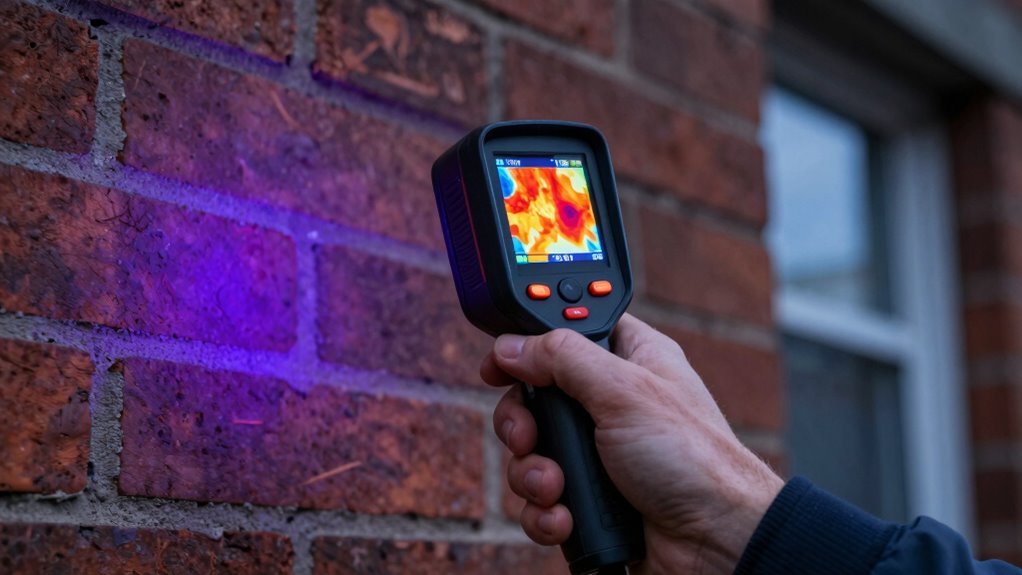

Thermal imaging and inspection cameras are becoming more useful because they let you quickly find hidden issues without disassembling equipment, saving time and money. They detect heat anomalies that reveal loose connections or overloaded circuits, enabling early repairs. Advances in technology improve image clarity and ease of use, making these tools accessible across industries. If you want to understand how these innovations can give you a proactive edge, keep exploring what’s possible.

Get business pricing on garage and car supplies
- Business-only prices and quantity discounts
- Tax-exempt purchasing
- Multiple users, one account, clear invoices
Key Takeaways
- Non-destructive testing allows for safe, quick inspections without equipment disassembly or damage.
- Advances in technology improve image quality, diagnostic accuracy, and application versatility.
- Rapid scanning and targeted analysis enable early detection of issues, reducing downtime and costs.
- User-friendly features and decreasing costs increase accessibility across industries.
- Growing industry adoption emphasizes thermal imaging’s role in proactive maintenance and safety.

In many industries, non destructive testing (NDT) is essential to maintaining safety and efficiency, and thermal imaging plays a significant role here. You can perform inspections without disassembling or damaging equipment, saving time and reducing costs. For example, in the electrical sector, thermal cameras help you detect loose connections or overloaded circuits by highlighting abnormal heat signatures. This non invasive approach means you don’t need to take equipment offline or disrupt operations, making maintenance more efficient and less risky. The ability to perform non destructive testing with thermal imaging ensures you get accurate, real-time data without compromising the integrity of the systems you’re inspecting.
The convenience and speed that thermal imaging offers are unmatched. You can scan large areas rapidly, pinpointing trouble spots within seconds. This quick detection capability is especially valuable when dealing with complex machinery or infrastructure, where early warning signs might be subtle or hidden. As you become more familiar with thermal imaging cameras, you’ll appreciate how they enable you to make informed decisions on repairs or further investigations, often preventing costly failures. Additionally, advancements in infrared detection technology are continually expanding the range of applications and improving image clarity. Incorporating thermal image analysis techniques can further enhance accuracy and diagnostic capabilities. Moreover, ongoing developments in sensor resolution and image processing algorithms are making thermal cameras even more effective and reliable. As these technologies evolve, they are making thermal imaging an increasingly vital tool across various sectors.
Furthermore, these cameras are becoming more accessible and user-friendly, encouraging wider adoption across industries. Modern models provide high-resolution images and intuitive interfaces, so even those new to thermal imaging can operate them effectively. As the technology advances, you’ll find that the cost of thermal imaging cameras continues to decrease, making them an increasingly practical investment for small businesses and large enterprises alike. Their versatility, combined with their ability to provide precise infrared detection and support non destructive testing, ensures that thermal imaging cameras will remain indispensable tools in maintaining safety, improving efficiency, and supporting proactive maintenance strategies in the future. Investing in thermal imaging technology can give organizations a competitive edge by enabling early detection and preventive care.
thermal imaging inspection camera
As an affiliate, we earn on qualifying purchases.
As an affiliate, we earn on qualifying purchases.
Frequently Asked Questions
How Accurate Are Thermal Imaging Cameras in Detecting Small Temperature Differences?
Thermal imaging cameras are quite accurate in detecting small temperature differences, especially when they have proper color calibration and high resolution sensitivity. These factors guarantee the camera accurately represents temperature variations and captures subtle changes. You’ll find that with good calibration and a sensitive resolution, you can reliably identify even minor temperature differences, making these cameras invaluable for precise inspections and troubleshooting.
What Are the Main Limitations of Thermal Imaging Technology?
Imagine trying to spot a small ember in a smoky room—thermal imaging faces similar limits. Calibration issues can skew readings, and environmental factors like weather or reflective surfaces hinder accuracy. While thermal cameras are cost-effective for many applications, their limitations mean you need proper calibration and awareness of conditions to trust the results. These constraints remind you that technology isn’t perfect, and understanding its limits guarantees better decision-making.
Can Thermal Cameras Be Used in Complete Darkness?
Yes, thermal cameras can be used in complete darkness, making them ideal for night vision and wildlife observation. Unlike traditional cameras, they detect heat signatures rather than relying on light, allowing you to see clearly even in total darkness. This capability enhances security, search and rescue operations, and outdoor adventures, providing you with detailed thermal images without any ambient light. Thermal imaging truly transforms how you observe and analyze in darkness.
How Do Environmental Conditions Affect Thermal Imaging Readings?
Environmental factors greatly impact thermal imaging readings, and calibration challenges can make accurate interpretation tricky. You might wonder if weather or surroundings distort the data. In reality, extreme temperatures, humidity, or wind can cause the thermal camera to misread heat signatures. To guarantee precise results, you need to account for these variables, calibrate your device properly, and understand how environmental conditions influence the thermal images you capture.
Are Thermal Imaging Cameras Safe for Long-Term or Repeated Use?
Thermal imaging cameras are generally safe for long-term and repeated use when you follow proper safety protocols. They emit no harmful radiation, making them safe for frequent operation. To guarantee long-term reliability, regularly calibrate your equipment and handle it carefully to prevent damage. By maintaining your devices properly and adhering to safety guidelines, you can confidently use thermal cameras over extended periods without concerns about safety or device longevity.
infrared thermal camera for electrical inspection
As an affiliate, we earn on qualifying purchases.
As an affiliate, we earn on qualifying purchases.
Conclusion
Thermal imaging cameras are like your own radar, revealing secrets hidden to the naked eye. As they become more advanced and accessible, you’ll find yourself equipped with a powerful tool that spots problems before they grow. Just like a lighthouse guides ships safely through dark waters, these cameras illuminate issues in your home or work environment, helping you act quickly and avoid costly repairs. Embrace this technology, and you’ll navigate risks with confidence and clarity.
As an affiliate, we earn on qualifying purchases.
non destructive testing thermal camera
As an affiliate, we earn on qualifying purchases.
As an affiliate, we earn on qualifying purchases.
Evergreen bestsellers Picks
bestsellers
As an affiliate, we earn on qualifying purchases.