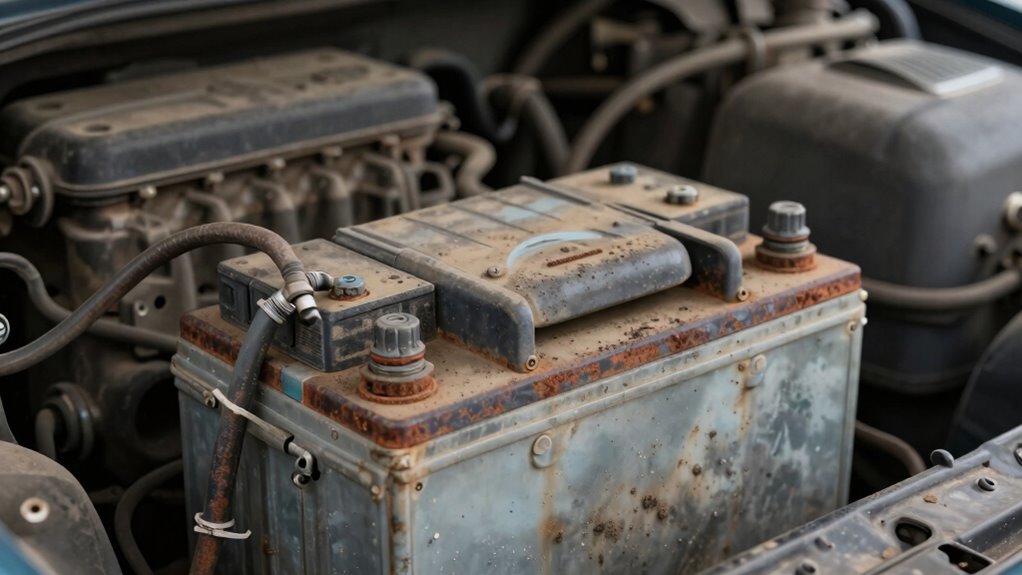

As your car ages, monitoring the battery becomes more important because it naturally loses capacity and efficiency over time, leading to higher chances of breakdowns. Signs like slow engine cranking or dim headlights indicate a battery is failing. Regular checks help you catch issues early, avoid costly repairs, and keep your vehicle dependable. Staying proactive with battery care guarantees your daily drive remains smooth. Keep going to discover more ways to protect your older car’s performance.

Get business pricing on garage and car supplies
- Business-only prices and quantity discounts
- Tax-exempt purchasing
- Multiple users, one account, clear invoices
Key Takeaways
- Older batteries naturally decline in capacity, making regular monitoring essential to prevent unexpected failures.
- Aging batteries show signs like slow cranking and dim lights, requiring proactive checks to maintain reliability.
- Environmental factors like temperature extremes accelerate wear in older batteries, increasing the need for vigilant monitoring.
- Proper maintenance and early detection extend the lifespan of aging batteries, reducing costly repairs.
- Understanding battery chemistry helps anticipate end-of-life, ensuring timely replacements for older vehicles.
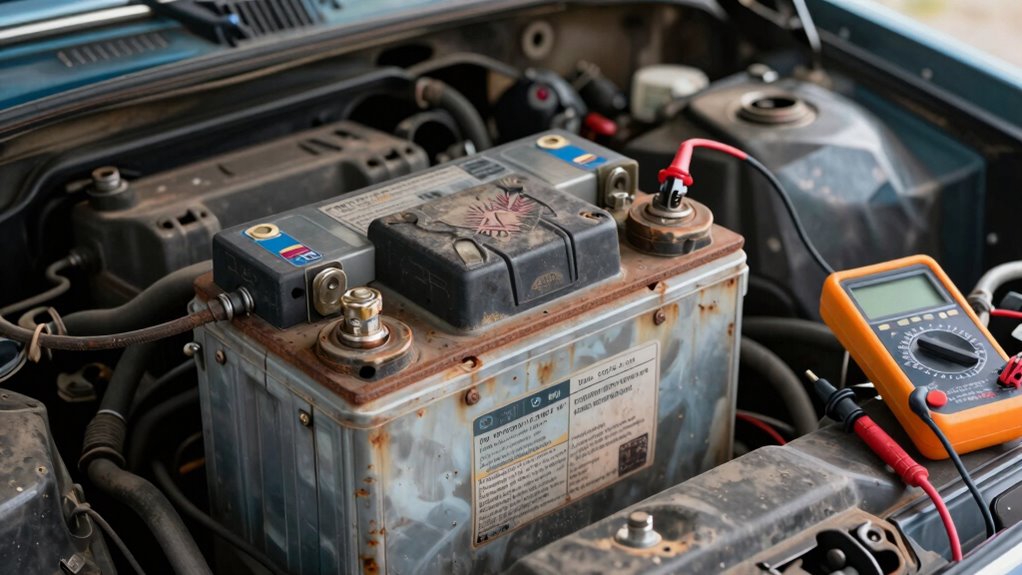
As your car ages, monitoring the battery becomes increasingly significant to prevent unexpected breakdowns. Over time, your vehicle’s battery naturally loses some of its ability to hold a charge, which directly impacts its lifespan. A declining battery not only risks leaving you stranded but also affects your car’s overall performance. By keeping a close eye on the health of your battery, you can catch potential issues early and extend its life. Understanding how your battery’s lifespan changes with age helps you prioritize regular checks, especially since older batteries tend to have reduced charging efficiency. When a battery isn’t charging properly, it struggles to deliver the power needed to start your engine or run electrical systems smoothly. This inefficiency can be caused by internal wear, corrosion, or other age-related factors, making monitoring essential for maintaining reliable operation.
If you ignore signs of declining battery health, you might find yourself stuck with a dead battery during the coldest or busiest parts of your day. Regular testing and visual inspections can help you identify early warning signs, such as slow engine cranking or dimming headlights, which indicate reduced charging efficiency. You can use a multimeter to measure voltage or invest in a battery tester to get a clearer picture of its condition. These simple checks give you valuable insights into whether your battery still performs at its best or if it’s nearing the end of its useful life. Additionally, understanding battery chemistry and how it affects performance can help you better anticipate when it’s time for a replacement, further safeguarding your daily commute. Because older batteries are more prone to failure, proactive monitoring becomes a critical step in avoiding emergency repairs and unnecessary towing costs.
Furthermore, being aware of the environmental factors that impact battery health, such as extreme temperatures, can help you take preventive measures to extend its lifespan. Additionally, maintaining proper charging habits can help preserve your battery’s lifespan. Avoid leaving your car unused for extended periods, as long periods of inactivity can lead to sulfation—a buildup that hampers charging efficiency. Ensuring your alternator is functioning correctly also plays an essential role in delivering the right amount of charge. If your charging system isn’t working properly, your battery will continually struggle to reach full capacity, accelerating wear and decreasing overall lifespan. Recognizing the importance of regular maintenance can help you detect issues early and avoid costly repairs. Paying attention to these factors and performing routine checks not only extends your battery’s life but also ensures your vehicle remains dependable day after day. Ultimately, keeping a vigilant eye on your battery’s health is a small but meaningful step toward reliable driving, especially as your car gets older.
As an affiliate, we earn on qualifying purchases.
Frequently Asked Questions
How Often Should I Check My Older Car’s Battery?
You should check your older car’s battery at least once every three to six months. Regular inspections help monitor its battery lifespan and identify issues early. Keep an eye on charging habits and look for signs like slow starting or dim lights. Proper maintenance can extend your battery’s life, especially in an older vehicle. Consistent checks guarantee reliable performance and prevent unexpected breakdowns on your daily drives.
Can Battery Monitoring Prevent Breakdowns in Older Vehicles?
Battery monitoring can definitely prevent breakdowns in older vehicles. Studies show that about 60% of roadside breakdowns are due to battery failure, often linked to poor charging habits. By keeping an eye on your battery’s health, you can extend its lifespan and catch issues early. Regular monitoring helps you adjust your charging habits, avoiding sudden failures and keeping your car reliable, especially as it ages.
What Are Signs My Battery Is Failing in an Older Car?
Your battery might be failing if you notice corrosion around the terminals or experience charging issues, like difficulty starting your car or dimming headlights. In older vehicles, corrosion can disrupt connections, and charging problems signal the battery isn’t holding a charge properly. Regularly inspecting for corrosion and monitoring the charging system helps you catch these signs early, preventing unexpected breakdowns and ensuring your car runs smoothly.
Is Professional Battery Testing Necessary for Older Cars?
Yes, professional battery testing is necessary for older cars because it helps evaluate the battery’s lifespan and charging efficiency. Over time, batteries lose their ability to hold a charge, which can lead to unexpected breakdowns. By having a professional check your battery, you guarantee it’s still reliable and functioning at its best. Regular testing can prevent you from getting stranded and extend your battery’s overall lifespan.
How Does Temperature Affect Older Car Batteries?
Think of your battery as a delicate dance partner, where temperature acts as the rhythm. Thermal effects influence battery chemistry, causing it to weaken or become unpredictable in extreme weather. In older car batteries, this can lead to reduced capacity and reliability. By monitoring temperature, you help preserve your battery’s health, ensuring it keeps up with your daily routine and avoids unexpected failures caused by the harsh effects of heat or cold.
12V multimeter for car batteries
As an affiliate, we earn on qualifying purchases.
As an affiliate, we earn on qualifying purchases.
Conclusion
Even if your older car seems to run fine, neglecting battery monitoring can leave you stranded unexpectedly. Some might think it’s unnecessary or too much hassle, but catching issues early saves you money and inconvenience down the road. Regular checks guarantee your vehicle starts reliably and avoids costly repairs. Don’t wait until you’re stuck — proactive battery monitoring keeps your daily driver dependable and extends its overall lifespan, giving you peace of mind every time you turn the key.
As an affiliate, we earn on qualifying purchases.
As an affiliate, we earn on qualifying purchases.
Fall Picks
fall essentials
As an affiliate, we earn on qualifying purchases.