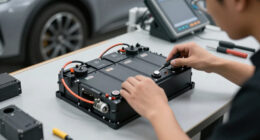
To improve your car diagnostics over time, you should keep detailed records of maintenance history, fuel consumption, and any unusual performance observations. Track warning lights, strange sounds, and handling changes to catch issues early. Monitor air quality and environmental factors like dust to spot potential problems with filters or engine health. Consistently recording these details helps you and your mechanic diagnose faster and prevent costly repairs. Keep exploring for more tips to maintain your vehicle’s health effectively.
Key Takeaways
- Track recurring issues and repair history to identify patterns and prioritize future diagnostics.
- Record vehicle performance changes, warning lights, and unusual sounds for context-aware troubleshooting.
- Monitor fuel efficiency and driving habits to detect early signs of mechanical or environmental problems.
- Log environmental factors like dust levels and air quality indicators that may affect engine or cabin health.
- Maintain detailed records of maintenance and repairs to facilitate accurate diagnostics over time.
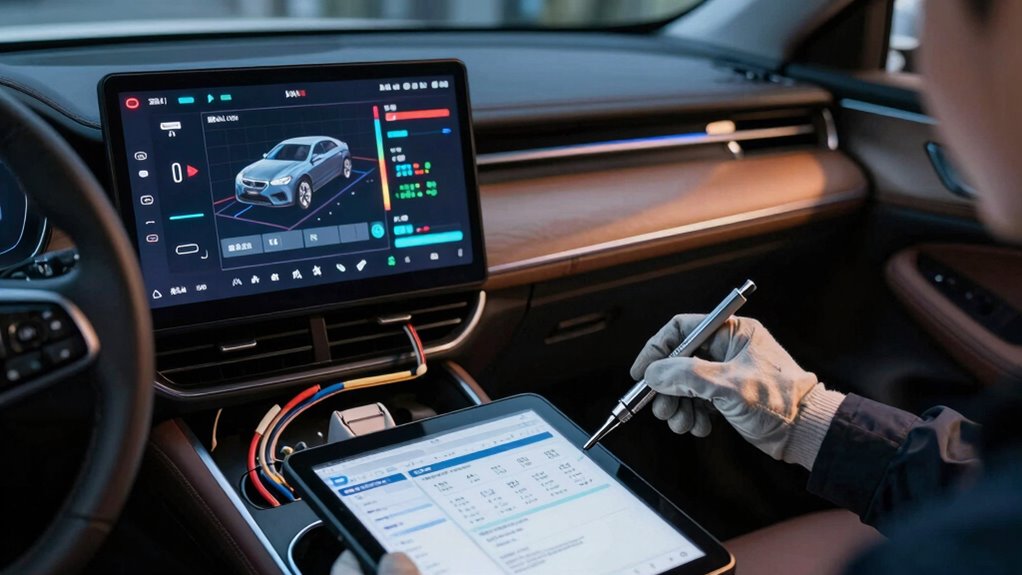
Keeping track of your car’s performance can greatly improve diagnostics over time, especially when you notice early signs of trouble. One of the most valuable things you can record is your vehicle’s maintenance history. This includes scheduled service appointments, parts replacements, oil changes, and any repairs. By maintaining a detailed log, you create a clear timeline of your car’s health, making it easier to identify patterns or recurring issues. For example, if your car frequently needs new spark plugs or has a history of brake problems, this information helps you and your mechanic diagnose problems faster. It also prevents unnecessary work, saving you money and time. Additionally, a well-kept maintenance record can alert you to parts nearing the end of their lifespan, allowing for proactive replacements before a breakdown occurs. Recognizing the importance of consistent record-keeping can further improve your diagnostic accuracy.
Tracking maintenance history helps diagnose issues faster, prevent unnecessary repairs, and keep your car running smoothly.
Fuel consumption is another critical data point to track regularly. Monitoring your fuel efficiency provides insights into your car’s overall condition, especially when it starts to deviate from normal performance. If your fuel consumption suddenly increases, it could indicate issues like a clogged air filter, tire misalignment, or engine problems. Conversely, consistent fuel usage helps confirm that your vehicle is running ideal. Recording your fuel consumption over time—by noting miles driven versus gallons purchased—allows you to spot subtle changes that may signal early stages of mechanical issues. This simple data can also assist in identifying driving habits that might be wasting fuel, such as excessive idling or aggressive acceleration. Recognizing vehicle performance trends can further enhance your understanding of your car’s health. Regularly reviewing this data can also help you identify fuel efficiency patterns, enabling more informed driving decisions.
Beyond these specific points, it’s beneficial to keep track of warning lights, unusual sounds, and noticeable changes in handling or acceleration. When you record these observations alongside maintenance history and fuel consumption, you create a thorough picture of your vehicle’s performance. This makes diagnostics more effective because your mechanic can access detailed data, reducing guesswork and enabling targeted repairs. Over time, this record-keeping becomes a valuable resource, helping you anticipate upcoming maintenance needs and avoid costly repairs. It also empowers you to take better care of your car, ensuring it runs smoothly and reliably for years to come. Incorporating dust and debris levels into your observations can also help identify potential issues with cabin or engine air quality.
In essence, diligent record-keeping—focusing on maintenance history and fuel consumption—turns your routine observations into powerful diagnostic tools. You’ll be able to catch early signs of trouble, understand your vehicle’s behavior better, and make informed decisions about repairs and maintenance. This proactive approach not only enhances your car’s longevity but also keeps you safe on the road. Recognizing microplastics in dust as a potential contributor to engine or cabin air quality can further inform your maintenance routine and improve your vehicle’s environment.

Vehicle Maintenance Log Book: Car Repair Journal / Automotive Service Record Book / Oil Change Logbook / Auto Expense Diary / Engine Autolog / Automobile, Truck Or Motorcycle Owner Gift Notebook
As an affiliate, we earn on qualifying purchases.
As an affiliate, we earn on qualifying purchases.
Frequently Asked Questions
How Often Should I Update My Diagnostic Records?
You should update your diagnostic records regularly, ideally every time you complete maintenance or repairs. Keep detailed entries of repair history and follow your vehicle’s maintenance schedules to guarantee accuracy. Doing this consistently helps identify patterns, anticipate future issues, and maintain peak performance. Frequent updates make your diagnostics more useful over time, providing valuable insights that can save you money and extend your car’s lifespan.
What Tools Are Best for Recording Diagnostic Data?
Forget about fancy gadgets—your smartphone with a good OBD-II scanner app, like Torque or OBD Link, is your best bet. Data logging becomes a breeze, and tool compatibility is key. These tools sync effortlessly with various devices, making recording diagnostic data straightforward. No need for complicated setups; just plug in, log data, and watch your car’s health history grow. Who knew monitoring could be this simple and fun?
Can Recorded Data Predict Future Car Issues Accurately?
Yes, recorded data can predict future car issues accurately when used for predictive maintenance. By analyzing trends over time, you identify patterns indicating potential failures. Ensuring data accuracy is vital, as precise information improves prediction reliability. With consistent monitoring and high-quality data, you can anticipate problems before they become serious, saving you money and preventing breakdowns. This proactive approach keeps your vehicle running smoothly and extends its lifespan.
How to Organize and Store Diagnostic Records Effectively?
Imagine your diagnostic records as a well-organized toolbox, ready for any repair. Keep clear records of maintenance schedules and repair histories, storing them digitally or in labeled folders. Regularly update these files, ensuring they’re accessible when needed. Use a consistent system so you can quickly track trends, predict issues, and make informed decisions, making your car’s health easier to manage over time.
Are There Privacy Concerns With Recording Diagnostic Data?
Yes, there are privacy concerns with recording diagnostic data, especially if it contains personal or sensitive information. You need to guarantee data security by using strong passwords and encryption to protect your records. Be aware of who has access to your diagnostic data, and consider the privacy policies of any apps or services you use. Regularly review your data security measures to keep your information safe and private.

ANCEL AD310 Classic Enhanced Universal OBD II Scanner Car Engine Fault Code Reader CAN Diagnostic Scan Tool, Read and Clear Error Codes for 1996 or Newer OBD2 Protocol Vehicle (Black)
- Diagnostic Capabilities: Read and clear engine trouble codes
- Recommended by Experts: Trusted by Scotty Kilmer and mechanics
- Live Data Monitoring: View live and freeze frame data
As an affiliate, we earn on qualifying purchases.
As an affiliate, we earn on qualifying purchases.
Conclusion
By consistently recording details like error codes, maintenance dates, and driving habits, you’ll build a valuable history for your car. For example, noticing a pattern of slight misfires before a major issue can help you catch problems early. Think of it as your car’s health journal—stopping minor issues from becoming costly repairs. Keep tracking, stay vigilant, and your diagnostics will become more accurate, saving you time and money in the long run.

Plug-in Home Monitor for Natural | Gas Fuel Concentration Changes, with High-Sensitivity Sensor, LED Display, Real-Time Readings and 85 dB Audible Alarm,withwith Natural | Gas Monitoring
- Real-Time Gas Concentration Monitoring: Displays current natural gas levels
- Loud Audible and Visual Alarm: 85 dB alert with flashing indicator
- High-Sensitivity Gas Sensor: Responsive detection around appliances
As an affiliate, we earn on qualifying purchases.
As an affiliate, we earn on qualifying purchases.
ANCEL AD310 Classic Enhanced Universal OBD II Scanner Car Engine Fault Code Reader CAN Diagnostic Scan Tool, Read and Clear Error Codes for 1996 or Newer OBD2 Protocol Vehicle (Black)
- Diagnostic Capabilities: Read and clear engine trouble codes
- Recommended by Experts: Trusted by Scotty Kilmer and mechanics
- Live Data Monitoring: View live and freeze frame data
As an affiliate, we earn on qualifying purchases.
As an affiliate, we earn on qualifying purchases.