
To watch for battery and charging issues in high-mileage cars, regularly inspect the battery terminals for white or bluish corrosion, which can hinder electrical flow. Keep an eye on warning lights like the battery symbol or dim headlights, and listen for unusual noises from the engine bay. Use a multimeter to check if your battery reads around 12.6 volts when off and 13.7–14.7 volts when running. Continuing with these tips will help you stay ahead of problems before they leave you stranded.
Key Takeaways
- Regularly inspect battery terminals for corrosion and clean with baking soda and water.
- Test the battery voltage with a multimeter; 12.6V when off indicates a healthy battery.
- Monitor electrical components for flickering or malfunctioning features, especially during high-mileage use.
- Listen for unusual noises like whining or growling from the engine bay, signaling belt or alternator issues.
- Check dashboard warning lights related to the charging system during routine maintenance checks.
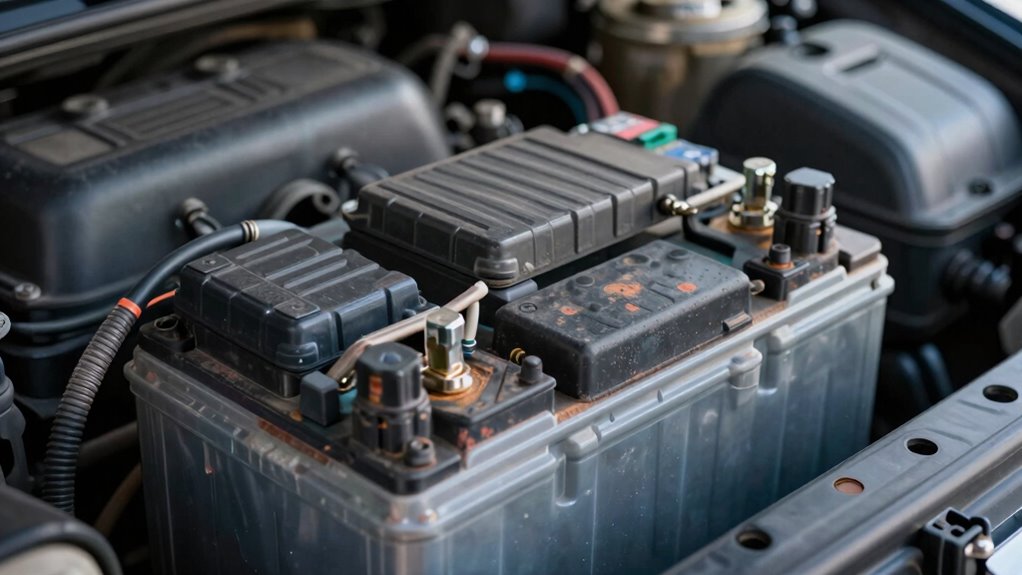
As your high-mileage car ages, keeping an eye on the battery and charging system becomes essential to prevent unexpected breakdowns. Over time, issues like battery corrosion and alternator failure can quietly develop, causing frustrating problems if not caught early. Regularly inspecting your battery terminals for corrosion is one of the simplest yet most effective ways to stay ahead. Corrosion appears as a white or bluish crust around the terminals and can interfere with the flow of electricity, making it harder for your vehicle to start or maintain proper function. If you notice corrosion, cleaning the terminals with a mixture of baking soda and water can often restore good contact, but don’t forget to wear gloves and eye protection for safety.
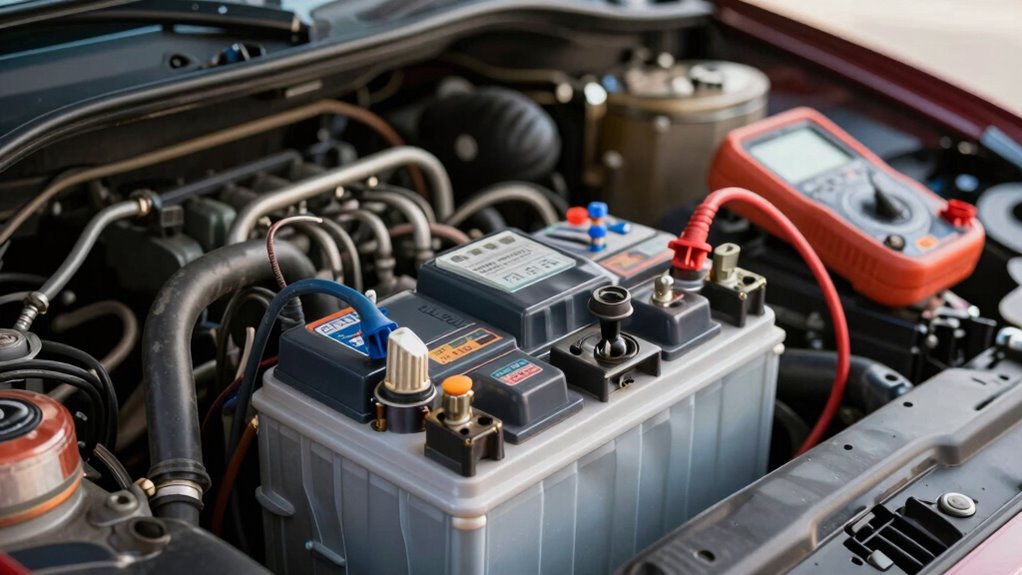
Pay close attention to warning signs that your charging system might be struggling. If your headlights seem dimmer than usual or your dashboard warning light, typically shaped like a battery, flickers on, it’s a sign that your alternator could be failing. The alternator is responsible for charging the battery while the engine runs, so if it starts to fail, your battery can’t get recharged properly. This often results in your car struggling to start, especially after sitting overnight, or electrical components like the radio or power windows acting up. Regularly testing your battery and alternator with a multimeter can help identify issues before they become critical. A healthy battery should read around 12.6 volts when the car is off, and around 13.7 to 14.7 volts when running, indicating the alternator is working correctly.
Other signs of charging problems include a slow crank when starting or a whine or growling noise from the engine bay, which could suggest a failing alternator belt or bearing. If left unchecked, a failing alternator can cause your battery to drain completely, leading to unexpected stalls or inability to start altogether. To avoid these problems, make it a habit to have your charging system inspected during routine maintenance. Keep an eye on the battery’s condition, ensure terminal connections are tight and clean, and listen for unusual noises or warning lights. Catching issues early can save you from being stranded and can extend the life of your high-mileage vehicle, keeping it running smoothly well into the future.

ANCEL BA101 Car Battery Tester, 12V Digital Automotive Alternator Meter Diagnostic Tool,100-2000 CCA Load Capacity, Charging & Cranking Analyzer for Truck, Boat, RV, Marine Vehicle, and More
Catch Battery Problems Early: Featured in two videos by Project Farm, a popular YouTube channel with millions of…
As an affiliate, we earn on qualifying purchases.
As an affiliate, we earn on qualifying purchases.
Frequently Asked Questions
How Often Should I Replace My High-Mileage Car’s Battery?
You should replace your high-mileage car’s battery every 3 to 5 years, depending on its battery lifespan and overall condition. Regular charging system maintenance helps prolong battery life, but even with good care, batteries wear out over time. Keep an eye on warning signs like slow starts or dim lights, and have your battery checked during routine maintenance. Replacing it proactively guarantees your vehicle stays reliable and prevents unexpected breakdowns.
Can Charging Problems Cause Engine Stalls?
Charging problems can definitely cause engine stalls. If your charging circuits have issues or there’s battery corrosion, your alternator might not supply enough power, leading to insufficient electrical energy for the engine to run smoothly. This can cause your engine to stall unexpectedly. Regularly inspect for battery corrosion and guarantee your charging circuits are functioning properly to prevent stalls and keep your high-mileage car running reliably.
Are Aftermarket Batteries Reliable for High-Mileage Vehicles?
Aftermarket batteries can be reliable for high-mileage vehicles, but their lifespan varies depending on brand and quality. You should research the aftermarket reliability of specific brands, as some offer durable options comparable to OEM batteries. Keep in mind, a high-mileage car’s battery may wear out faster, so regular inspections and testing are essential. Choosing a reputable brand and proper installation can help guarantee your aftermarket battery lasts longer and keeps your vehicle running smoothly.
What Are Signs of Alternator Failure in High-Mileage Cars?
Imagine your car’s electrical system as a symphony—when the alternator falters, the music loses rhythm. Signs of alternator failure include dimming headlights, flickering dashboard lights, and a warning light. You might notice battery corrosion around terminals or a dead battery despite a new one. If these signs appear, it’s time for a mechanic to check the alternator, preventing unexpected breakdowns and safeguarding your high-mileage ride.
How Does Temperature Affect Battery Performance in High-Mileage Cars?
Temperature fluctuations can notably impact your high-mileage car’s battery performance. Cold weather causes battery corrosion, reducing the ability to hold charge, while hot temperatures accelerate fluid evaporation, leading to faster wear. You might notice difficulty starting your car or dimming lights. To keep it running smoothly, check for corrosion, especially during temperature changes, and consider maintaining proper fluid levels and insulation to protect your battery from extreme temperatures.

TKDMR Battery Terminal Cleaners (2 pcs),12 pcs Battery Terminal Anti-Corrosion Fiber Washers (6 Red & 6 Green) for Car Marine Battery
Quantity: comes with 10 pieces battery anti-corrosion washers(5 red & 5 green) and 2pcs Battery Terminal Cleaning Brush.
As an affiliate, we earn on qualifying purchases.
As an affiliate, we earn on qualifying purchases.
Conclusion
Keeping an eye on your high-mileage car’s battery and charging system means staying alert, noticing signs early, and acting quickly. Check the battery connections, test the alternator, and watch for warning lights or sluggish starts. By monitoring these essential components, you prevent unexpected breakdowns, extend your vehicle’s life, and enjoy peace of mind. Stay proactive, stay attentive, and keep your car running smoothly—because prevention always beats repair.
ANCEL BA101 Car Battery Tester, 12V Digital Automotive Alternator Meter Diagnostic Tool,100-2000 CCA Load Capacity, Charging & Cranking Analyzer for Truck, Boat, RV, Marine Vehicle, and More
Catch Battery Problems Early: Featured in two videos by Project Farm, a popular YouTube channel with millions of…
As an affiliate, we earn on qualifying purchases.
As an affiliate, we earn on qualifying purchases.

CRC 05023 Battery Cleaner with Acid Indicator – 11 Wt Oz.
Fleet and Vehicle Maintenance
As an affiliate, we earn on qualifying purchases.
As an affiliate, we earn on qualifying purchases.