
If your check engine light flashes or stays steady along with severe symptoms like engine stalling, power loss, or strange noises, you should pull over immediately. Codes such as P0300 (misfire), P0172 (rich mixture), P0131 (oxygen sensor issue), or P0700 (transmission control system) often indicate urgent problems. Ignoring these signs can cause serious damage. Keep going, and you’ll find out more about which codes mean you need to stop now.
Key Takeaways
- A flashing check engine light indicates a severe issue requiring immediate pull-over and inspection.
- Error codes like P0300 (misfire), P0700 (transmission), or P0171 (system too lean) may signal urgent problems.
- Continuous or flashing light with rough idling, loss of power, or noises warrants pulling over immediately.
- Certain codes suggest potential engine or safety hazards, such as P0420 (catalytic converter efficiency) or P0128 (coolant temperature).
- Always consult a diagnostic tool to interpret error codes and determine if immediate action is necessary.
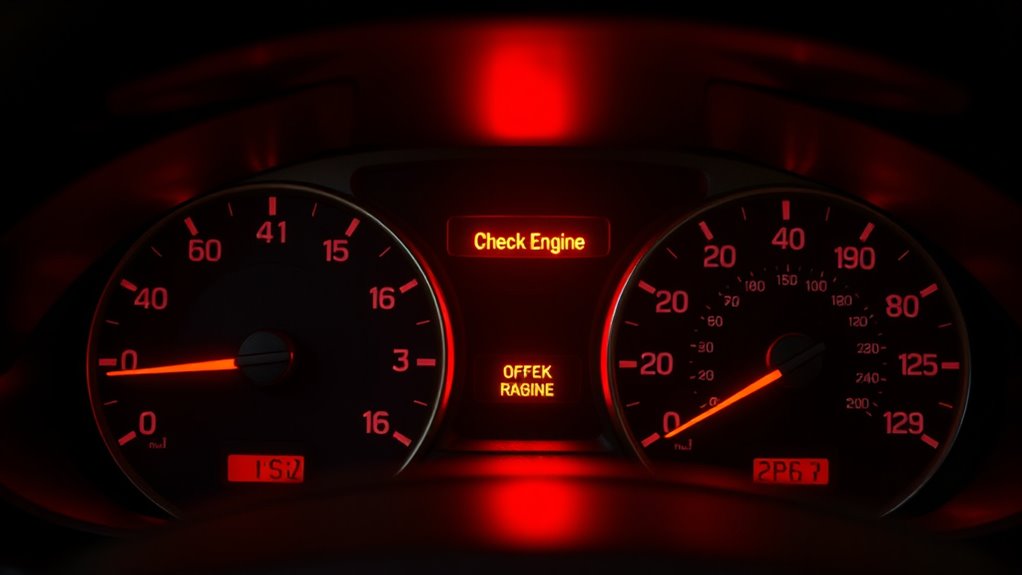
When the check engine light illuminates on your dashboard, it’s a clear signal that your vehicle’s onboard computer has detected a potential issue. This warning can stem from a variety of problems, but many are related to the emission system or sensor diagnostics. Understanding what the light signifies can help you decide whether to keep driving or pull over immediately.
A check engine light signals a potential issue, often related to emissions or sensors, requiring prompt attention.
The emission system is responsible for controlling pollutants released into the atmosphere, ensuring your vehicle runs cleanly and efficiently. If there’s a problem here, your car’s computer will trigger the check engine light. Common issues involve faulty oxygen sensors, catalytic converters, or leaks in the exhaust system. These components work together to monitor and regulate emissions, and when one fails, it can cause increased emissions, reduced fuel economy, or engine performance issues. Sensor diagnostics play an essential role in this process, as sensors constantly monitor parameters like oxygen levels, airflow, and temperature. If a sensor reports abnormal readings, the system flags it, illuminating the check engine light. Proper sensor functioning is vital for maintaining emission standards and optimal engine performance.
When this light comes on, it’s tempting to ignore it or keep driving, but that can be risky. Some emission system faults, particularly those involving sensors, can cause your vehicle to run inefficiently or damage other components if left unchecked. If the warning is flashing or accompanied by rough idling, strange noises, or a significant drop in power, it’s time to pull over immediately. These symptoms indicate a more severe problem that could lead to engine damage or failure.
In many cases, the check engine light relates to sensor diagnostics—faulty sensors or wiring issues that give false readings or fail to provide data altogether. This can lead to incorrect fuel mixture adjustments, which may increase emissions or cause your vehicle to run poorly. Sometimes, a simple sensor reset or replacement is enough to fix the issue, but diagnostics are necessary to pinpoint the exact cause.
If the light is steady and your vehicle is running normally, you might have some time before urgent action is needed. Still, scheduling a diagnostic check with a mechanic is wise. They can use specialized tools to read the error codes stored in your vehicle’s computer, giving precise insight into whether the emission system needs repair or if sensor diagnostics reveal a faulty component. Ignoring the warning can result in more costly repairs down the line or failed emissions tests, so don’t delay when the check engine light signals trouble.
Frequently Asked Questions
Can a Flashing Check Engine Light Be Harmless?
A flashing check engine light isn’t harmless; it indicates a serious issue like engine misfire that can damage your catalytic converter. Using diagnostic tools, you can identify warning lights and codes causing the problem. Don’t ignore it—pull over safely and get your vehicle checked promptly. Ignoring a flashing light risks costly repairs, so always treat it as urgent and seek professional help immediately to prevent further damage.
How Long Can I Drive With a Solid Check Engine Light?
Ever wonder how long you can safely drive with a solid check engine light? Usually, it’s okay to drive a short distance, but you should get your engine diagnostics checked soon. A dashboard warning indicates something may be wrong, but it’s not always urgent. Ignoring it could lead to more damage or costly repairs. Keep an eye on the light, and don’t delay your visit to a mechanic.
Are All Engine Codes Equally Urgent to Address?
Not all engine codes are equally urgent. You should perform a severity assessment based on diagnostic procedures to determine if immediate action’s needed. Some codes indicate minor issues, like a loose gas cap, while others point to serious problems, such as engine misfires or emissions system failures. If a code suggests a critical issue, you must pull over and seek help right away to prevent further damage or safety risks.
Do Different Vehicle Makes Display Check Engine Lights Differently?
Imagine your vehicle dashboard as a vigilant lighthouse, warning you of trouble ahead. Different makes display check engine lights uniquely—some with simple icons, others with detailed warning indicators. While the core message remains the same, the visual cues vary, so familiarize yourself with your vehicle’s dashboard symbols. This way, you can interpret warning indicators accurately and decide whether to pull over immediately or seek help.
Can a Check Engine Light Turn off on Its Own?
Yes, your check engine light can turn off on its own if the emission system detects no ongoing issues or if a sensor malfunction temporarily clears. Modern vehicles have self-diagnostic systems that may reset the light after a drive cycle without problems. However, if the light remains off but a sensor malfunction or emission system issue persists, it’s best to get your vehicle checked to prevent further damage or emissions violations.
Conclusion
When your check engine light flashes, when it stays steady, when it signals danger — don’t ignore it. Recognize the codes that demand immediate action, understand what they mean, and know when to pull over. Stay alert, stay cautious, and prioritize safety above all. Because your car’s warning lights aren’t just symbols; they’re signals that you need to stop, assess, and act. Trust your instincts, heed the codes, and drive safely.