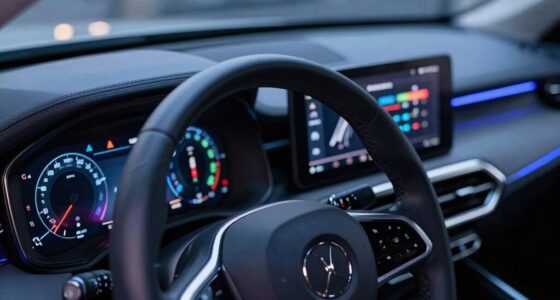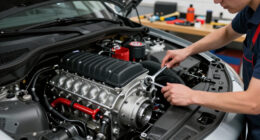
Seeing codes gives you clues about possible issues, but diagnosing problems means analyzing those clues in context. You need to check sensor data, observe patterns, and consider external factors like temperature or electrical interference that can skew readings. Focusing only on codes can lead to misdiagnosis. To truly understand what’s wrong and find the root cause, you must connect the dots and interpret the information carefully. Keep exploring to learn how to turn these clues into accurate repairs.
Key Takeaways
- Reading codes identifies potential issues but doesn’t confirm the root cause or severity of the problem.
- Diagnosing problems involves analyzing sensor data, error patterns, and external factors for an accurate fix.
- Codes are clues; diagnosis requires interpreting real-time sensor readings and environmental influences.
- Error codes can be triggered by multiple causes; diagnosis distinguishes the actual fault through comprehensive analysis.
- Proper diagnosis combines code data with contextual understanding to determine appropriate repairs.

Many drivers confuse reading diagnostic trouble codes with actually diagnosing car problems, but they’re not the same. When your check engine light appears, you might think pulling the code gives you a full picture of what’s wrong, but that’s only part of the process. Reading a code is like getting a clue; it points you toward a system or component that may be malfunctioning, but it doesn’t tell you the root cause or the severity of the issue. That’s where real diagnosis comes in, involving a deeper understanding of how sensor readings and error patterns interact.
Sensor readings are vital in diagnosing problems because they provide real-time data about how your car’s systems are functioning. For example, the oxygen sensor’s readings inform the engine control unit (ECU) whether the air-fuel mixture is correct. If the sensor detects an abnormal reading, it could trigger a trouble code, but it doesn’t necessarily mean the sensor itself is faulty. Sometimes, the error stems from a clogged fuel injector or a vacuum leak, which causes the sensor to report inconsistent data. To truly diagnose, you need to analyze how sensor readings fluctuate over time and under different conditions, rather than just relying on a static code. Understanding sensor behavior is essential for accurate diagnosis because external factors like temperature or electrical interference can influence readings.
Error patterns are the key to understanding whether a problem is isolated or part of a larger issue. For instance, if the check engine light comes on only during cold starts or only at high speeds, you’re observing a pattern that helps narrow down the potential causes. Recognizing these patterns requires you to look beyond the code and consider how different systems interact. Do multiple sensors report similar anomalies? Are certain error codes recurring after specific driving conditions? These patterns can reveal whether the issue is a failing sensor, a wiring problem, or a mechanical failure.
Effective diagnosis involves piecing together sensor readings and error patterns like a puzzle. You need to verify whether the data is consistent with known failure modes, cross-check other sensor outputs, and interpret how errors evolve over time. This process requires technical knowledge and experience because a single error code can have multiple causes, and sensor readings can be affected by external factors such as temperature or electrical interference. Additionally, understanding water-related issues can be crucial in diagnosing problems, especially if corrosion or leaks affect sensor performance. By understanding the context behind the code—how sensor readings behave and what error patterns emerge—you can identify the real problem. That’s the difference between simply reading codes and actually diagnosing car problems: it’s about interpreting data in a way that guides you to a precise, effective fix.

FOXWELL NT301 OBD2 Scanner Live Data Professional Mechanic OBDII Diagnostic Code Reader Tool for Check Engine Light
- Read Fault Codes: Requires ignition on and check engine light on
- Vehicle CEL Diagnosis: Read DTCs, reset MIL, retrieve VIN
- Live Data Graphing: Monitor sensor data in real-time
As an affiliate, we earn on qualifying purchases.
As an affiliate, we earn on qualifying purchases.
Frequently Asked Questions
How Can I Improve My Diagnostic Accuracy With Complex Vehicle Issues?
To improve your diagnostic accuracy with complex vehicle issues, focus on precise sensor calibration and thorough error interpretation. Always verify sensor readings against specifications, and don’t rely solely on codes—use live data to spot inconsistencies. Develop your troubleshooting skills by studying common error patterns and understanding how sensors influence system behavior. Practice methodical diagnosis, document findings carefully, and stay updated on vehicle technology to enhance your problem-solving effectiveness.
Are There Specific Tools Recommended for Diagnosing Modern Electronic Systems?
Think of diagnosing modern electronic systems as wielding a high-tech scalpel—precision is everything. You’ll want a dedicated scan tool compatible with your vehicle’s make and model, like an OEM or advanced aftermarket scanner. Regularly maintain your tools and keep software updates current to guarantee accuracy. Proper tool maintenance and up-to-date software help you cut through complex diagnostics quickly, giving you confidence in pinpointing problems without digging through unnecessary data.
How Often Should Diagnostic Equipment Be Calibrated for Accurate Readings?
You should calibrate your diagnostic equipment regularly, ideally every six months, to guarantee ideal calibration frequency. This practice maintains equipment precision, giving you accurate readings during diagnostics. Factors like usage frequency and environmental conditions can influence calibration needs, so monitor performance closely. Regular calibration prevents errors, saves time, and improves your ability to diagnose problems effectively. Staying proactive with calibration helps keep your tools reliable and your troubleshooting precise.
What Training Is Necessary to Become Proficient in Vehicle Diagnostics?
Like a detective solving a mystery, you need proper diagnostic training to become proficient in vehicle diagnostics. You should pursue technical courses that focus on electrical systems, engine management, and scan tool operation. Hands-on skill development is essential, so practice with real-world scenarios. Additionally, staying current with manufacturer updates and tools enhances your expertise. With dedication and continuous learning, you’ll develop the diagnostic skills necessary to accurately identify and resolve vehicle issues.
How Do Environmental Factors Affect Diagnostic Code Readings and Interpretations?
Environmental interference can profoundly affect diagnostic code readings because it disrupts sensor sensitivity, leading to inaccurate data. You might see false codes or miss real issues if your sensors pick up noise from external sources like electromagnetic interference or extreme temperatures. To guarantee accurate interpretations, you need to take into account these environmental factors, regularly check sensor connections, and be aware of how environmental interference can distort sensor signals, affecting your diagnosis.
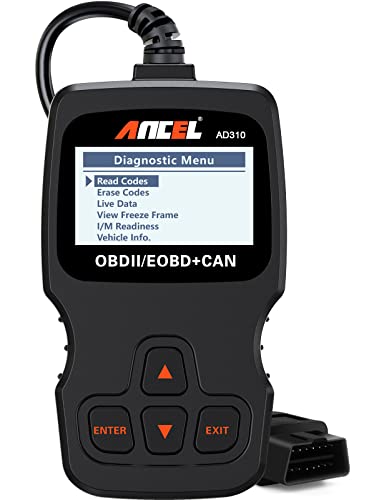
ANCEL AD310 Classic Enhanced Universal OBD II Scanner Car Engine Fault Code Reader CAN Diagnostic Scan Tool, Read and Clear Error Codes for 1996 or Newer OBD2 Protocol Vehicle (Black)
- Diagnostic Capabilities: Read and clear engine trouble codes
- Recommended by Experts: Trusted by Scotty Kilmer and mechanics
- Live Data Monitoring: View live and freeze frame data
As an affiliate, we earn on qualifying purchases.
As an affiliate, we earn on qualifying purchases.
Conclusion
Understanding the difference between reading codes and diagnosing problems is essential for effective vehicle repair. While reading codes gives you clues, diagnosing requires your skill to interpret those clues and find the root cause. Did you know that technicians accurately diagnose issues nearly 85% of the time when they combine both skills? Mastering this balance guarantees you’re not just fixing symptoms but solving problems for good, saving time and money in the process.
ANCEL AD310 Classic Enhanced Universal OBD II Scanner Car Engine Fault Code Reader CAN Diagnostic Scan Tool, Read and Clear Error Codes for 1996 or Newer OBD2 Protocol Vehicle (Black)
- Diagnostic Capabilities: Read and clear engine trouble codes
- Recommended by Experts: Trusted by Scotty Kilmer and mechanics
- Live Data Monitoring: View live and freeze frame data
As an affiliate, we earn on qualifying purchases.
As an affiliate, we earn on qualifying purchases.
ANCEL AD310 Classic Enhanced Universal OBD II Scanner Car Engine Fault Code Reader CAN Diagnostic Scan Tool, Read and Clear Error Codes for 1996 or Newer OBD2 Protocol Vehicle (Black)
- Diagnostic Capabilities: Read and clear engine trouble codes
- Recommended by Experts: Trusted by Scotty Kilmer and mechanics
- Live Data Monitoring: View live and freeze frame data
As an affiliate, we earn on qualifying purchases.
As an affiliate, we earn on qualifying purchases.