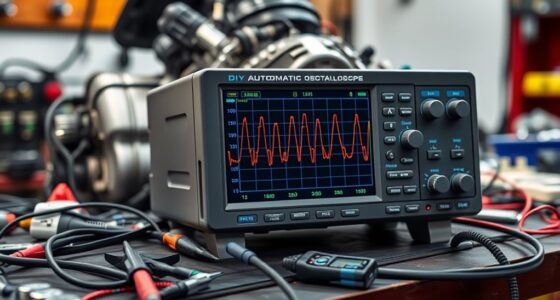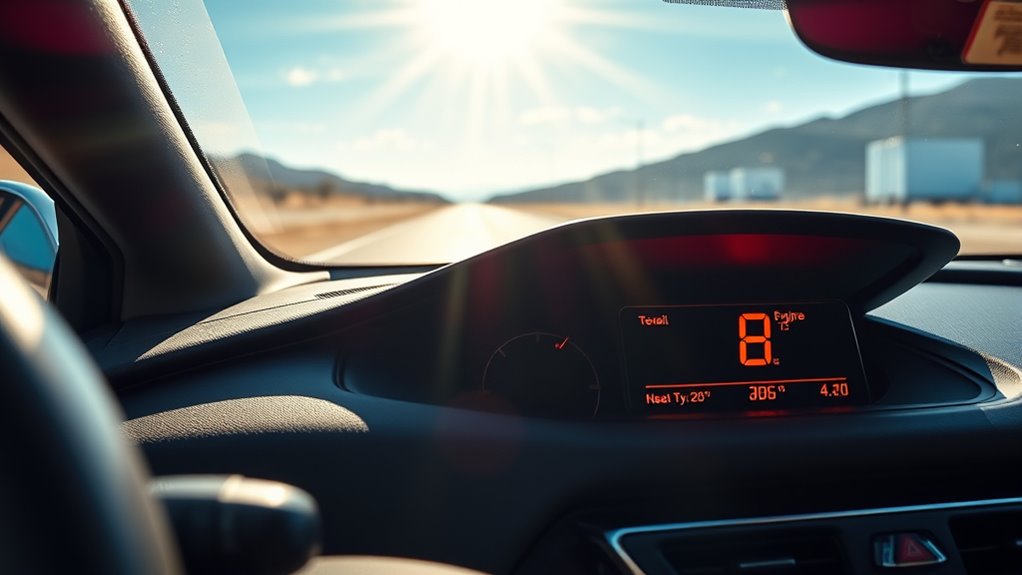

To keep an eye on your engine heat during hot days, use your OBD scanner to monitor coolant temperature in real-time. Make sure your sensor is working correctly by running diagnostics, so the data is accurate. Watch for rising temps or warning signs like steam or coolant leaks. Staying alert helps you catch problems early and prevent damage. Keep exploring to learn more about maintaining your engine’s health when the heat rises.
Key Takeaways
- Use an OBD scanner to monitor real-time coolant temperature data during hot weather to prevent engine overheating.
- Regularly run diagnostics on the coolant temperature sensor to ensure accurate readings and avoid false alarms.
- Compare OBD coolant temperature readings with normal engine temperature ranges for early detection of overheating issues.
- Watch for warning signs like rising gauges, steam, or coolant loss, and use OBD data to verify potential problems.
- Maintain cooling system components and respond promptly to high temperature readings to prevent engine damage.

Monitoring your engine’s heat through the On-Board Diagnostics (OBD) system allows you to keep a close eye on critical engine temperatures in real-time. When the weather heats up, keeping an eye on the coolant temperature becomes even more essential, as high ambient temperatures can push your engine closer to its thermal limits. The OBD system provides you with instant access to this data, helping you spot potential issues before they escalate into costly repairs. By regularly checking the coolant temperature readings, you can determine whether your engine is running too hot, which could indicate underlying problems such as coolant leaks, a faulty radiator fan, or insufficient coolant levels.
Sensor diagnostics play a fundamental role in this process. The coolant temperature sensor, for instance, relays key information to your vehicle’s computer, which then displays it on your OBD interface. If this sensor malfunctions, you might get inaccurate readings, leading you to overlook real problems or chase false alarms. That’s why it’s essential to verify your coolant temperature sensor is functioning correctly. Many OBD scanners can run diagnostics on sensors, helping you identify whether the sensor itself is at fault or if the issue lies elsewhere in the cooling system. Regular sensor diagnostics allow you to confirm the accuracy of the temperature data, ensuring you’re making decisions based on reliable information.
Additionally, understanding projector technology can help you better interpret the accuracy of digital readouts and sensor performance, as both rely on precise components for optimal function. During hot days, monitoring your engine’s heat becomes especially critical if you notice warning signs like a rising temperature gauge, steam from the hood, or a sudden drop in coolant levels. Using your OBD scanner, you can quickly check the coolant temperature reading and compare it against normal operating ranges. If the temperature creeps higher than recommended, it’s a sign you need to take action—whether that’s pulling over, inspecting the cooling system, or scheduling repairs. Early detection through sensor diagnostics and real-time data helps prevent overheating, which can cause severe damage like warped heads or blown head gaskets.
Frequently Asked Questions
Can OBD Devices Measure Oil Temperature Too?
Yes, OBD devices can measure oil temperature if your vehicle has an oil sensor that reports this data. Many advanced OBD scanners display oil temperature alongside engine temperature on the app or device interface. You can compare it to your vehicle’s temperature gauge to monitor oil health, especially on hot days. Just verify your vehicle’s OBD system supports oil temperature readings, and your device can access that specific data.
How Often Should I Check Engine Temperature During a Hot Day?
On a scorching day, you should check your engine temperature every 10 to 15 minutes. While driving, keep an eye on the engine coolant temperature via your OBD device; if it nears the red zone, activate the radiator fan or pull over. Don’t wait until your engine overheats—prompt action helps prevent damage, especially when the heat is relentless and the radiator fan struggles to keep things cool.
Do All Cars Support Real-Time Engine Heat Monitoring?
Not all cars support real-time engine heat monitoring due to sensor compatibility and device limitations. Some vehicles lack the necessary sensors or OBD system features to display engine temperature in real-time. Before you rely on a device, check your car’s specifications and compatibility. If your vehicle doesn’t support it, you might need an aftermarket sensor or alternative methods to monitor engine heat, especially during hot days.
What Are the Signs of Overheating Beyond Temperature Readings?
If your engine is overheating, watch for signs like steam from the hood, a burning smell, or the engine warning light. You might also notice a drop in coolant levels, which can cause the cooling system to fail. Pay attention to increased engine temperature readings, strange noises, or reduced performance. These signs indicate your cooling system isn’t working properly, and you should pull over and check coolant levels immediately.
Is There a Recommended Safe Engine Temperature Threshold?
You should keep your engine temperature within the safe operating range of 195°F to 220°F to prevent overheating. The engine temperature limits vary slightly depending on your vehicle, but exceeding 240°F indicates a problem. Always monitor your engine’s temperature gauge or OBD data, and if it approaches or exceeds the upper limit, pull over promptly. Staying within these engine temperature limits helps make certain your engine runs smoothly and avoids damage.
Conclusion
So, next hot day, don’t just sweat in traffic—check your engine temp with OBD. It’s funny how we trust technology to keep us cool, but forget it’s also warning us when things get too hot to handle. Ignoring those readings might turn your smooth ride into a fiery disaster. So, stay ahead of the heat, keep an eye on that gauge, and remember: your engine’s temp is the only thing that shouldn’t be “hot” today.