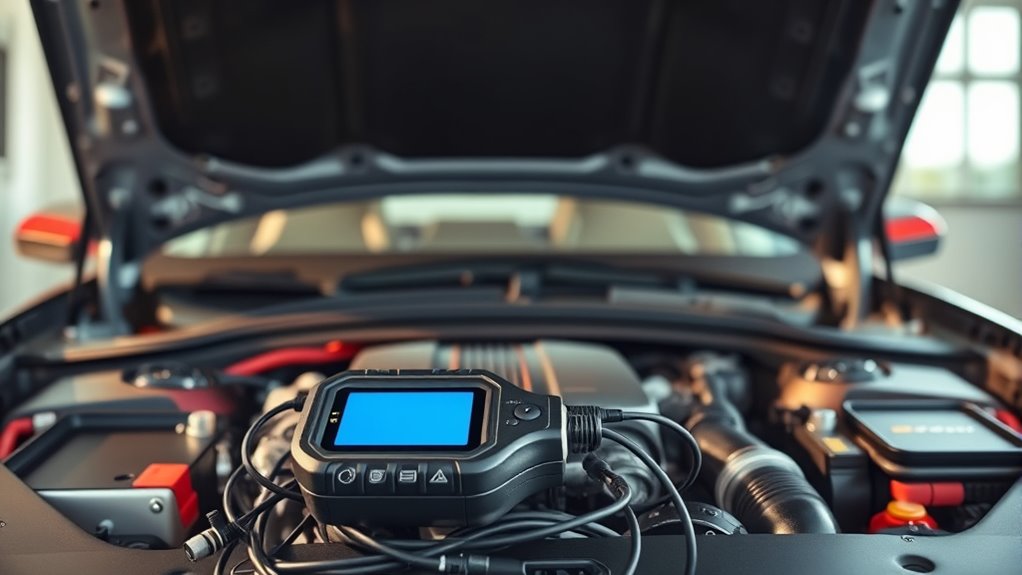

With a $20 scanner, you can identify why your check engine light is on by reading specific codes. You can diagnose engine misfires by checking error codes linked to spark plugs or coils. It helps pinpoint fuel system issues like low pressure or clogged injectors. You can also spot problems with emission components, such as oxygen sensors or the catalytic converter. Plus, it assists in troubleshooting sensor faults by checking wiring and sensor signals—discover more tips to keep your car running smoothly.
Key Takeaways
- Detects check engine light codes indicating issues like faulty oxygen sensors or catalytic converters.
- Identifies engine misfires by revealing misfire codes associated with specific cylinders.
- Monitors fuel system health through fuel pressure readings and injector performance data.
- Diagnoses emission system problems, including oxygen sensor and catalytic converter efficiency.
- Reveals sensor malfunctions by reading error codes and live data for sensors like oxygen and MAP.
Identifying Check Engine Light Codes
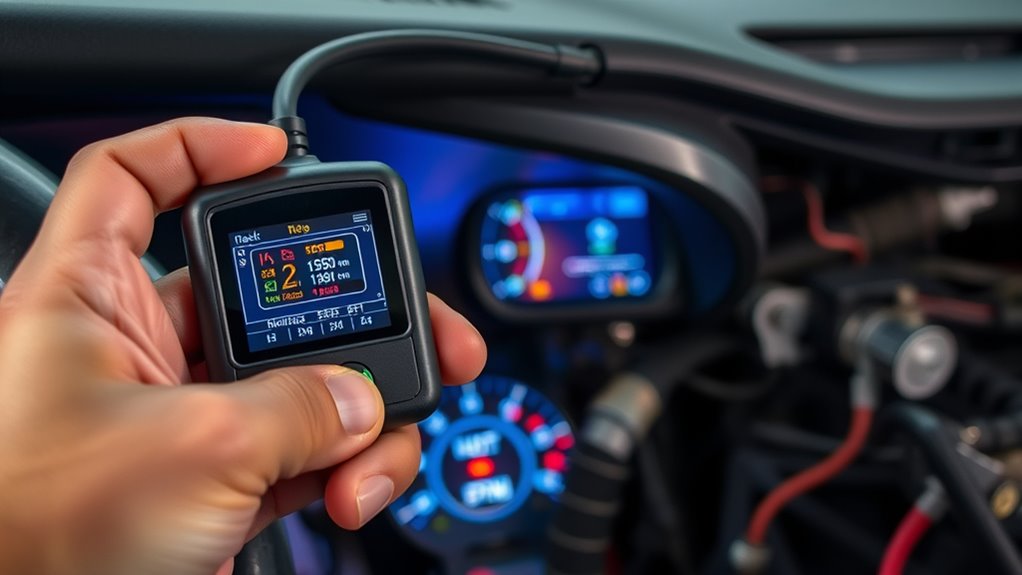
When the check engine light comes on, it’s your car’s way of signaling that something needs attention. Using a $20 scanner, you can easily identify specific codes that point to issues like faulty oxygen sensors or a failing catalytic converter. These codes help pinpoint whether your engine’s air-fuel mixture isn’t ideal or if emissions systems aren’t functioning properly. For example, a code related to oxygen sensors might indicate they’re sending incorrect data, causing your vehicle to run inefficiently. Similarly, a catalytic converter code signals it’s not converting exhaust gases effectively. By reading these codes, you gain insight into what’s triggering the warning light, allowing you to decide whether a simple fix or professional repair is needed. Understanding how these codes relate to your vehicle’s overall health can help you make informed decisions on repairs or maintenance. Additionally, recognizing the significance of diagnostic codes can guide you in prioritizing repairs and avoiding further engine issues. Being aware of common causes of engine trouble can enable you to perform basic troubleshooting and prevent minor issues from escalating, especially when you understand the role of sensors in your vehicle’s operation. It’s also helpful to know that vetted sources can provide reliable information on interpreting these codes and diagnosing problems effectively.
Diagnosing Engine Misfires
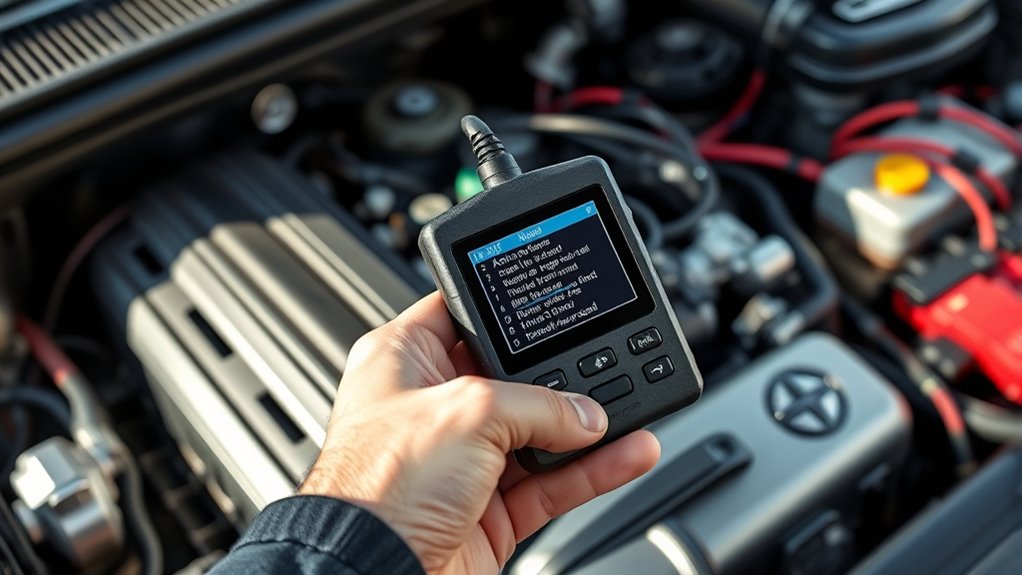
Engine misfires can cause your vehicle to run roughly, hesitate, or stall unexpectedly. When diagnosing, your $20 scanner can reveal misfire codes linked to specific cylinders. Start by checking the spark plugs; worn or fouled plugs can cause weak sparks, leading to misfires. The ignition coil supplies the spark needed for combustion, so if it’s faulty, the cylinder won’t fire properly. Use the scanner to identify which cylinder is misfiring by its code, then inspect that spark plug and ignition coil. If the spark plug looks worn or damaged, replace it. If the ignition coil is suspect, swapping it with a different cylinder’s coil can help confirm if it’s the source of the misfire. This process is simple and cost-effective with a basic scanner. Additionally, understanding the importance of color accuracy in your vehicle’s sensors can help diagnose issues related to engine performance and emissions. Recognizing common diagnostic trouble codes can also streamline the troubleshooting process and save you time. Furthermore, being aware of sensor calibration is essential for ensuring accurate diagnostics and efficient engine operation.
Detecting Fuel System Issues

Ever wonder if your fuel system is causing rough running or poor acceleration? Your $20 scanner can help you check fuel pressure, a key indicator of fuel system health. Connect it to your vehicle’s OBD port and look for trouble codes related to fuel delivery. Low fuel pressure can point to a failing fuel pump or a clogged fuel filter. You might also notice issues with fuel injectors, which spray fuel into the engine. If they’re dirty or malfunctioning, your engine won’t get the proper amount of fuel, causing rough idling or hesitation. By monitoring fuel pressure readings and checking for injector-related codes, you can identify fuel system problems early. This simple step can save you time and money before more serious damage occurs. Additionally, understanding how your vehicle’s fuel system components work can help you better interpret scanner readings and diagnose issues more effectively. Recognizing fuel pressure fluctuations can alert you to developing problems before they lead to breakdowns. Knowing how your vehicle’s role of fuel injectors in delivering fuel allows you to recognize symptoms of injector problems more easily. Regularly inspecting fuel system maintenance can prevent many issues from escalating into costly repairs. Keeping an eye on fuel filter condition as part of routine maintenance ensures consistent fuel flow and engine performance.
Monitoring Emission System Problems
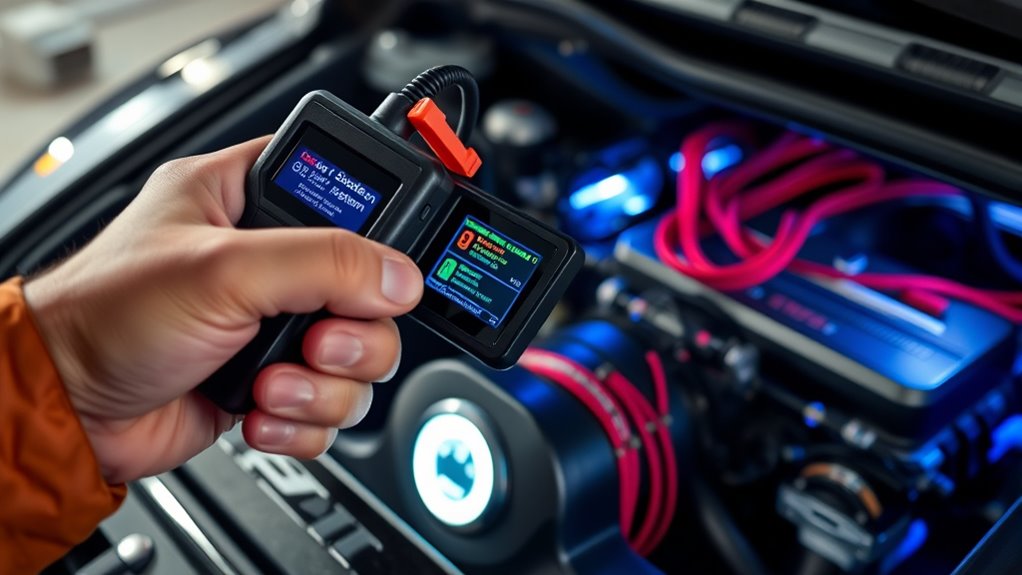
Monitoring your vehicle’s emission system is a key step in diagnosing overall engine performance. Your scanner can reveal issues with oxygen sensors, which measure exhaust gases and help optimize fuel combustion. If these sensors malfunction, you might see increased emissions or poor fuel economy. The scanner also checks the catalytic converter’s efficiency, ensuring it properly reduces harmful pollutants. A failing catalytic converter can cause your vehicle to fail emissions tests and run less smoothly. Additionally, understanding deep-sky imaging techniques can improve your ability to diagnose subtle engine issues visually. By regularly monitoring these components, you can catch problems early before they lead to costly repairs or environmental harm. Keep an eye on the emission system’s health with your scanner, and you’ll maintain better engine performance and stay compliant with emission standards. Proper diagnostics can help you identify issues before they escalate into expensive repairs or environmental violations.
Troubleshooting Sensor Malfunctions
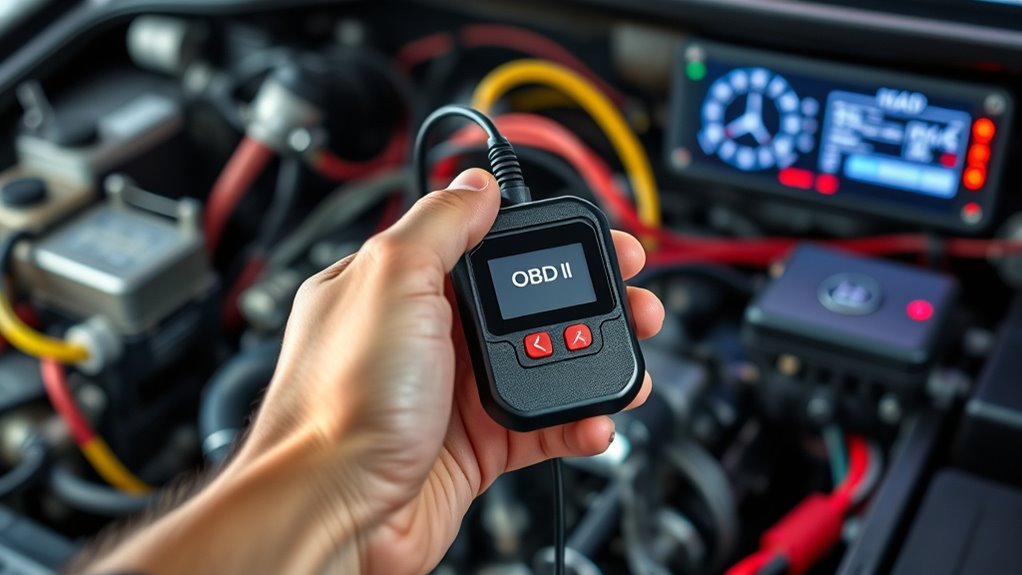
When a sensor malfunctions, it can cause your vehicle to run inefficiently or trigger warning lights on the dashboard. To troubleshoot, start with a wiring inspection—check for loose connections, corrosion, or damaged wires that could disrupt signals. Next, consider sensor calibration; sometimes, sensors need to be reset or recalibrated to ensure accurate readings. Use your scanner to read error codes related to specific sensors, like the oxygen or MAP sensor. Here are some key steps:
Malfunctioning sensors can cause poor performance; check wiring, calibrate, and read error codes to troubleshoot effectively.
- Inspect wiring harnesses for corrosion or damage
- Clear error codes to see if issues recur
- Verify sensor signals with your scanner’s live data
- Replace faulty sensors as indicated by codes
- Re-calibrate sensors after replacement
- Remember that sensor calibration is crucial for maintaining proper engine performance and fuel efficiency. Regularly checking sensor connections can prevent many common issues before they affect your vehicle’s operation. Additionally, understanding error codes can help you quickly identify which sensor or component may be at fault, saving you time and money. Being familiar with sensor troubleshooting techniques can greatly improve your ability to diagnose problems early. Following these steps helps pinpoint sensor issues quickly and efficiently.
Frequently Asked Questions
Can a Cheap Scanner Fix My Car Problems Automatically?
No, a cheap scanner can’t automatically fix your car problems. It simply reads error codes, but sensor limitations and compatibility concerns mean it may not detect every issue or work with all vehicles. You’ll need to interpret the data yourself or seek professional help for repairs. The scanner is a useful starting point, but it doesn’t replace the need for a mechanic or more advanced diagnostic tools.
How Accurate Are $20 Scanners Compared to Professional Tools?
$20 scanners aren’t as accurate as professional diagnostics because of their limitations. They can identify basic issues, but they often miss complex problems or give false readings. You might get helpful insights, but for precise diagnostics, a professional tool is vital. If you’re serious about troubleshooting, investing in a more advanced scanner or visiting a mechanic ensures you won’t miss critical issues.
Will a Basic Scanner Identify All Engine Issues?
A basic scanner can identify many common engine issues, but it won’t catch everything. Sensor limitations mean it might miss some problems, especially if they’re related to complex systems. Compatibility issues can also restrict what your scanner reads, so verify it’s compatible with your vehicle. While a $20 scanner is useful for basic diagnostics, for thorough checks, especially for intricate problems, professional tools are more reliable.
Can I Clear Trouble Codes With a Low-Cost Scanner?
Yes, with a low-cost scanner, you can clear trouble codes, which is helpful for emissions testing and sensor diagnostics. It allows you to reset the check engine light after fixing minor issues, saving you time and money. However, keep in mind that while it can clear codes, it might not provide detailed diagnostics for complex sensor problems or all engine issues. For thorough troubleshooting, more advanced scanners may be necessary.
Are There Car Models Incompatible With Budget Scanners?
Think of budget scanners as a Swiss Army knife—useful but not always versatile. Some car models, especially luxury brands like BMW or Mercedes, can be incompatible due to manufacturer compatibility issues or software limitations. These scanners may lack the necessary protocols or updates to communicate effectively. Before buying, check if your vehicle’s make and model are supported, so you don’t end up with a tool that’s as helpful as a screen door on a submarine.
Conclusion
With just a $20 scanner, you hold the key to revealing your car’s silent secrets. Imagine being a detective, piecing together clues that prevent costly repairs and keep you moving. Don’t let mysteries under the hood stay hidden—take control, diagnose issues early, and turn your car’s whispers into clear conversations. After all, isn’t it better to speak the language of your vehicle before it stops listening? Your journey to smarter driving starts now.