

To DIY diagnose your car’s A/C issues, start by inspecting airflow and checking refrigerant levels with a pressure gauge connected to your recharge kit. Use an electronic leak detector or UV dye to spot refrigerant leaks visually, and listen for unusual noises from the compressor clutch with a smartphone app or mechanic’s stethoscope. Monitoring these components helps pinpoint problems early; keep exploring to discover more tech tips for efficient troubleshooting.
Key Takeaways
- Use an A/C manifold gauge set to check refrigerant pressure levels accurately.
- Listen for unusual noises or clutch engagement issues with the compressor during operation.
- Inspect visually for oil spots, refrigerant residue, or damaged belts and components.
- Utilize a digital thermometer to measure output air temperature for cooling performance.
- Employ automotive diagnostic tools or scan tools to identify electrical faults affecting the A/C system.
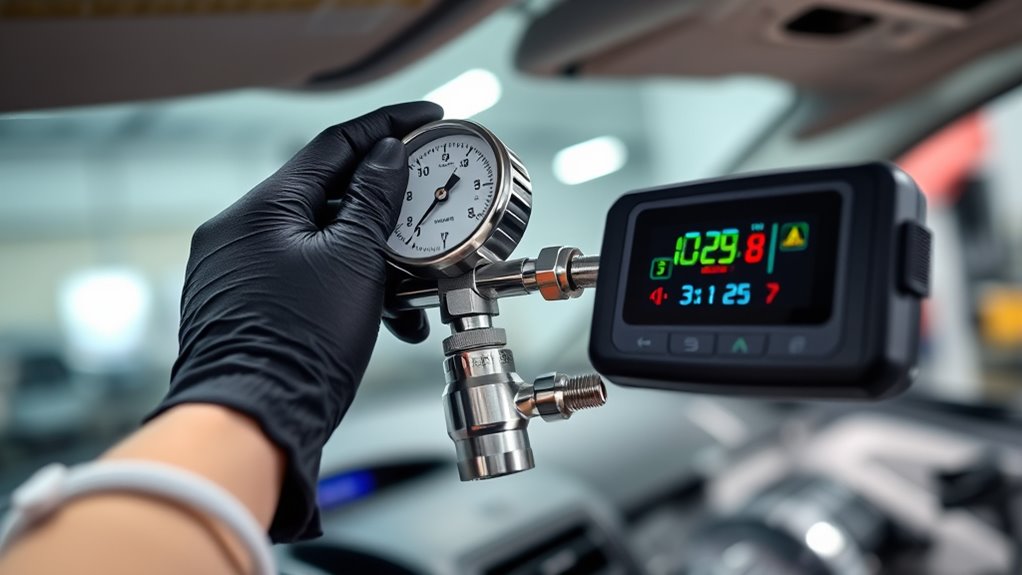
Ever wondered how to guarantee your car’s A/C is working effectively before the hot weather hits? Taking a proactive approach can save you from sweaty commutes and costly repairs down the line. One of the first steps you can do yourself is a basic A/C check, which involves inspecting key components and understanding what might be causing cooling issues. Start by turning on your vehicle and setting the A/C to the maximum cold setting with the fan on high. If you notice weak airflow or warm air blowing out, it’s a sign that something isn’t functioning properly.
A common culprit for poor cooling is low refrigerant levels. Recharging the refrigerant is a straightforward process if you have the right tools and safety gear, but it’s essential to follow the instructions carefully. You can purchase a refrigerant recharge kit designed for automotive air conditioning systems. These kits typically come with a gauge to monitor pressure levels, ensuring you add the correct amount. Keep in mind that overcharging can cause damage, so never guess—use the gauge and follow the manufacturer’s guidelines. If your system is low on refrigerant, it could be due to a leak, which may require professional attention, but recharging can temporarily restore cooling efficiency.
Another critical check involves inspecting your compressor, the heart of your A/C system. The compressor pressurizes and circulates refrigerant, making it essential for cooling performance. To inspect it visually, locate the compressor, usually driven by a belt from the engine. Look for signs of damage, leaks, or worn-out belts. When the system is running, listen for unusual noises like grinding or squealing, which could indicate a failing compressor. Also, check if the compressor clutch engages when you turn on the A/C. If the clutch isn’t engaging, it could be due to electrical issues or a faulty clutch coil. In some cases, the compressor may need professional diagnosis or replacement, but a visual inspection and listening can often reveal early signs of trouble. Additionally, understanding the importance of specific technologies in your system can help identify potential problems more effectively.
Frequently Asked Questions
Can I Repair My A/C System Without Professional Tools?
You can attempt basic repairs like a refrigerant recharge or compressor inspection if you have some technical skills and proper safety gear. However, without professional tools, you risk damaging your system or causing leaks. It’s best to follow safety guidelines, and consider consulting a mechanic for complex issues. For a refrigerant recharge or compressor inspection, investing in the right tools guarantees accurate diagnosis and avoids costly mistakes.
How Often Should I Perform a DIY A/C Check?
Think of your car’s A/C like a garden that needs regular watering. You should perform a DIY A/C check at least once a season, aligning with your seasonal checks and maintenance schedule. This keeps your system healthy, prevents small issues from growing into big problems, and ensures cool comfort whenever you need it. Regular inspections help you catch leaks or refrigerant loss early, saving you time and costly repairs later.
What Are Signs My A/C System Needs Professional Servicing?
You should seek professional servicing if you notice refrigerant leaks or if your compressor makes unusual noises. Refrigerant leaks can reduce cooling efficiency and harm the environment, while compressor noise indicates potential mechanical issues. Don’t ignore these signs, as they often require specialized tools and expertise. Prompt professional attention guarantees your A/C system functions properly, keeps you comfortable, and prevents costly repairs down the line.
Are There Safety Risks in DIY A/C Diagnostics?
Think of DIY A/C diagnostics as walking a tightrope—balanced carefully between knowledge and caution. Handling refrigerant without proper training risks leaks or injury, while electrical safety hazards could cause shocks or fires. If you’re inexperienced, you might inadvertently damage components or worsen the problem. Always prioritize safety—use proper tools, avoid direct contact with refrigerants, and know your limits. When in doubt, it’s smarter to call in a professional to keep your cool safely.
How Much Does It Typically Cost to Fix an A/C Problem Myself?
Fixing your car’s A/C yourself typically costs between $100 and $400, depending on the problem. Your main repair expenses include purchasing refrigerant, replacing a compressor, or fixing leaks. A cost estimate helps you prepare budget-wise, but keep in mind that some repairs might require specialized tools or parts, which can increase expenses. Doing it yourself saves labor costs, but verify you’re comfortable with the repair process to avoid costly mistakes.
Conclusion
With a little hands-on effort, you can uncover the gentle whispers of your A/C’s needs before they become loud complaints. Think of your car’s cooling system as a delicate garden—regular care keeps it lush and vibrant. By taking these simple steps, you’re tending to your vehicle’s comfort, helping it breathe easier and run smoothly. A bit of attention now can prevent a sudden chill of disappointment later—keeping your journey cool and carefree.