To create a repeatable vehicle health check routine, start by developing a personalized checklist based on your vehicle’s manual and essential components like tires, fluids, brakes, and lights. Perform monthly inspections for tire pressure, fluid levels, and wear on belts and brake pads. Set specific days or intervals for routine checks and keep the checklist visible or digital. Staying consistent helps you catch issues early, ensuring your vehicle stays reliable and safe—continue for tips on mastering this routine.

Get business pricing on garage and car supplies
- Business-only prices and quantity discounts
- Tax-exempt purchasing
- Multiple users, one account, clear invoices
Key Takeaways
- Develop a personalized maintenance checklist based on your vehicle’s manual and manufacturer recommendations.
- Schedule regular inspection intervals, such as monthly or quarterly, and set reminders.
- Focus on key components like tires, fluids, brakes, and lights during each routine check.
- Use digital tools or apps to track maintenance tasks and ensure consistency.
- Address issues promptly and document inspections to build a repeatable, organized routine.
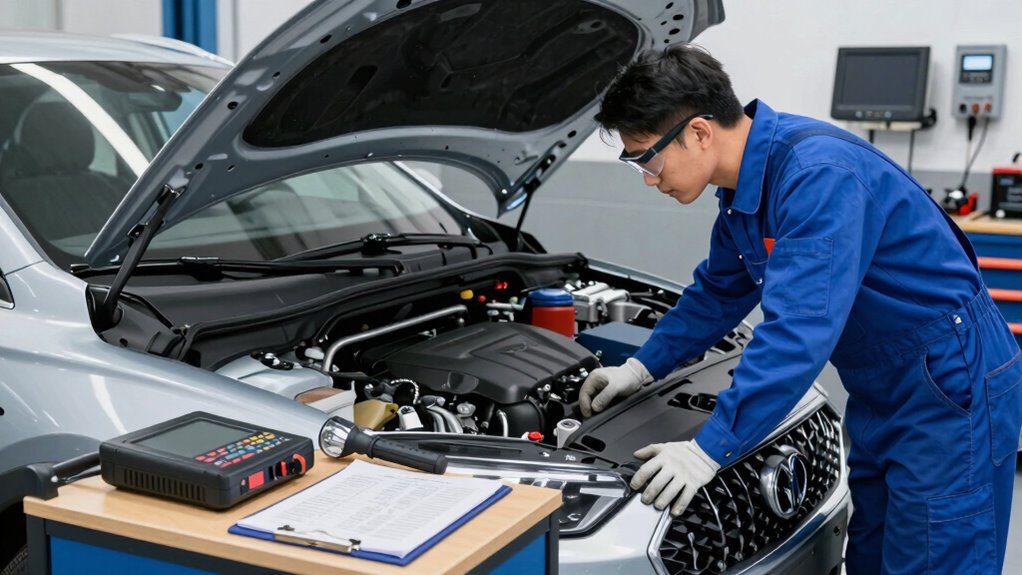
Maintaining your vehicle’s health is vital for safety and cost savings, and establishing a repeatable routine makes this process simple and effective. The key to a reliable vehicle is performing regular vehicle inspections, which help catch potential issues early before they turn into costly repairs. Creating a maintenance checklist tailored to your vehicle ensures you don’t overlook critical components and keeps your routine organized. Start by familiarizing yourself with your owner’s manual, which provides manufacturer-recommended intervals for oil changes, tire rotations, brake inspections, and other essential services. Once you have this information, compile it into a thorough maintenance checklist that you can follow consistently.
Establish a routine with a personalized maintenance checklist for safer, more reliable vehicle performance.
To establish your routine, set specific days or intervals for performing these inspections. For example, you might check your tire pressure and fluid levels every month or before long trips. When doing a vehicle inspection, look for signs of wear or damage—such as cracked belts, worn brake pads, or fluid leaks—and address any issues promptly. This habit not only prolongs your vehicle’s lifespan but also enhances safety on the road. Keep your maintenance checklist visible, whether on a sticky note on your garage wall or as a digital reminder, so you’re consistently reminded of upcoming tasks. Additionally, utilizing digital maintenance tools can help you stay organized and ensure you don’t miss essential checks.
While performing these checks, don’t forget to examine the smaller, often-overlooked parts like windshield wipers, lights, and battery terminals. Clean and replace them as needed to prevent inconveniences or safety hazards. Regularly inspecting your tires for tread wear and proper inflation is vital, as it affects handling, fuel economy, and safety. If you notice uneven wear, it might be time for a wheel alignment or suspension check. Additionally, check your fluid levels—oil, coolant, brake fluid, and transmission fluid—making sure they’re at the recommended levels and looking for signs of contamination or leaks. Incorporating emerging trends in digital publishing can help you stay updated with new maintenance tools and resources that make routine checks easier and more efficient. Regularly checking for wear or damage helps you catch issues early, saving money and preventing breakdowns.
Sticking to your vehicle inspection routine helps you become familiar with your vehicle’s normal condition, making it easier to identify anomalies. Over time, your maintenance checklist becomes a valuable tool, providing a clear plan for upkeep and avoiding last-minute surprises. Remember, consistency is key; even if you’re busy, dedicating a few minutes regularly to vehicle inspections keeps your car running smoothly and safely. With a well-planned routine, you gain peace of mind knowing that your vehicle remains in good shape, saving you money and reducing the risk of breakdowns.
As an affiliate, we earn on qualifying purchases.
Frequently Asked Questions
What Tools Are Essential for a Vehicle Health Check?
You need diagnostic tools like an OBD-II scanner to identify engine issues quickly. A maintenance checklist helps you systematically inspect crucial areas such as tires, brakes, fluids, and lights. These tools guarantee you don’t miss any critical step and keep your vehicle in top shape. Regularly using diagnostic tools and following your maintenance checklist makes your health checks more thorough and helps prevent unexpected breakdowns.
How Often Should I Perform a Health Check?
Imagine your vehicle as an essential health guardian, and regular check-ups are its lifelines. You should perform vehicle maintenance and safety inspections at least once a month or every 1,000 miles. Frequent checks catch issues early, ensuring your car runs smoothly and keeps you safe on the road. Consistent inspections help prevent breakdowns, extend your vehicle’s lifespan, and give you peace of mind every time you hit the road.
Can I Perform These Checks Myself or Need a Mechanic?
You can definitely perform DIY inspections for routine checks like tire pressure, fluid levels, and brake conditions. However, for more complex issues, it’s best to seek professional diagnostics. Doing simple inspections yourself saves time and money, but don’t hesitate to consult a mechanic for thorough diagnostics, especially if you notice unusual sounds or warning lights. Combining DIY checks with professional diagnostics guarantees your vehicle stays in top shape.
What Signs Indicate Urgent Vehicle Repairs?
You’ll want to get urgent repairs if you notice low tire pressure, which can cause unsafe driving, or if fluid levels like oil, coolant, or brake fluid are dangerously low. Unusual noises, warning lights, or a burning smell are also signs. Regularly checking tire pressure and fluid levels helps catch issues early. If you experience any of these signs, don’t delay—seek professional help immediately to keep your vehicle safe and reliable.
How Do I Track and Record My Check Results?
You should set up a system for maintenance scheduling and record keeping to track your check results consistently. Use a dedicated notebook, digital app, or spreadsheet to log each inspection, noting the date, issues found, and actions taken. Regularly review these records to identify patterns or recurring problems. Staying organized helps you stay proactive, ensuring your vehicle remains reliable and safe, and makes future maintenance easier and more efficient.
As an affiliate, we earn on qualifying purchases.
Conclusion
By establishing a simple, repeatable vehicle health check routine, you can catch potential issues early and keep your vehicle running smoothly. For instance, a delivery driver who regularly inspects tire pressure and fluid levels avoided costly breakdowns, saving time and money. Making these checks a habit guarantees safety and longevity for your vehicle. So, stick to your routine, stay vigilant, and enjoy a smoother, trouble-free ride every time.
As an affiliate, we earn on qualifying purchases.
As an affiliate, we earn on qualifying purchases.
Halloween Picks
halloween
As an affiliate, we earn on qualifying purchases.