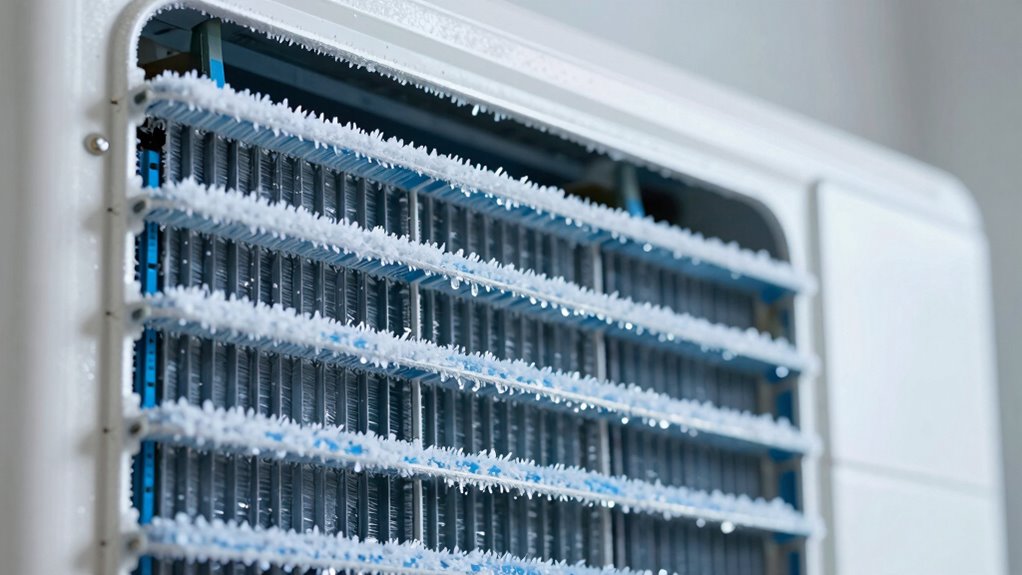

To catch cooling issues early, regularly check your coolant levels and look for leaks or white deposits around the radiator and hoses. Monitor your engine’s temperature gauge for unusual fluctuations or constant high readings, and guarantee your radiator fan operates properly. Pay attention to signs like a heater that won’t warm up or steam from the engine bay. Staying vigilant and acting promptly can save you from costly repairs—discover more tips to keep your cooling system in top shape.
Key Takeaways
- Regularly check coolant levels and top off before trips or seasonal changes.
- Inspect radiator, hoses, and clamps for cracks, corrosion, or leaks.
- Monitor engine temperature gauges and be alert to fluctuations or overheating signs.
- Look for puddles, white deposits, or steam indicating potential leaks or overheating.
- Schedule routine coolant flushes and professional inspections to detect issues early.
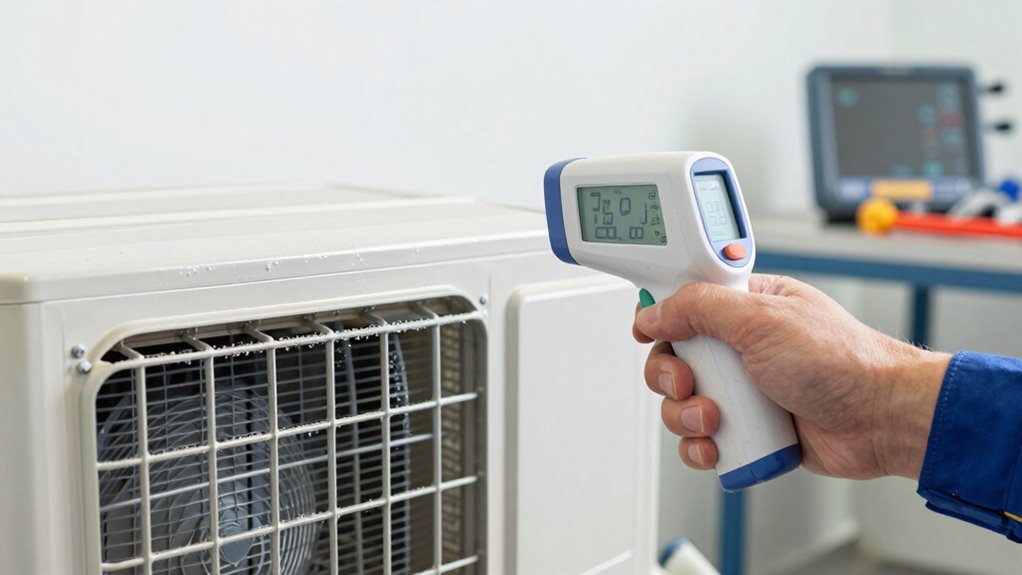
Cooling problems can sneak up on you, leading to costly repairs if not caught early. One of the most common issues is radiator leaks, which can silently cause your engine to overheat. You might notice puddles under your vehicle or a drop in coolant levels without understanding the source. Regularly inspecting your radiator and hoses for cracks or corrosion can help you catch leaks early. Look for white, rusty deposits around the radiator or under the engine bay—these are signs of leaks that need immediate attention. Ignoring radiator leaks can lead to engine overheating, warped components, or even engine failure, all of which are expensive repairs.
Another critical component to monitor is your thermostat. A thermostat failure can cause inconsistent engine temperatures or prevent your engine from reaching the *most favorable* operating temperature altogether. If your engine runs hotter than usual or if the temperature gauge fluctuates erratically, it could mean the thermostat is stuck open or closed. A stuck closed thermostat traps hot coolant in the engine, leading to overheating, while a stuck open thermostat prevents the engine from warming up efficiently, impacting performance and fuel economy. Catching thermostat issues early means replacing or repairing it before it causes damage to other parts like the water pump or radiator, which are more costly to fix.
You should also pay attention to how your vehicle responds during temperature changes. Notice if the heater isn’t warming up or if the radiator fan runs constantly, both signs of potential cooling issues. When the cooling system isn’t functioning properly, it affects your engine’s efficiency and longevity. Regular maintenance, like flushing the coolant and inspecting your radiator and thermostat, can prevent small problems from escalating. Making sure to monitor your coolant levels and coolant quality regularly can help prevent corrosion and buildup that compromise your cooling system’s effectiveness. Make it a habit to check your coolant level monthly and top it off if necessary, especially before long trips or during seasonal changes. Being aware of cooling system performance and addressing issues promptly can save you significant money in repairs down the line.
Keeping an eye on warning signs like steam from the engine bay, unusual smells, or an overheating gauge can save you from expensive repairs. If you suspect radiator leaks or thermostat failure, don’t delay in having a professional inspection. Addressing these issues early not only keeps your engine running smoothly but also extends its lifespan. Regular maintenance and attentive observation are your best defenses against cooling system problems that can turn costly if ignored. By staying vigilant, you’ll catch small issues before they develop into major, expensive repairs.
As an affiliate, we earn on qualifying purchases.
Frequently Asked Questions
How Often Should I Schedule Cooling System Inspections?
You should schedule cooling system inspections at least once a year to guarantee proper system maintenance and catch potential issues early. If you use your cooling system heavily or experience irregular performance, consider more frequent check-ups. Regularly scheduled repairs help prevent costly breakdowns and improve efficiency. Staying proactive with your repair scheduling allows you to identify problems before they escalate, saving you money and extending the lifespan of your cooling system.
What Are Early Signs of Cooling System Leaks?
If you notice your cooling system acting more like a leaky faucet than a well-oiled machine, it’s time for leak detection. Early signs of leaks include unexplained fluid loss, lingering puddles, or a sudden drop in performance. Don’t ignore these clues—they’re your system’s way of whispering, “I need help.” Catching leaks early saves you from costly repairs and keeps your home comfortably cool.
Can Coolant Color Indicate System Problems?
Yes, coolant color can indicate system problems. When you use coolant dye, it helps you spot leaks by showing color changes under UV light. If the coolant shifts from its normal hue—like green, orange, or pink—to a darker or cloudy shade, it signals contamination or corrosion. Pay attention to these color changes, as they often point to underlying issues that, if ignored, could lead to costly repairs.
How Does Ambient Temperature Affect Cooling Efficiency?
You might think ambient temperature doesn’t matter, but it greatly influences your cooling efficiency. When the ambient impact is high, your system has to work harder to maintain ideal temperature regulation, risking overheating. Conversely, cooler environments aid heat dissipation. By understanding this, you can better monitor your system’s performance and prevent costly repairs, especially during temperature extremes. Adjusting cooling strategies based on ambient conditions ensures consistent, reliable operation.
Are DIY Repairs Effective for Minor Cooling Issues?
DIY solutions can be effective for minor cooling issues, especially if you’re comfortable with basic repairs. Simple tasks like cleaning filters, checking for blockages, or recharging refrigerant can improve performance. However, the repair effectiveness depends on the issue’s complexity. While small fixes may save money and time, avoid tackling major problems yourself to prevent further damage. When in doubt, consulting a professional guarantees proper repairs and long-term efficiency.
As an affiliate, we earn on qualifying purchases.
Conclusion
Don’t wait until your cooling system completely fails—you could be facing costly repairs or worse. Keep a close eye on unusual noises, temperature fluctuations, or rising energy bills, and address them early. The real question is, how many signs are you overlooking? Stay vigilant and act swiftly; the next problem might be lurking just around the corner. Catch it early, and you’ll save yourself a headache—and a hefty bill—down the line.
As an affiliate, we earn on qualifying purchases.
As an affiliate, we earn on qualifying purchases.