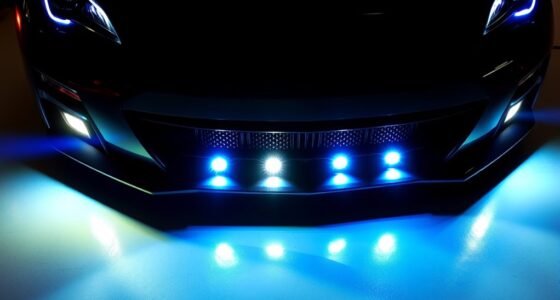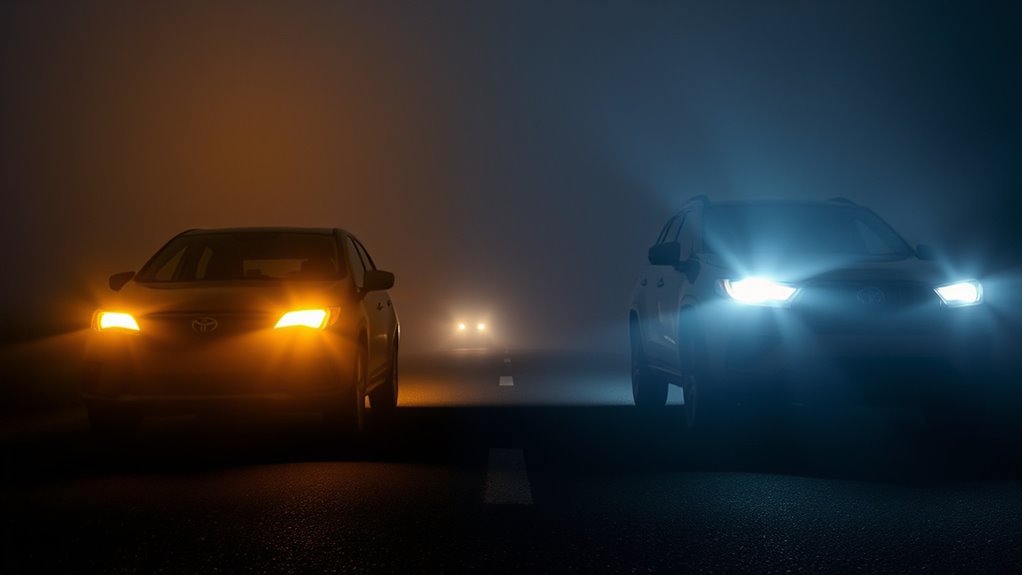

In fog, yellow fog lights usually outperform white ones because they produce a focused beam and have a lower color temperature, around 3000K. This combination helps cut through moisture haze, reduce glare, and improve contrast for better visibility. White lights tend to scatter more in fog, reducing effectiveness. If you’re curious about how beam patterns and light interaction influence fog driving, there’s more to discover below.
Key Takeaways
- Yellow fog lights produce focused beams that reduce glare and improve contrast in foggy conditions.
- Lower color temperature (around 3000K) minimizes light scattering, enhancing visibility in dense fog.
- Focused beam patterns of yellow lights better penetrate fog compared to broader white beams.
- White fog lights emit bluish-white light that scatters more, potentially impairing clarity in fog.
- Overall, yellow fog lights generally perform better in dense fog due to their color and beam focus.
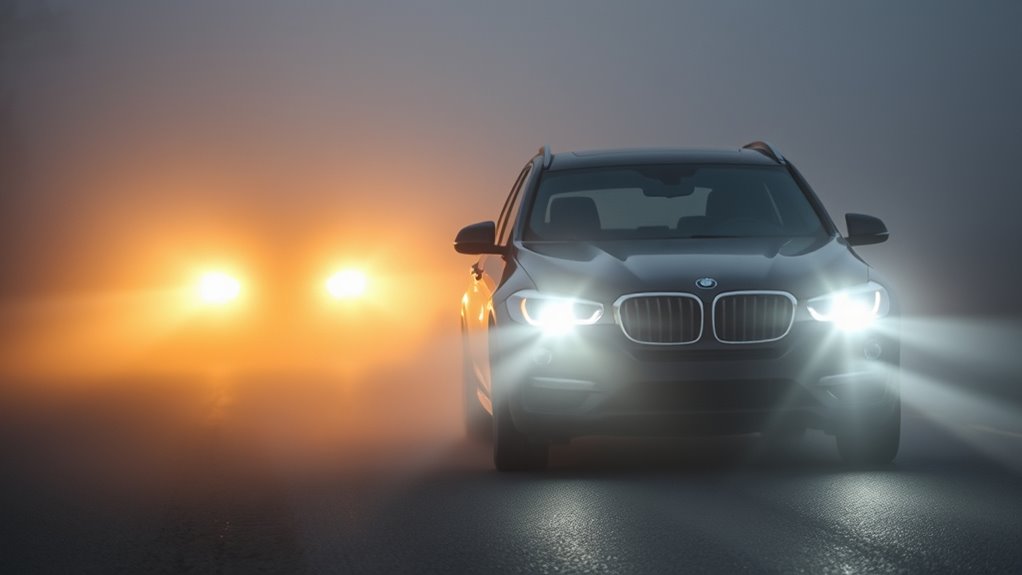
Have you ever wondered which fog lights perform best in challenging weather conditions? When you’re driving through thick fog, visibility becomes a critical safety concern. The choice between yellow and white fog lights can considerably impact how well you see and how others see you. To make an informed decision, it’s crucial to understand how beam patterns and color temperature affect their performance. Beam patterns determine how the light disperses on the road, while color temperature influences how the light interacts with fog particles and ambient conditions.
Yellow fog lights are often praised for their ability to cut through fog, rain, or snow. This is because their beam patterns tend to be more focused and less scattered, reducing glare and enhancing contrast. The warm hue of yellow light, which has a lower color temperature typically around 3000K, helps minimize the haze caused by moisture particles in the fog. It creates a more defined and penetrating beam that illuminates the road surface without reflecting back excessively into your eyes. This focused beam pattern allows you to see further ahead and helps you distinguish objects and lane markings more clearly, even in dense fog. The lower color temperature of yellow lights means they produce a softer, warmer glow that causes less scatter, leading to better visibility in foggy conditions.
Yellow fog lights focus better and reduce glare, improving visibility in dense fog conditions.
In contrast, white fog lights usually have a higher color temperature, often around 5000K to 6000K, producing a bright, bluish-white light. While white lights might seem more natural and similar to daylight, they tend to scatter more in fog, rain, or snow. Their beam patterns can be broader and less focused, which might cause more glare and reduce your overall visibility by bouncing light back into your eyes. Because of the higher color temperature, white lights may also create more reflections off moisture particles, making it harder to see clearly through thick fog. However, white fog lights do offer a wider field of illumination, which can be advantageous in less dense fog or when you need to see the sides of the road more clearly. Additionally, the beam pattern plays a significant role in how effectively fog lights perform, with more focused beams generally providing better visibility in adverse conditions.
Ultimately, the performance of fog lights in challenging weather comes down to how their beam patterns and color temperature work together. Yellow lights, with their focused beam pattern and lower color temperature, generally perform better in dense fog by providing better contrast and reducing glare. White lights, while brighter and more natural-looking, tend to scatter more in foggy conditions, which can impair visibility. When choosing fog lights, consider the typical weather conditions you face and prioritize those with optimized beam patterns and a color temperature suited for foggy environments.
Frequently Asked Questions
How Do Fog Lights Affect Overall Vehicle Visibility?
Fog lights improve your vehicle’s visibility by enhancing color contrast and light penetration in foggy conditions. When you use them, you can see the road more clearly, avoiding obstacles and hazards. Yellow fog lights typically provide better contrast, reducing glare and reflections, while white lights offer brighter illumination. Overall, fog lights make driving safer by helping you spot potential dangers sooner, especially in low-visibility situations.
Are Yellow Fog Lights Legal in All Regions?
Yes, yellow fog lights are legal in some regions, but you need to check regional regulations because color restrictions vary. You might find that certain areas favor standard white lights, while others accept yellow for better visibility. Before you install yellow fog lights, confirm local laws to avoid fines or issues. Remember, complying with regional regulations ensures your vehicle stays legal and safe on the road.
Can Upgrading Fog Lights Improve Driving Safety?
Upgrading your fog lights can definitely improve your driving safety. The right fog light color, like yellow, enhances visibility by reducing glare and penetrating fog better than white lights. This visibility enhancement allows you to see obstacles earlier and react faster, especially in foggy conditions. So, if you’re considering an upgrade, choosing fog lights with ideal color and brightness can make a significant difference in keeping you safe on the road.
Do Fog Lights Consume More Energy Than Regular Headlights?
Fog lights generally consume less energy than regular headlights, with an average electrical load of around 55 watts compared to 55-60 watts for low beams. This means they don’t substantially increase your vehicle’s energy consumption. You won’t have to worry about extra strain on your electrical system when turning on fog lights. Instead, they’re designed to provide focused illumination without draining your car’s battery, making them both efficient and effective.
How Should I Maintain My Fog Lights for Optimal Performance?
To keep your fog lights performing their best, regularly check their bulb lifespan and replace bulbs when they dim or flicker. Use gentle cleaning techniques, like wiping with a soft cloth and mild soap, to remove dirt and grime that can reduce brightness. Avoid harsh chemicals, and make certain the lenses are clear. Proper maintenance ensures your fog lights stay bright, effective, and safe for foggy driving conditions.
Conclusion
So, when it comes to fog lights, yellow truly outshines the rest, cutting through fog like a superhero slicing through smoke. While white lights might seem brighter, they often bounce back and create glare, making visibility worse. Trust me, choosing yellow fog lights is like wielding a magic wand against fog’s sneaky grip. It’s the ultimate secret weapon that’ll keep you safer and more confident on those murky, misty mornings.