
If you want better night vision, restoring your headlights can clear off dullness, allowing more light to pass through and improve visibility. Upgrading to new, high-performance bulbs or headlights offers maximum illumination and sharper beams. While restoration is a cheaper, quicker fix for minor haze, full upgrades provide the latest technology for the best nighttime safety. To find out which option suits your needs and how to get the best results, keep exploring the details.
Key Takeaways
- Headlight restoration improves lens clarity, enhancing light transmission and night visibility without replacing bulbs.
- Upgrading to high-performance bulbs (HID/LED) significantly increases brightness and contrast for better night vision.
- Combining restoration with new bulbs offers the best current solution for maximum nighttime illumination.
- Restoration is cost-effective for minor lens haziness; upgrades are better for severely fogged or yellowed headlights.
- Overall, upgrades provide superior night vision due to advanced lens technology and brighter bulbs, but restoration is a quick, affordable fix.
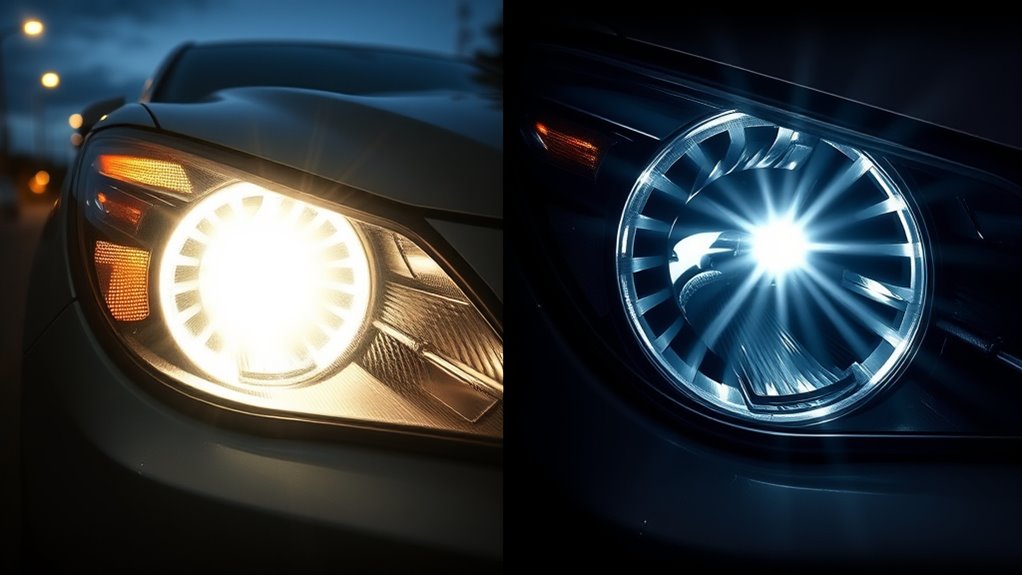
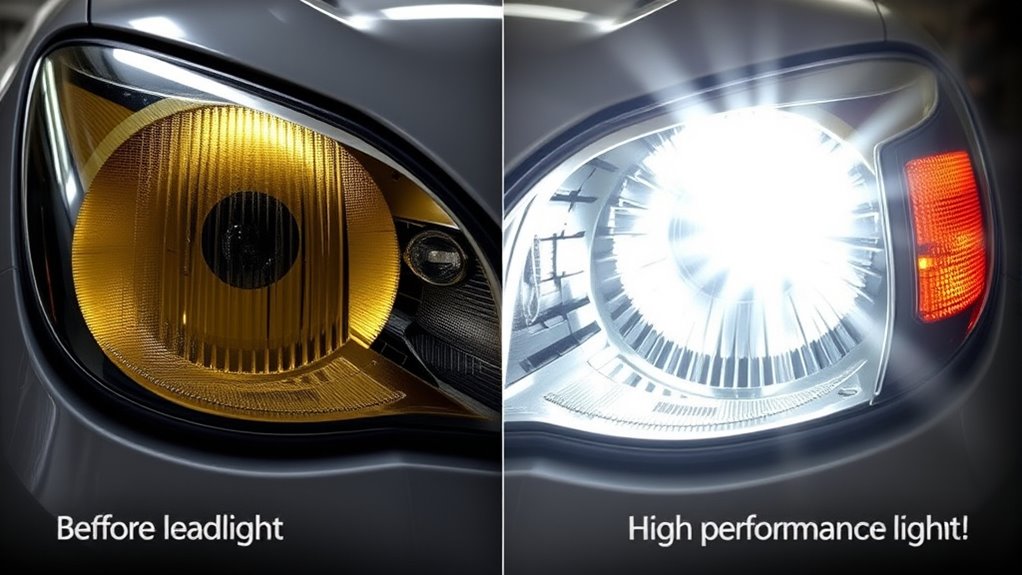
When your headlights become cloudy or dull, you might wonder whether to restore them or upgrade to new ones. The decision hinges on several factors, primarily how much you value cost, convenience, and the quality of your night vision. Restoring your headlights involves cleaning and polishing the lens surface to improve clarity, which directly impacts lens clarity. Over time, the plastic lens can get oxidized or covered with grime, causing it to become hazy. Restoring them can effectively remove this film, revealing a clearer lens that allows more light to pass through. As a result, your headlights will project a sharper, more focused beam, enhancing your visibility at night. Additionally, some restoration kits include UV sealants that help protect the lens from future oxidation, extending the lifespan of your restored headlights.
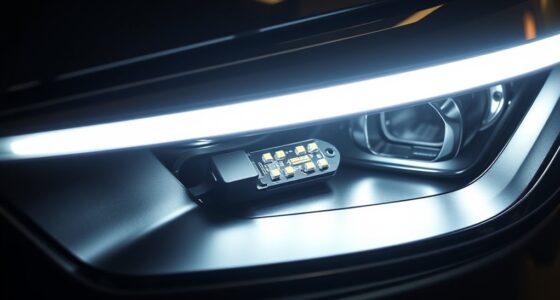
However, the clarity of the lens isn’t the only factor that influences night vision. The brightness of the bulb itself plays a vital role. Even if you restore the lens, if your bulbs are old or underperforming, they won’t deliver the maximum light output. Upgrading to new bulbs, especially high-intensity discharge (HID) or LED options, can markedly improve bulb brightness. These modern bulbs produce a brighter, whiter light that illuminates the road more effectively, sometimes doubling the light output compared to standard halogens. Combining a lens restoration with new bulbs can give you a notable boost in night vision, making driving safer and less stressful.
Restoration is usually cheaper and quicker. It’s a practical choice if your headlights are just slightly dull or yellowed. Plus, restoring your lights allows you to retain the original equipment and avoid the cost of a full upgrade. On the other hand, if your headlights are severely fogged or yellowed beyond repair, or if you’re seeking maximum illumination, upgrading might be the better investment. New headlights with advanced lens technology and high-performance bulbs can provide better lens clarity and bulb brightness than restored originals. They also often come with features like focused beam patterns and integrated LED lighting, which improve overall visibility.
Ultimately, the best approach depends on your specific needs and budget. Restoring your headlights can restore lens clarity and improve existing bulb brightness at a low cost, but if you want the latest in lighting technology and ideal night vision, upgrading to new headlights with high-intensity bulbs offers a more complete solution. Both options can greatly enhance your driving safety, but understanding how lens clarity and bulb brightness influence your night vision helps you make the right choice. Recognizing the importance of natural light and how it interacts with artificial lighting can further optimize your nighttime driving experience.
Frequently Asked Questions
How Long Does a Headlight Restoration Typically Last?
A headlight restoration typically lasts around 2 to 3 years, depending on factors like UV protection and exposure to the elements. You should consider applying a UV protection sealant during the restoration to extend durability. Regular maintenance, such as cleaning and reapplying protective coatings, helps prolong the restoration’s lifespan. Ultimately, proper care guarantees your headlights stay clear and effective for years to come.
Are Upgrades More Cost-Effective Than Restorations Long-Term?
They say, “You get what you pay for,” and when it comes to headlight upgrades, they’re often more cost-effective long-term. Upgrades usually offer greater durability and improved night vision, making them a smarter investment over restorations. While restorations are cheaper upfront, upgrades tend to last longer and require fewer repairs, saving you money in the long run. So, a well-chosen upgrade can be worth the initial cost.
Can Both Options Improve Visibility Equally in Foggy Conditions?
Both options can improve visibility in foggy conditions, but upgrades tend to offer better foggy clarity and enhanced visibility. Upgraded headlights usually have newer technology, such as brighter LEDs or advanced beam patterns, which cut through fog more effectively. Restorations mainly improve clarity by cleaning or polishing existing lenses, but they might not provide the same level of visibility enhancement in foggy weather. Upgrades generally give you a clearer, brighter view.
Do Upgrades Require Professional Installation or Can They Be DIY?
You can most definitely tackle headlight upgrades yourself, but it’s a bit of a double-edged sword. With DIY tips, you might save money and learn something new, but professional services guarantee you get the job done right the first time. If you’re handy, a DIY approach works, but if you prefer peace of mind and perfect results, professionals are your best bet. Remember, don’t bite off more than you can chew.
Which Option Provides Better Aesthetic Enhancement for Older Vehicles?
Upgrading your headlights offers a better aesthetic enhancement for older vehicles, blending vintage appeal with modern aesthetics. You’ll enjoy a sleek, refreshed look that highlights your car’s character while adding contemporary flair. An upgrade often involves replacing outdated fixtures with stylish, high-performance options, instantly boosting your vehicle’s visual appeal. Whether you do it yourself or seek professional help, upgrading headlights transforms your car’s appearance and elevates its overall style.
Conclusion
Ultimately, choosing between headlight restoration and a full upgrade depends on your needs and budget. If your headlights are just foggy, restoring them can quickly clear the view—think of it like giving your car a fresh pair of glasses. But if they’re deeply oxidized or damaged, upgrading to new lights might be the better choice for long-term clarity. Imagine driving at night, seeing the road clearly, just like in a well-lit movie scene—that’s the power of the right fix.