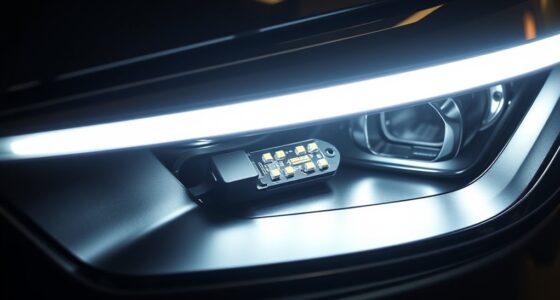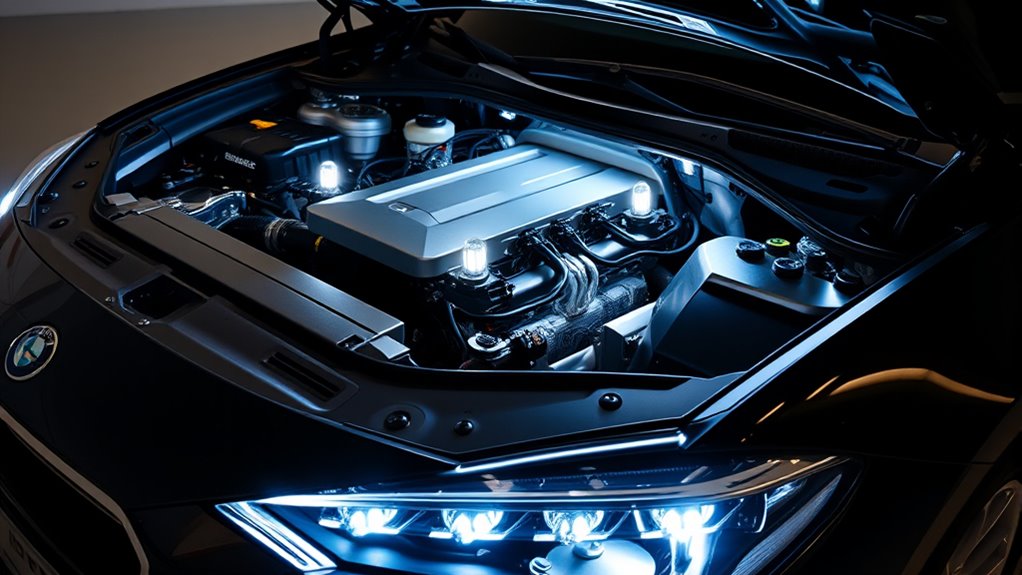

Replacing every bulb in your car with LEDs can save you money on replacements, improve visibility, and give your vehicle a modern look. However, installation can be tricky—some vehicles need extra parts like resistors to prevent flickering or errors. Compatibility and electrical system considerations are also important. If you’re willing to put in the effort and research, the benefits can be worth it. Keep exploring to see if a full LED swap is right for you.
Key Takeaways
- Full LED upgrades improve vehicle appearance, visibility, and energy efficiency but require proper installation to avoid issues.
- Compatibility concerns may demand additional components like resistors or drivers for optimal performance.
- LEDs have longer lifespans, reducing maintenance and replacement frequency over time.
- Some vehicles’ electrical systems might need adjustments to handle reduced power draw and prevent warning lights.
- A thorough assessment of installation complexity and long-term benefits helps determine if the upgrade is worth the effort.
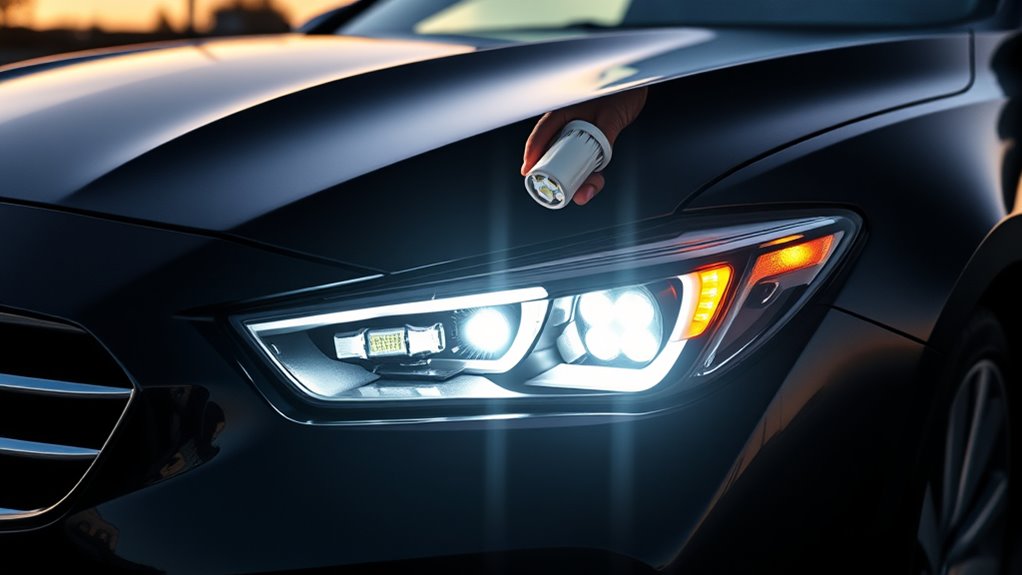
Thinking about upgrading your vehicle’s lighting? A full LED swap can be an exciting way to modernize your car and improve visibility, but it’s important to weigh the benefits against potential hurdles. One key factor to consider is lighting longevity. LEDs are known for lasting much longer than traditional halogens or incandescent bulbs, often enduring tens of thousands of hours before needing replacement. This means fewer trips to the auto shop and less hassle over time, making the investment worthwhile if you’re tired of constantly changing bulbs. However, achieving that longevity isn’t always straightforward. Proper installation is essential, and many drivers underestimate the installation challenges associated with a full LED retrofit. Compatibility issues can arise, especially if your vehicle’s electrical system isn’t designed for LED technology. You might need additional components like resistors or drivers to prevent flickering or error messages. In some cases, the fitment isn’t perfect, requiring modifications or custom mounting solutions, which can be time-consuming and frustrating if you’re not experienced with auto repairs.
When contemplating a full LED swap, you need to think carefully about your vehicle’s wiring and electrical capacity. LEDs draw less power than halogen bulbs, which is a plus, but some vehicles require resistors or specific drivers to work correctly. Without these, you could face issues like flickering, warning lights, or even damage to your electrical system. Installing LEDs isn’t just about swapping bulbs; it’s about ensuring that each component works harmoniously with your existing setup. If you’re comfortable with basic wiring and troubleshooting, you might find the installation manageable. Otherwise, you might want to seek professional help to avoid costly mistakes. Also, keep in mind that some modern cars have sensitive electronic systems that can be disrupted by non-compatible LED bulbs, so research thoroughly before purchasing. Additionally, understanding the lighting longevity of LEDs can help you plan for a long-lasting upgrade, making the initial effort more worthwhile.
Frequently Asked Questions
How Long Do LED Bulbs Typically Last?
LED bulbs typically last between 25,000 to 50,000 hours, offering a long lifetime expectancy. You’ll find they require minimal maintenance, making them a convenient upgrade. Proper installation and avoiding excessive heat can extend their lifespan even further. Compared to traditional bulbs, LEDs are more durable and energy-efficient, so you won’t have to replace them often. This longevity makes them a worthwhile investment for your car’s lighting needs.
Are LED Replacements Compatible With All Vehicle Models?
LED replacements aren’t compatible with all vehicle models due to potential compatibility issues. You’ll need to check for model-specific fit because some cars have unique bulb sizes or electrical systems. Before buying, verify your vehicle’s specifications and consult your owner’s manual or a professional to guarantee the LED bulbs will work correctly. This way, you avoid issues like flickering or fitting problems, making your upgrade smoother and more reliable.
Will Switching to LEDS Affect My Car’s Warranty?
Switching to LEDs generally won’t void your warranty unless the manufacturer restrictions specify otherwise. However, if the LED upgrade causes damage or affects warranty coverage, your manufacturer could deny claims related to those components. To stay safe, double-check your vehicle’s warranty policy and consult your manufacturer. Using quality LED bulbs and proper installation can help prevent issues and keep your warranty intact.
Do LED Bulbs Require Special Installation Tools?
You might be surprised to learn that LED bulbs don’t usually need special installation tools. However, the installation complexity varies depending on your car’s make and model. Making sure bulb compatibility is essential—some vehicles require adapters or specific housings. While the process might seem straightforward, a little extra care ensures a smooth upgrade. Are you prepared to handle potential compatibility issues, or should you consider professional help for a flawless LED swap?
How Do LED Bulbs Perform in Extreme Weather Conditions?
LED bulbs generally perform well in extreme weather conditions due to their weather resilience and high temperature tolerance. You’ll notice they operate reliably in both hot and cold climates, maintaining brightness and functionality without flickering or failing. Their durable design helps them withstand moisture, vibrations, and temperature fluctuations, making them a solid choice for all-season driving. Just make certain you select high-quality LEDs to maximize their weather resilience and temperature tolerance.
Conclusion
So, after swapping every bulb for LEDs, you’re now the proud owner of a car that shines brighter than a UFO. Sure, it looks cool and might save a few watts, but let’s be honest—you’ve basically turned your vehicle into a disco on wheels. Is it worth the hassle and expense? Only if you enjoy blinding everyone on the road and risking a ticket. Otherwise, maybe just stick to good old-fashioned bulbs and keep your glow a little more subtle.