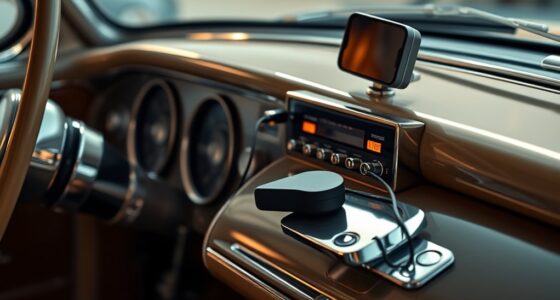
Some vintage cars actually have better audio because their original sound systems, though simple, offer a warm, authentic sound that many modern systems can’t replicate. Many owners restore or upgrade these setups to preserve the classic look while boosting sound quality, sometimes adding modern features like Bluetooth without sacrificing authenticity. If you’re curious how these cars manage superior sound despite their age, there’s plenty more to explore about how restoration and upgrades can transform your vintage ride.
Key Takeaways
- Vintage cars often have dedicated, high-quality speakers installed during restoration, enhancing sound clarity over factory modern systems.
- Classic interiors reduce electronic interference, resulting in cleaner audio signals compared to some modern vehicles’ complex electronics.
- Custom aftermarket upgrades in vintage cars can include larger speakers and subwoofers, delivering richer, more powerful sound than stock modern setups.
- Many vintage cars use well-maintained or upgraded components that preserve sound quality, unlike some new cars with cheaper factory audio options.
- Enthusiasts often invest in tailored sound systems for vintage rides, achieving superior audio performance compared to mass-produced factory systems in new cars.

Vintage cars have a timeless charm that many enthusiasts cherish, but their original audio systems often fall short by today’s standards. When you get behind the wheel of a classic, the last thing you want is to settle for scratchy AM radios or muffled speakers that diminish your driving experience. Luckily, you can breathe new life into that vintage sound system through factory upgrades and aftermarket modifications. These options allow you to retain the classic aesthetic while enjoying crisp, clear audio that rivals modern vehicles.
Factory upgrades are designed specifically for your vintage car, offering a seamless integration that respects the original design. Many manufacturers now produce modern head units that fit into the existing dashboard without requiring extensive modifications. These factory upgrades typically include Bluetooth connectivity, touchscreen displays, and compatibility with smartphones, transforming your vintage ride into a connected, high-quality audio source. By opting for these upgrades, you preserve the authenticity of your car’s interior while remarkably enhancing its sound capabilities. They’re often straightforward to install, providing a clean, OEM look without the clutter of aftermarket components.
Factory head units seamlessly preserve your vintage car’s look while upgrading audio features like Bluetooth and touchscreen.
However, if you’re seeking even more customization and performance, aftermarket modifications are the way to go. These allow you to tailor your sound system to your preferences, whether that means installing larger, more powerful speakers, subwoofers, or amplifiers. You can choose from a range of brands and designs to match your vintage car’s style, from sleek, modern components to retro-inspired speakers that complement the classic interior. Aftermarket systems also provide options for sound insulation, ensuring that road noise doesn’t drown out your music. While these modifications require more effort and possibly professional installation, they give you total control over audio quality and system capacity. Incorporating sound insulation can significantly improve listening comfort on noisy roads.
Both factory upgrades and aftermarket modifications serve to bridge the gap between vintage charm and modern audio performance. The key is balancing authenticity with functionality. If you value maintaining the original look, factory upgrades offer a convenient, integrated solution. But if you’re passionate about sound quality and customizing your driving experience, aftermarket modifications provide the flexibility you need. Either way, you turn your vintage car into a rolling music haven, proving that old rides can indeed have better sound than their modern counterparts. Your classic deserves an audio system that matches its timeless appeal, and with the right upgrades, you can enjoy crisp, rich sound on every drive.
Frequently Asked Questions
How Do Vintage Car Audio Systems Compare in Reliability?
Vintage car audio systems tend to be quite reliable because of their vintage durability and straightforward design. You’ll often find fewer electronic components that can fail, making them easier to maintain. Compared to modern systems, their reliability is generally higher over time, especially if well-preserved. So, if you prioritize durability, vintage audio setups often outperform newer, more complex systems that may suffer from frequent electronic issues.
Can Modern Cars’ Audio Systems Be Upgraded to Vintage Quality?
Yes, you can upgrade your modern car’s audio system to achieve vintage-quality sound. Focus on enhancing speaker placement for richer, immersive audio and consider installing high-quality speakers that emulate classic sound profiles. While Bluetooth connectivity offers convenience, it can sometimes compromise sound fidelity. By replacing factory components and carefully positioning speakers, you can enjoy the warm, nostalgic sound of vintage systems in your modern ride.
What Are the Cost Differences Between Vintage and New Audio Setups?
The cost analysis shows vintage audio setups often cost less to install and maintain, fitting better within your budget considerations. You’ll find that upgrading a vintage system with quality components can be more affordable than installing a high-end new car audio system. Plus, vintage setups tend to require fewer complex modifications, helping you save money while achieving that nostalgic, rich sound you desire.
Do Vintage Car Audio Systems Require More Maintenance?
Vintage car audio systems often require more maintenance because their speaker durability and wiring longevity tend to decline over time. Around 60% of vintage audio components need occasional repairs or replacements, especially if exposed to moisture or vibrations. You should check speaker connections regularly and consider upgrading wiring to guarantee consistent sound quality. Proper maintenance keeps your vintage system sounding great and extends its lifespan, making your driving experience more enjoyable.
How Does Road Noise Affect Audio Quality in Both Car Types?
Road noise impacts your audio quality by making it harder to hear details clearly, especially in newer cars with thinner insulation. Vintage cars often have better sound clarity because their thicker panels and heavier construction reduce road noise. When you drive, less road noise means you can enjoy your music or calls without turning up the volume excessively, ensuring a richer, more immersive listening experience regardless of your car’s age.
Conclusion
So, next time you hop into a vintage car, remember it’s like discovering a hidden treasure chest of sound. Those classic speakers and timeless craftsmanship create an audio experience that’s richer and warmer than many modern systems. It’s as if the car’s personality breathes through its sound, turning every drive into a nostalgic symphony. Sometimes, the old ways really do hit all the right notes, making your journey feel like a ride through history’s finest concert.