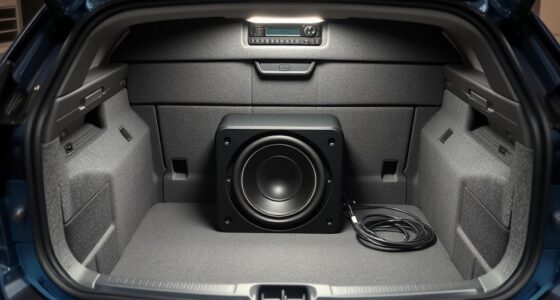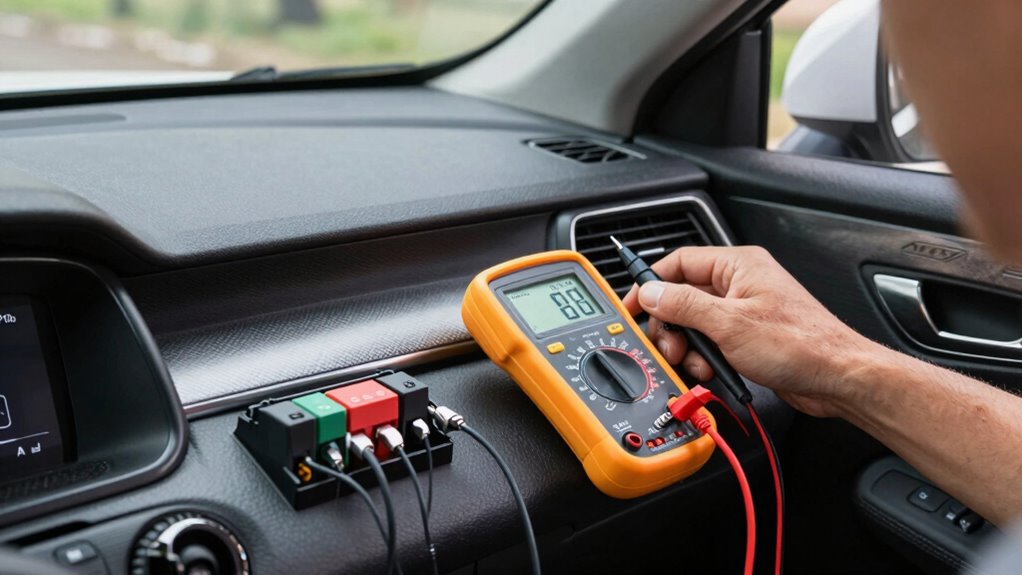

To know if your car can handle extra electronics, check the alternator’s amperage rating and your battery’s capacity, which tells you the total power your system can support. Sum up the wattage or amps of all devices you plan to add to see if they stay within your system’s limits. If your needs exceed capacity, upgrading the alternator or adding secondary power sources might be necessary. Keep exploring for detailed tips to keep your system safe and reliable.

Get business pricing on garage and car supplies
- Business-only prices and quantity discounts
- Tax-exempt purchasing
- Multiple users, one account, clear invoices
Key Takeaways
- Check your vehicle’s alternator rated output (in amps) and compare it to the total power demands of your electronics.
- Calculate the combined wattage or amperage of your devices and ensure it stays within the alternator’s capacity.
- Assess your battery’s capacity to determine if it can support additional accessories when the engine is off.
- Consider upgrading your alternator or adding secondary power sources if your current system is near capacity.
- Monitor for electrical issues like dimming lights or device malfunctions, indicating power overloads.

Wondering if your car can handle added electronics? Before you start installing that new sound system, dash cam, or USB chargers, it’s vital to understand your vehicle’s power capacity. Your car’s ability to support extra electronics depends primarily on two key factors: battery capacity and alternator output. These elements determine whether your vehicle can sustain the additional electrical load without risking power failures or damaging its electrical system.
Your battery capacity is a good starting point. It provides the initial energy needed to start your vehicle and power accessories when the engine isn’t running. If your battery is old or weak, it might struggle to handle extra electronics, especially if those devices draw significant power. A healthy, high-capacity battery can store more energy and offer a buffer for additional devices. However, simply having a large battery isn’t enough; it’s more essential to consider how much power your existing electrical system can draw without causing issues. If your battery is nearing the end of its lifespan, upgrading to a higher-capacity model might be worth contemplating, but only if your alternator can supply enough current to recharge it and support your electronics. Additionally, understanding the electrical system’s limits can help prevent overloads and ensure reliable operation.
Alternator output is the next vital factor. The alternator functions like your car’s power plant, generating electricity while the engine runs. Each alternator has a maximum output rating, usually specified in amperes. If you try to add electronics that exceed this capacity, you risk overloading the alternator, which can lead to overheating, reduced lifespan, or even failure. To determine if your alternator can handle extra devices, check its rated output and compare it with the power demands of your planned electronics. For example, a typical factory alternator might produce around 100 amps, but if you’re adding multiple high-power components, you might need a more powerful alternator or supplementary power solutions. Additionally, understanding your vehicle’s electrical system limits can help prevent overloads and ensure reliable operation. Being aware of the electrical system’s capacity helps you stay within safe operational ranges and avoid potential damage.
In addition to knowing your battery capacity and alternator output, it’s wise to calculate the total power consumption of your electronics. Most devices list their power draw in watts or amps. Summing these up helps you understand whether your current electrical system can support all your devices simultaneously. Remember, it’s not just about the maximum capacity but also about ensuring your system operates comfortably within those limits. If your calculations show that your electrical load exceeds your alternator’s output, consider upgrading your alternator, adding a secondary power source, or choosing more energy-efficient electronics.
As an affiliate, we earn on qualifying purchases.
Frequently Asked Questions
Can Adding Electronics Affect My Car’s Fuel Efficiency?
Adding electronics can affect your fuel efficiency because they increase your car’s power consumption, which may put extra strain on the engine. If your battery capacity isn’t sufficient, your alternator has to work harder, reducing overall efficiency. Keep an eye on how much power your new gadgets draw, and consider upgrading your battery if needed. This way, you maintain peak performance without sacrificing fuel economy.
How Do I Upgrade My Car’s Electrical System Safely?
To upgrade your car’s electrical system safely, start by evaluating your alternator capacity to guarantee it can handle additional loads. Consult a professional to perform wiring upgrades, which prevent overheating and short circuits. Avoid DIY fixes for complex tasks, and always use quality components. Upgrading your system carefully ensures your electronics work efficiently without risking damage to your vehicle’s core electrical system.
What Signs Indicate My Car’s Electrical System Is Overloaded?
You notice dimming headlights, frequent flickering, or slow electrical responses, which signal your electrical system might be overloaded. Check your battery capacity; if it’s draining quickly, and your alternator performance is declining, these are signs you’re pushing your system too hard. Overloading can cause these issues, so it’s vital to evaluate your electrical load and upgrade components if necessary to prevent damage and guarantee reliable operation.
Are There Any Legal Restrictions on Installing Certain Electronics?
Think of installing electronics in your car as sailing through waters with hidden reefs—some restrictions are there to keep you safe. Legal restrictions and installation regulations vary by region, and certain devices like radar detectors or tinted windows might be restricted or forbidden. Always check local laws before proceeding to avoid fines or penalties. Staying informed guarantees your upgrades stay smooth sailing, avoiding legal storms that could otherwise capsize your plans.
How Do I Choose the Right Power Inverter for My Vehicle?
To choose the right power inverter, first check your vehicle’s alternator capacity to guarantee it can handle the inverter’s wattage without straining. Next, verify wiring compatibility—make sure your vehicle’s wiring can support the inverter’s power requirements safely. Consider the inverter’s continuous and surge wattage, matching it to your electronic devices’ needs. This way, you’ll select an inverter that runs smoothly without risking electrical issues or draining your battery.
As an affiliate, we earn on qualifying purchases.
Conclusion
Don’t worry if you’re unsure whether your car can handle extra electronics. Just remember, many vehicles have more capacity than you think, especially if you check your alternator’s output and fuse box. If you’re still concerned, consulting a professional can give you peace of mind. Adding electronics isn’t always a risk—just make sure to verify your system’s limits first. With a little research, you’ll confidently upgrade your car without overloading it.
As an affiliate, we earn on qualifying purchases.
car power inverter for electronics
As an affiliate, we earn on qualifying purchases.
As an affiliate, we earn on qualifying purchases.
Fall Picks
fall essentials
As an affiliate, we earn on qualifying purchases.