
To improve your car audio, start by adjusting the equalizer to boost or cut specific frequencies, balancing the sound to suit your taste and vehicle acoustics. Then, leverage a DSP to fine-tune time alignment, phase, and crossover points, ensuring all speakers work seamlessly. Proper speaker placement and acoustic treatment also play key roles. Keep exploring these tools further, and you’ll discover how to create a truly professional sound environment in your car.
Key Takeaways
- Use equalizers to adjust specific frequency ranges for balanced and personalized sound.
- Implement DSP to perform precise time alignment and phase correction across speakers.
- Fine-tune crossover points with DSP to improve frequency separation and clarity.
- Combine acoustic treatment with placement adjustments to minimize reflections and resonance.
- Continuously monitor and refine settings to optimize overall sound quality and listening experience.
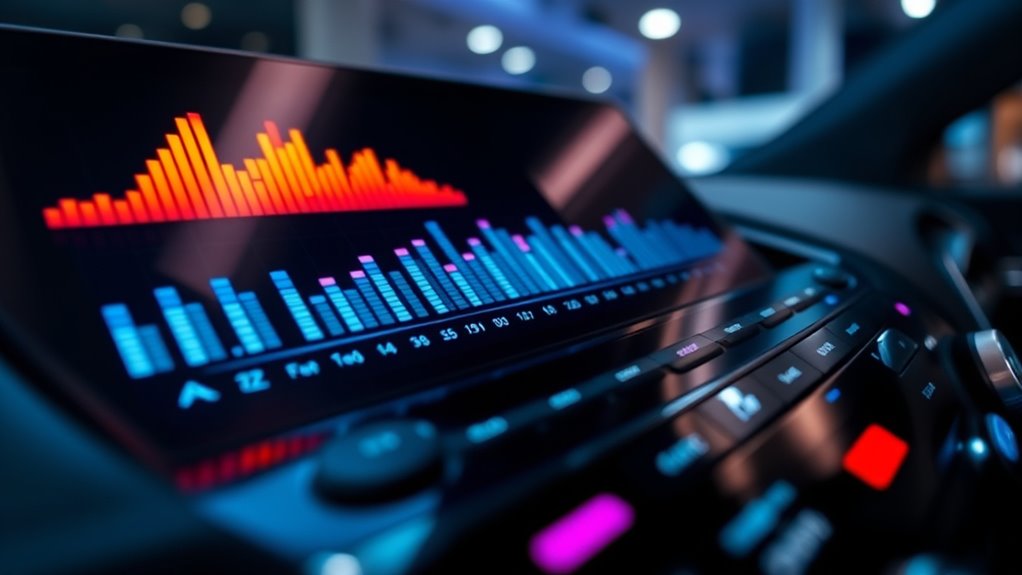
Achieving great sound quality in your car audio system starts with understanding how equalizers and digital signal processing (DSP) can fine-tune your listening experience. One of the most critical aspects is proper speaker placement. Where you position your speakers directly impacts sound clarity and balance. You want to avoid placing speakers too close to surfaces that can reflect sound, such as dashboards or door panels, because reflections create muddiness and reduce clarity. Instead, aim for a position that directs sound toward the listener’s ears, ideally at ear level or slightly above. Adjusting the angle and distance of speakers helps create a more immersive and natural soundstage. Proper speaker placement minimizes phase issues and ensures that each frequency range reaches your ears coherently, making your music sound more precise and detailed.
Along with placement, acoustic treatment plays a crucial role in optimizing sound quality. Treating your car’s interior involves adding materials like foam, damping mats, or acoustic panels to reduce unwanted vibrations and sound reflections. These treatments help eliminate rattles and minimize echo, allowing your speakers’ true sound to shine through. For example, installing damping mats on door panels can considerably improve bass response and reduce resonance. Acoustic treatments also help control the acoustics inside your vehicle, making the environment more neutral. When combined with strategic speaker placement, acoustic treatment ensures your audio system produces a cleaner, more defined sound profile.
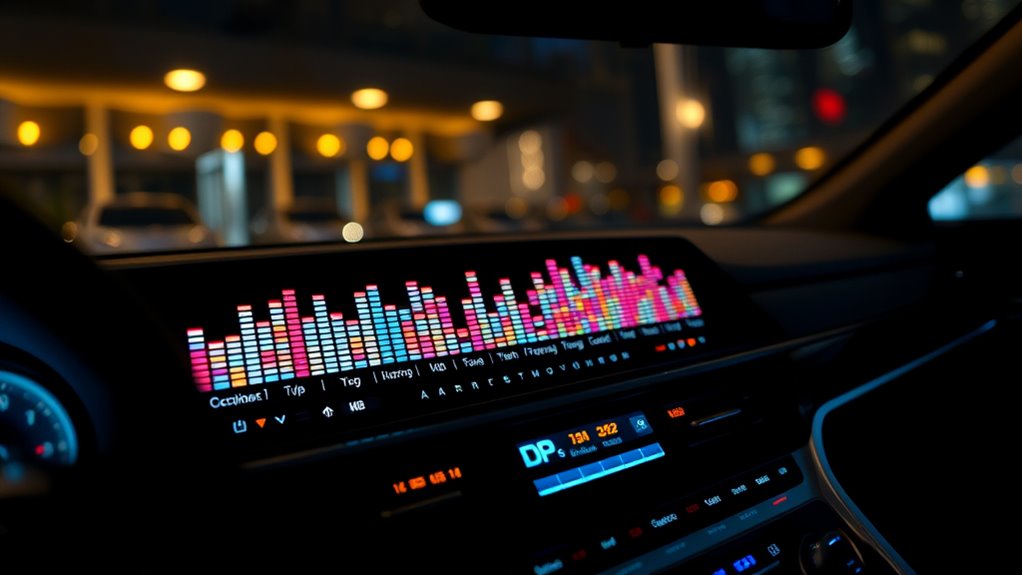
Once your speakers are well-placed and your interior acoustics are managed, you can leverage equalizers and DSP to fine-tune the sound further. Equalizers allow you to boost or cut specific frequency ranges, correcting for any tonal imbalances caused by your car’s interior or speaker limitations. DSP takes this a step further by providing digital control over multiple parameters, such as time alignment, phase correction, and crossover points. These adjustments help ensure that sound waves from all speakers arrive at your ears simultaneously, creating a seamless and cohesive listening experience. Using a combination of equalizers and DSP, you can customize your sound to match your preferences and compensate for any acoustic quirks in your vehicle. This level of control transforms your car into a high-fidelity listening environment, making every drive more enjoyable.
Frequently Asked Questions
Can I Use a Smartphone App to Tune My Car Audio?
Yes, you can use smartphone apps to tune your car audio. These apps offer sound customization options, allowing you to adjust equalizers and DSP settings easily. With a compatible interface or adapter, you can connect your phone to your car’s audio system and fine-tune the sound to your liking. This makes improving your car’s audio quality simple and accessible, even without professional equipment.
How Often Should I Re-Tune My Equalizer Settings?
You should re-tune your equalizer settings whenever you notice changes in sound quality or after manual adjustments, especially if you switch audio sources or add new components. Seasonal tuning is also helpful, as temperature and humidity can affect your system’s performance. Regularly reassess your settings to guarantee ideal sound, and don’t hesitate to tweak your equalizer to match your listening environment and personal preferences.
Do Different Music Genres Require Different Sound Tuning?
Yes, different music genres often require genre-specific adjustments to your equalizer settings. For example, bass-heavy genres like hip-hop may need boosted lows, while acoustic or classical music might benefit from enhanced mids and highs. You should also consider your listener preferences, as personal taste can influence your ideal sound. Experiment with these adjustments to find a balanced, tailored sound that enhances your enjoyment of each genre.
Is Professional Calibration Necessary for Optimal Sound Quality?
Professional calibration isn’t always necessary for peak sound quality, especially if you’re comfortable with DIY tweaks. You can improve your car audio by adjusting equalizers and DSP settings yourself, saving on cost considerations. While a professional calibration ensures precise tuning, many enthusiasts find that with some patience and research, they can achieve great sound without the expense. Just remember to experiment carefully to avoid damaging your system.
Can Tuning Damage My Car’s Audio Components?
You might think tuning will only enhance your sound, but it can secretly cause system damage if you crank the levels too high. Overdoing it can accelerate component wear and stress your audio system, ironically leading to worse sound quality over time. So, while adjusting your equalizer and DSP seems harmless, pushing the limits risks damaging your car’s audio components, making careful tuning essential to avoid costly repairs.
Conclusion
Think of your car’s audio system as a garden, where each plant needs just the right amount of sunlight and water to thrive. Equalizers and DSP are your skilled gardeners, shaping the environment so every note blooms with clarity and depth. When you tune your sound system mindfully, you’re nurturing a harmonious landscape where music flourishes. With patience and precision, you’ll cultivate an audio experience that transforms every drive into a symphonic journey.