
TL;DR

Get business pricing on garage and car supplies
- Business-only prices and quantity discounts
- Tax-exempt purchasing
- Multiple users, one account, clear invoices
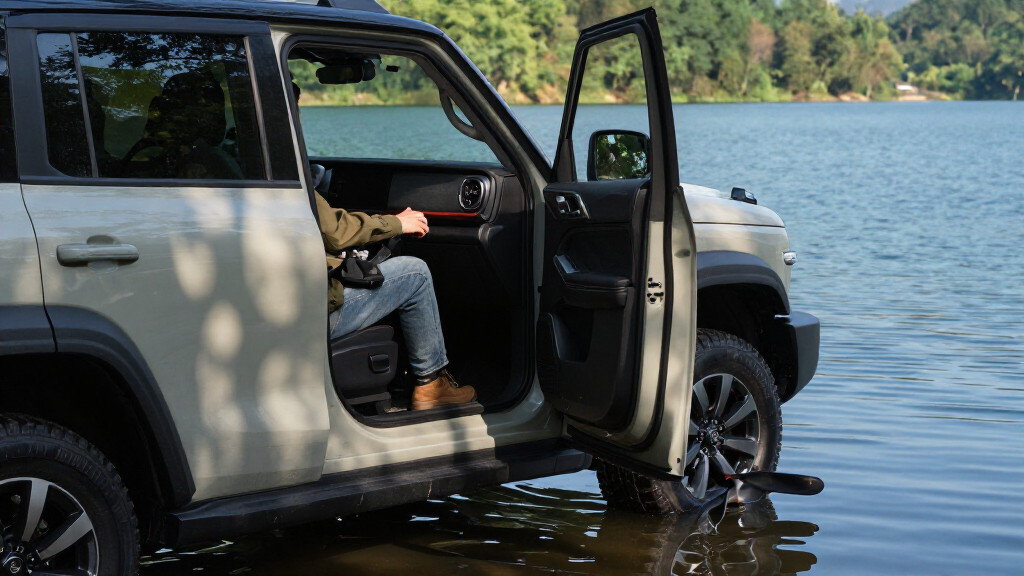
A Chinese company has unveiled an SUV featuring integrated propellers designed to enable water crossings. The development has attracted significant interest, though official details remain limited.
A Chinese automaker has revealed a new SUV equipped with built-in propellers, allowing the vehicle to traverse bodies of water. This development is confirmed by the company’s recent showcase and has garnered widespread attention due to its innovative approach to off-road mobility. The vehicle’s capabilities and future production plans remain unconfirmed but could signal a new direction in vehicle versatility and amphibious design.
The vehicle, which has not yet been officially named or released for commercial sale, features a pair of retractable propellers integrated into its chassis. According to images and video clips circulating on social media, the SUV can switch from traditional driving to water navigation mode, with the propellers deploying beneath the vehicle. The automaker behind this innovation has not provided detailed specifications or performance data, but early footage suggests the vehicle is capable of moving across calm water surfaces at moderate speeds.
Industry analysts note that the concept aligns with ongoing trends toward amphibious vehicles and multi-terrain mobility solutions, especially amid increasing interest in outdoor recreation and emergency response vehicles. However, experts caution that the technology’s safety, reliability, and practicality in real-world conditions remain to be demonstrated. The automaker has not announced plans for mass production or commercial release, and it is unclear whether this is a prototype or a limited concept.
Implications for Vehicle Innovation and Off-Road Capabilities
This development could mark a significant step forward in vehicle versatility, blending traditional SUVs with amphibious technology. If successfully commercialized, such vehicles could expand capabilities for outdoor enthusiasts, emergency responders, and military applications. It also signals a broader trend toward integrating unconventional features into consumer vehicles, driven by technological advances and market demand for multi-functional transportation. However, the safety, cost, and regulatory challenges of deploying water-capable SUVs at scale remain uncertain, and the actual impact will depend on future testing and industry acceptance.As an affiliate, we earn on qualifying purchases.
Emerging Trends in Amphibious and Multi-Terrain Vehicles
Interest in amphibious vehicles has grown over the past decade, driven by innovations in lightweight materials, propulsion systems, and autonomous navigation. Several companies worldwide have experimented with water-capable cars, but most remain in prototype or limited production stages. The recent surge in coverage around this Chinese SUV suggests a heightened curiosity about integrating such features into mainstream vehicles. Historically, amphibious vehicles have faced challenges related to safety, cost, and usability, which have limited widespread adoption. This new development appears to be an extension of this ongoing trend, with the added element of built-in propellers for enhanced water mobility.As an affiliate, we earn on qualifying purchases.
Unconfirmed Details About Vehicle Capabilities and Plans
It is not yet clear whether the vehicle is a fully functional prototype or a concept. Details about its performance, safety features, and whether it will enter mass production are still undisclosed. The automaker has not issued official statements on the timeline or commercial plans, and independent verification of the water-crossing capabilities is lacking. Additionally, questions remain about the vehicle’s durability, regulatory approval, and practical usability in diverse conditions.
As an affiliate, we earn on qualifying purchases.
Next Steps for Verification and Industry Evaluation
Further testing and official disclosures from the automaker are expected in the coming months. Industry experts anticipate that real-world trials and safety assessments will be critical to determine whether the vehicle can move beyond a concept. If the technology demonstrates reliability and safety, it could lead to prototypes or limited production runs. Meanwhile, regulatory bodies may begin evaluating the vehicle’s compliance with safety standards for amphibious vehicles. Public and industry interest will likely influence the pace and scope of future developments.
As an affiliate, we earn on qualifying purchases.
Key Questions
Is this vehicle available for purchase now?
No, the vehicle is currently in the concept or prototype stage, and there are no official plans announced for mass production.
How does the vehicle switch between land and water modes?
Based on available footage, the vehicle appears to have retractable propellers that deploy beneath the chassis when needed, but detailed mechanisms are not yet confirmed.
What are the safety concerns with water-capable SUVs?
Potential concerns include stability, propulsion reliability, and safety standards compliance, which need to be addressed before commercial deployment.
Could this technology be used in emergency response or military applications?
Yes, amphibious vehicles with water-crossing capabilities could be valuable in rescue operations or military scenarios, but practical use depends on further development and validation.
When might we see a production version of this vehicle?
There is no confirmed timeline; the vehicle remains in early development stages, and commercial release could be several years away if it proceeds beyond prototypes.
Source: rss
Fall Picks
fall essentials
As an affiliate, we earn on qualifying purchases.