
Installing an auto-dimming rearview mirror helps eliminate headlight glare by automatically adjusting its reflection based on surrounding light levels. It uses sensors to detect bright headlights and swiftly dims to improve nighttime visibility and reduce eye strain. To get the best performance, you’ll need to choose a compatible mirror, gather the right tools, and follow proper wiring and calibration steps. Continue exploring to learn how to install and maintain it for maximum safety.
Key Takeaways
- Select an auto-dimming mirror compatible with your vehicle’s make and model for proper fit and functionality.
- Carefully remove the existing mirror, then connect the wiring harness to your vehicle’s power source following manufacturer instructions.
- Mount the new mirror securely, ensuring proper alignment for optimal sensor calibration and performance.
- Calibrate the mirror sensors as instructed to ensure effective glare reduction from headlights behind you.
- Regularly clean sensors and re-calibrate if necessary to maintain optimal glare protection and mirror performance.
Understanding How Auto-Dimming Mirrors Work

Auto-dimming mirrors use advanced light sensors to detect when headlights from vehicles behind are brightening the rearview. When the sensors pick up intense light, they activate the mirror’s dimming mechanism. Proper sensor calibration is vital; it ensures the mirror responds accurately without dimming unnecessarily or failing to dim when needed. The process involves adjusting the sensor’s sensitivity, often during installation or maintenance. Electrical wiring connects these sensors to the mirror’s control system, transmitting signals swiftly. Ensuring secure wiring connections prevents false triggers caused by loose connections or electrical interference. Regularly inspecting the sensor’s calibration settings helps maintain optimal performance and prevents unintended dimming. Properly managing Electrical wiring also minimizes the risk of electrical noise affecting the sensor’s responsiveness. Additionally, adherence to manufacturers’ guidelines is crucial for ensuring proper installation and ongoing functionality. Maintaining sensor calibration and proper wiring management are essential for consistent, reliable operation. Understanding how the sensors are calibrated and how the electrical wiring is managed helps you maintain the mirror’s functionality, guaranteeing a comfortable, glare-free driving experience even during night traffic. Additionally, understanding the science behind light sensors can help you troubleshoot issues more effectively.
Choosing the Right Auto-Dimming Rearview Mirror for Your Vehicle
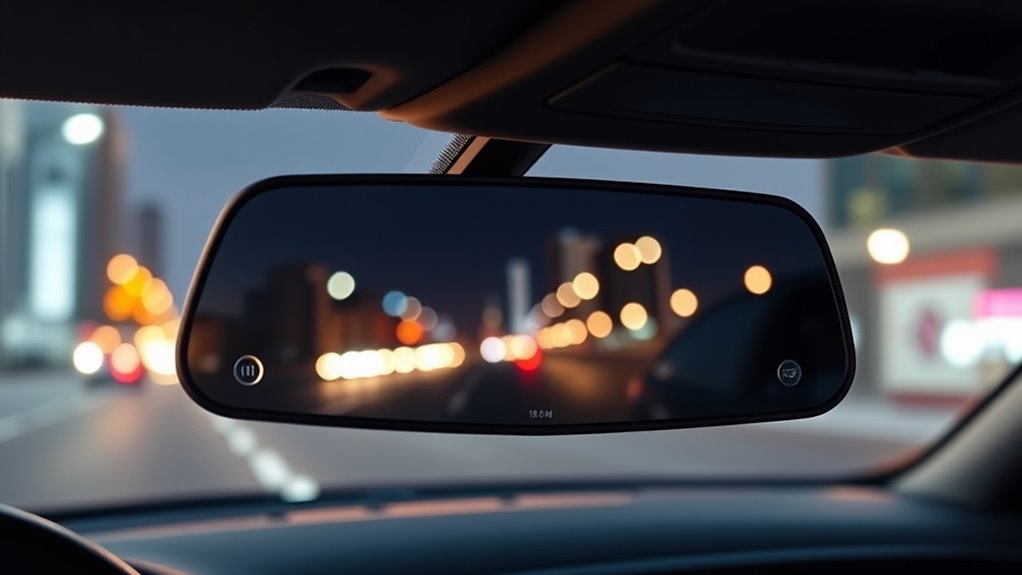
When selecting an auto-dimming rearview mirror, it’s important to take into account your vehicle’s specific features and your driving needs. You’ll want to guarantee mirror compatibility with your car’s make and model to avoid fitment issues. Consider aesthetic options so your mirror complements your vehicle’s interior style. Think about additional features you might want, like integrated compasses or garage door openers, which can enhance convenience. Keep in mind the size and shape of the mirror to match your visibility preferences. Additionally, check for compatibility with existing wiring or mounting setups. Understanding industry trends can help you choose a modern and reliable mirror that suits your interior design, making your driving safer and more comfortable. Staying informed about compatibility considerations ensures you select a mirror that integrates seamlessly with your vehicle’s electrical system and features.
Furthermore, being aware of smart home integration trends can offer insights into how your auto-dimming mirror might connect with other vehicle or home automation systems for a more cohesive experience.
Tools and Materials Needed for Installation

To install your auto-dimming mirror, you’ll need a few essential tools and materials. Having the right equipment on hand makes the process smoother and more efficient. Let’s review what you’ll need to get your installation done correctly and safely. Be sure to use essential oils for a calming environment during the process to help stay relaxed and focused. Additionally, familiarizing yourself with wiring basics can help prevent electrical issues and ensure a secure connection throughout the installation. Knowing about affiliate disclosure can also be helpful when considering different features and options for your vehicle accessories.
Tools Required for Installation
Installing an auto-dimming rearview mirror requires a few essential tools and materials to guarantee a smooth process. First, you’ll need basic hand tools like a screwdriver and socket wrench to remove the existing mirror and secure the new one. A multimeter is vital for checking electrical wiring connections and verifying proper power supply. You’ll also need a mirror calibration tool or follow the manufacturer’s calibration instructions to prevent glare issues. Additionally, having a trim removal tool helps access wiring behind the headliner without damage. Lastly, keep some electrical tape and wire connectors handy for secure wiring connections. With these tools, you’ll be able to handle electrical wiring tasks confidently and verify your mirror functions correctly, providing glare-free driving.
Materials Needed for Setup
Before starting your auto-dimming rearview mirror installation, gather all the necessary materials to guarantee a smooth process. You’ll need the auto-dimming mirror itself, along with a compatible power supply—typically a 12V connector or fuse tap. Verify you have the appropriate wiring harness and connectors for a secure connection. A sensor calibration tool is essential for adjusting the light sensor after installation, ensuring proper glare detection. You might also need double-sided tape or mounting brackets depending on your mirror’s design. Make sure you have screwdrivers, wire strippers, and electrical tape for secure connections. Confirm that your power supply is reliable and matches the mirror’s voltage requirements. Proper preparation avoids delays and ensures your mirror functions correctly, providing a glare-free driving experience.
Step-by-Step Guide to Installing Your Auto-Dimming Mirror

Replacing your existing rearview mirror with an auto-dimming one is a straightforward process if you follow the right steps. First, remove the old mirror carefully, then connect the wiring harnesses from your new mirror to your vehicle’s power source. Make sure the wiring is secure and hidden to avoid any distractions. Next, position the mirror on the mount, ensuring it’s straight and firmly attached. Once installed, turn on your vehicle and perform mirror calibration if needed—this guarantees maximum dimming performance. Here are some tips to keep in mind:
- Double-check wiring connections for security
- Follow the manufacturer’s calibration instructions
- Use the wiring harnesses provided for compatibility
- Adjust the mirror position for best view
- Test the auto-dimming function before finishing
Tips for Maintaining and Troubleshooting Your Auto-Dimming Mirror

To keep your auto-dimming mirror functioning properly, regular maintenance and prompt troubleshooting are essential. Start by checking the mirror calibration; if the auto-dimming feature isn’t working correctly, recalibrating the sensor can restore proper operation. Clean the sensor area regularly to ensure it isn’t obscured by dirt, dust, or grime, which can interfere with light detection. Perform sensor maintenance by inspecting for any physical damage or misalignment, as these issues can cause malfunctioning. If glare persists or the mirror doesn’t dim when it should, recalibration or sensor cleaning usually resolve the problem. Always follow your vehicle’s manual instructions for calibration procedures and sensor care to keep your auto-dimming mirror performing reliably and effectively. Additionally, understanding the importance of proper sensor maintenance can help prolong the life and functionality of your auto-dimming mirror.
Benefits of Upgrading to an Auto-Dimming Rearview Mirror

Upgrading to an auto-dimming rearview mirror offers significant safety benefits by automatically reducing glare from headlights behind you, which can improve nighttime visibility and reduce eye strain. Beyond safety, it enhances your vehicle aesthetics with a sleek, modern look that complements interior lighting. You’ll notice less distraction, allowing you to focus on the road. Plus, it adds convenience by adjusting instantly without manual input. This upgrade also helps protect your eyes from harsh bright lights, making night driving more comfortable. The improved interior lighting creates a more refined cabin atmosphere. Additionally, field‑of‑view considerations ensure you maintain clear visibility around your vehicle. Proper thermal behavior management within the mirror ensures consistent performance in different lighting conditions. Modern auto-dimming mirrors often incorporate light sensors that automatically detect ambient light levels to optimize glare reduction. An automotive safety feature like this not only improves your driving experience but also contributes to overall vehicle safety standards. Here are some benefits:
- Enhanced vehicle aesthetics for a cleaner look
- Reduced eye strain during night drives
- Improved interior lighting consistency
- Less distraction from glaring headlights
- Increased safety and driving confidence
Frequently Asked Questions
Can Auto-Dimming Mirrors Be Installed on Any Vehicle Model?
Auto-dimming mirrors can be installed on many vehicle models, but your options depend on vehicle compatibility and retrofit options. You should check if your car’s existing mirror can accommodate an auto-dimming feature or if you’ll need a new mirror designed for your specific model. Some vehicles might require professional installation or additional wiring, so it’s best to consult with a specialist to guarantee proper fit and functionality.
What Is the Typical Lifespan of an Auto-Dimming Mirror?
You can expect your auto-dimming mirror to last around 5 to 10 years with proper mirror maintenance. Its lifespan depends on factors like exposure to sunlight, temperature changes, and electrical system health. Regular cleaning and cautious handling help prevent damage, ensuring it functions correctly. Keep an eye on any dimming issues or flickering, as these signs indicate it’s time for a replacement, extending the overall life of your mirror.
Do Auto-Dimming Mirrors Require Professional Installation?
Auto-dimming mirrors can often be installed through DIY installation if you’re comfortable with basic tools, but many prefer professional help for a perfect fit and wiring. If you’re not confident about handling electrical connections or mounting, it’s best to seek professional help. This guarantees the auto-dimming feature works correctly, and you avoid damaging your vehicle’s interior. Ultimately, professional installation offers peace of mind and proper functionality.
Are There Any Safety Concerns With Auto-Dimming Mirrors?
You don’t need to worry much about safety concerns with auto-dimming mirrors, as they’re designed for glare reduction and enhance driving safety. However, guarantee the sensor is reliable; if it malfunctions, it may not dim properly, possibly causing temporary glare or distraction. Regularly check the mirror’s functionality and keep the sensor clean to maintain peak performance, so you can enjoy safer, glare-free driving at all times.
How Do I Reset or Recalibrate My Auto-Dimming Mirror?
Ever wonder how to keep your auto-dimming mirror functioning perfectly? To reset or recalibrate your mirror, start with the reset procedure: locate the calibration controls, usually found on the mirror or dashboard. Follow the manufacturer’s instructions, which often involve turning on the ignition, adjusting the mirror to a specific position, and then performing the mirror calibration. This guarantees your auto-dimming feature works seamlessly and enhances your safety on the road.
Conclusion
So, congratulations on upgrading to an auto-dimming mirror—no more blinding headlights ruining your night drives. Now you can enjoy the subtle joy of feeling technologically superior every time your mirror adjusts itself. Just remember, with great glare reduction comes great responsibility: don’t forget to actually look at the road. After all, even the smartest mirror can’t save you from a moment of distracted brilliance. Drive smart, and let your new mirror do the heavy lifting.