
TL;DR

Get business pricing on garage and car supplies
- Business-only prices and quantity discounts
- Tax-exempt purchasing
- Multiple users, one account, clear invoices
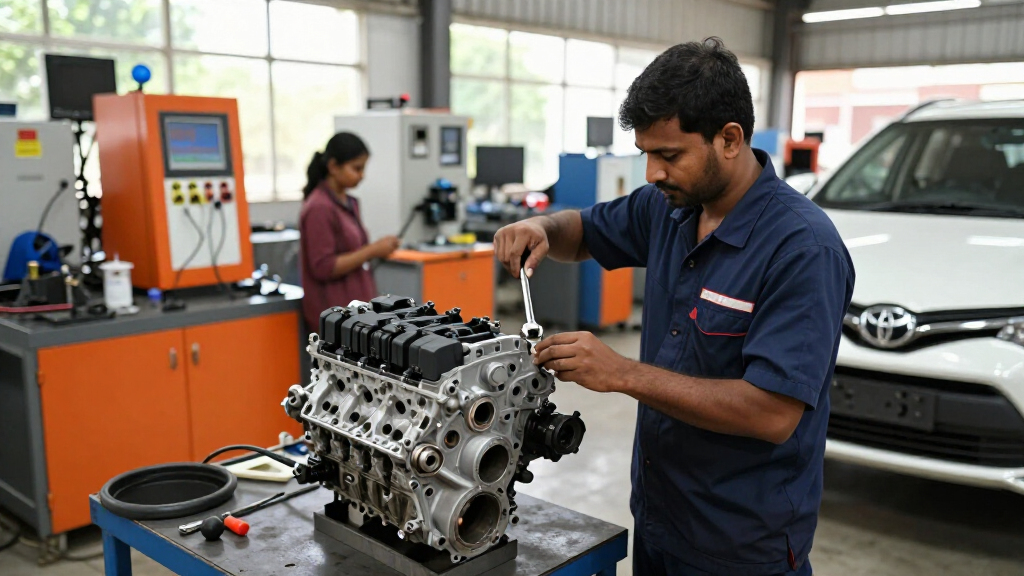
Toyota has opened a new engine manufacturing plant in Bangalore, India, as part of its expansion strategy. The facility aims to boost local production and meet growing demand, though specific production targets are not yet confirmed.
Toyota has officially inaugurated a new engine manufacturing facility in Bangalore, India, marking a significant step in the automaker’s local expansion plans. The plant aims to increase production capacity to support Toyota’s growing market share in India and enhance its global supply chain.
The new engine plant in Bangalore is part of Toyota’s broader strategy to strengthen its manufacturing footprint in India, one of the world’s fastest-growing automobile markets. The facility is expected to focus on producing engines for both domestic sales and export, aligning with Toyota’s global production network. While specific details about the plant’s capacity or the number of jobs created have not been publicly disclosed, sources indicate that the facility is equipped with advanced manufacturing technologies to meet international standards.
Industry analysts note that Toyota’s move comes amid increased competition in India’s automotive sector, with several automakers expanding their local manufacturing capabilities. The Bangalore plant is seen as a strategic investment to improve supply chain resilience and reduce dependence on imports for engine components. The company has not yet announced the exact timeline for the plant’s operational ramp-up or the initial production volume.
Strategic Expansion in India’s Auto Sector
This development signifies Toyota’s commitment to strengthening its manufacturing presence in India, a key market for the automaker’s global growth. The new engine plant is expected to support increased local production, potentially lowering costs and improving supply chain efficiency. It also signals a response to rising demand for vehicles in India and the region, which is attracting significant investment from global automakers. For consumers, this could translate into more locally produced models and potentially more competitive pricing in the future.As an affiliate, we earn on qualifying purchases.
Toyota’s Growing Investment in India
Toyota has been steadily expanding its manufacturing footprint in India over the past decade, establishing multiple plants and increasing local sourcing. The company’s recent focus has been on producing hybrid and conventional engines to cater to the Indian market’s evolving preferences. Prior to this, Toyota had announced plans to ramp up local assembly and expand its product lineup, including hybrid vehicles, as part of its India strategy. The inauguration of the new engine plant aligns with global trends toward localized manufacturing to meet regional demand and reduce import costs.As an affiliate, we earn on qualifying purchases.
Details on Production Capacity and Timeline
It is not yet clear what the initial production capacity of the Bangalore engine plant will be, nor the specific timeline for full operational status. Toyota has not publicly disclosed detailed plans or the number of jobs to be created at this stage. Additionally, the plant’s role in Toyota’s global supply chain remains to be fully clarified, including whether it will serve export markets or focus solely on domestic needs.
automotive engine diagnostic scanner
As an affiliate, we earn on qualifying purchases.
As an affiliate, we earn on qualifying purchases.
Next Steps for Toyota’s Bangalore Plant
The company is expected to announce further details about the plant’s capacity, production schedules, and employment figures in the coming months. Observers will also be watching for any new vehicle launches or hybrid models that leverage the new engine manufacturing capabilities. Additionally, Toyota may expand its local supplier network to support the plant’s operations, further integrating into India’s automotive ecosystem.
As an affiliate, we earn on qualifying purchases.
Key Questions
What types of engines will the Bangalore plant produce?
While specific engine types have not been confirmed, industry sources suggest the plant will produce conventional petrol and possibly hybrid engines to meet local demand and support Toyota’s hybrid vehicle lineup.
How many jobs will the new plant create?
Exact employment figures have not been disclosed. However, industry estimates suggest the plant could generate several hundred to over a thousand jobs once fully operational.
Will the Bangalore plant serve export markets?
It is not yet confirmed whether the plant will focus solely on the Indian market or also supply engines for export. This detail remains to be announced by Toyota.
When will the plant become fully operational?
There is currently no specific timeline announced. Toyota is expected to provide updates on the plant’s operational status in the coming months.
The new engine plant could help Toyota expand its local manufacturing capacity, potentially strengthening its position in India’s competitive auto market and enabling more competitive pricing and product offerings.
Source: local
Fall Picks
fall essentials
As an affiliate, we earn on qualifying purchases.