
TL;DR

Get business pricing on garage and car supplies
- Business-only prices and quantity discounts
- Tax-exempt purchasing
- Multiple users, one account, clear invoices
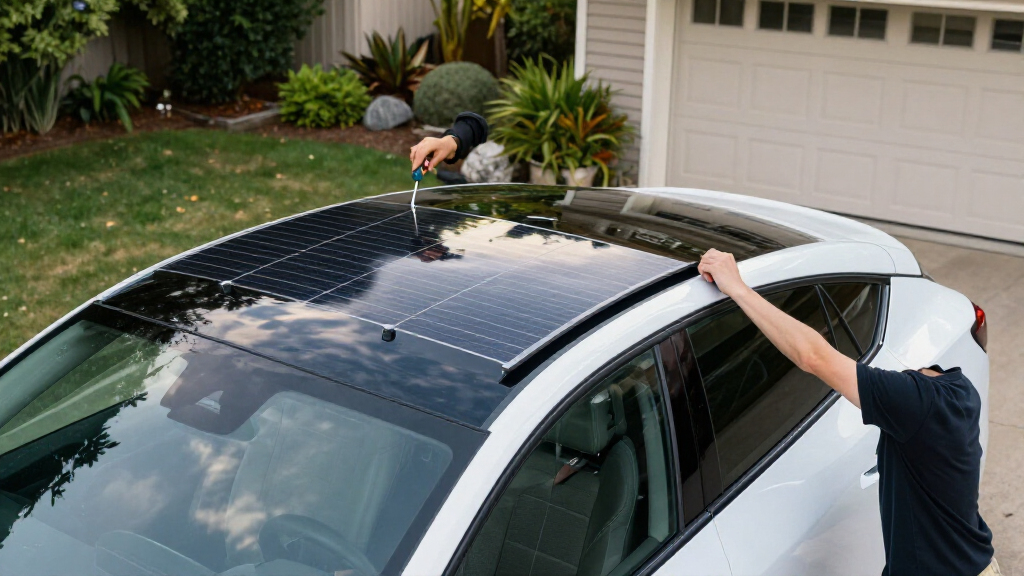
Aptera announced a new solar-powered EV claiming a theoretical range of 47 miles on sunlight alone. The vehicle’s solar integration is promising but untested in real-world conditions, raising questions about practical performance.
Aptera has introduced a new solar-powered electric vehicle that, according to the company, can travel up to 47 miles on sunlight alone in theory. This development highlights a potential breakthrough in solar integration within EVs, though the range remains unverified in real-world conditions. The claim positions Aptera as a leader in solar vehicle innovation, attracting attention from industry observers and potential consumers interested in solar energy’s role in transportation.
The vehicle, named the Aptera Solar EV, features an extensive array of integrated solar panels covering its body, designed to harness sunlight and convert it into usable energy. The company states that under optimal conditions, the solar array can generate enough power to support a 47-mile range without charging from external sources. This figure is based on laboratory testing and theoretical calculations, not on extensive field testing or consumer use scenarios.
Aptera’s CEO, Chris Anthony, emphasized that the 47-mile figure represents the vehicle’s potential under ideal conditions, such as direct sunlight and optimal angles. He noted that real-world performance might be lower due to weather, shading, and other environmental factors. The company plans to conduct further testing to assess actual range and efficiency in diverse conditions before releasing the vehicle to consumers.
The vehicle’s design includes lightweight construction and high-efficiency solar cells, aiming to maximize energy capture. Aptera claims that the solar integration could significantly reduce the need for traditional charging, especially in sunny climates, and potentially extend the vehicle’s overall range over time as solar technology improves.
Potential Impact of Solar-Only Range Claims
If validated through real-world testing, Aptera’s solar vehicle could represent a major step toward reducing dependence on external charging infrastructure for EVs. The ability to travel 47 miles solely on sunlight could make solar-powered EVs more practical for daily commuting, especially in regions with abundant sunshine. However, the current figure is based on theoretical modeling, and its practical implications remain uncertain. The development may also influence industry efforts to incorporate solar technology into mainstream electric vehicles, encouraging further innovation and investment in solar energy integration.
As an affiliate, we earn on qualifying purchases.
Background on Solar Integration in Electric Vehicles
While solar-powered vehicles have been experimented with for decades, widespread adoption has been limited by the relatively low energy density of solar panels and the high cost of integrating them into vehicle designs. Past efforts, including prototypes and concept cars, have demonstrated the potential for solar energy to supplement EV range but rarely achieved significant standalone distances. Companies like Lightyear and Sono Motors have also pursued solar EVs, but none have yet achieved commercial success at the scale of Aptera’s ambitions. The current announcement builds on ongoing industry interest in renewable energy solutions for transportation, though practical, fully solar-powered EVs remain a future goal rather than a current standard.
“Our solar panels are designed to capture sunlight efficiently and convert it into usable energy, giving the vehicle a potential of 47 miles on solar power alone under ideal conditions.”
— Chris Anthony, CEO of Aptera
As an affiliate, we earn on qualifying purchases.
Uncertainties About Real-World Solar Performance
It is not yet clear how the 47-mile range will translate outside laboratory settings. Factors such as weather, shading, vehicle orientation, and geographic location can significantly impact actual solar energy capture. Aptera has acknowledged that the figure is based on optimal conditions and plans further testing to verify real-world performance. Until then, the practical applicability of the solar-only range remains uncertain, and consumers should consider it a potential rather than guaranteed feature.
As an affiliate, we earn on qualifying purchases.
Next Steps for Validation and Consumer Readiness
Aptera intends to conduct extensive real-world testing to evaluate the vehicle’s solar performance across different climates and conditions. The company also plans to refine the solar technology and vehicle design based on these results. A commercial rollout is not yet scheduled, but if testing confirms the theoretical claims, Aptera could begin limited deliveries or demonstrations within the next year. Industry observers will be watching closely to see whether the solar range can be substantiated outside controlled environments.
As an affiliate, we earn on qualifying purchases.
Key Questions
Can the vehicle truly travel 47 miles on sunlight alone?
The 47-mile figure is based on laboratory tests under ideal conditions. Real-world performance may be lower due to environmental factors, and Aptera is still testing to verify actual range.
How does Aptera’s solar technology compare to others?
Aptera claims its solar panels are highly efficient and integrated extensively across the vehicle’s surface, aiming for maximum energy capture. Other companies have experimented with solar but typically with less extensive coverage or lower claimed ranges.
When will the vehicle be available to consumers?
There is no confirmed release date yet. Aptera plans further testing and refinement before considering commercial production, which could take at least a year or more.
Will solar alone be enough to power the vehicle for daily use?
Given current technology, solar alone is unlikely to fully power the vehicle for all daily driving needs, but it could significantly extend range and reduce charging frequency in sunny regions.
What are the limitations of solar-powered EVs?
The main limitations include the low energy density of solar panels, weather dependence, and high costs of integration. Achieving substantial standalone range remains a challenge for most solar EVs.
Source: rss
Halloween Picks
halloween
As an affiliate, we earn on qualifying purchases.