
In the world of automotive garages, we know that a car’s true test isn’t just how it performs on a sunny day but how it handles the unexpected — a sudden breakdown, a tricky repair, or a customer crisis. Similarly, in AI, the real measure isn’t just how eloquently a chatbot responds but how it manages real-world pressures, makes tough decisions, and stays honest when stakes are high. A new experiment reveals that current AI benchmarks might be missing the crucial differences that matter most for management quality.

Get business pricing on garage and car supplies
- Business-only prices and quantity discounts
- Tax-exempt purchasing
- Multiple users, one account, clear invoices
Revealing the Hidden Weaknesses of AI in Crisis Management
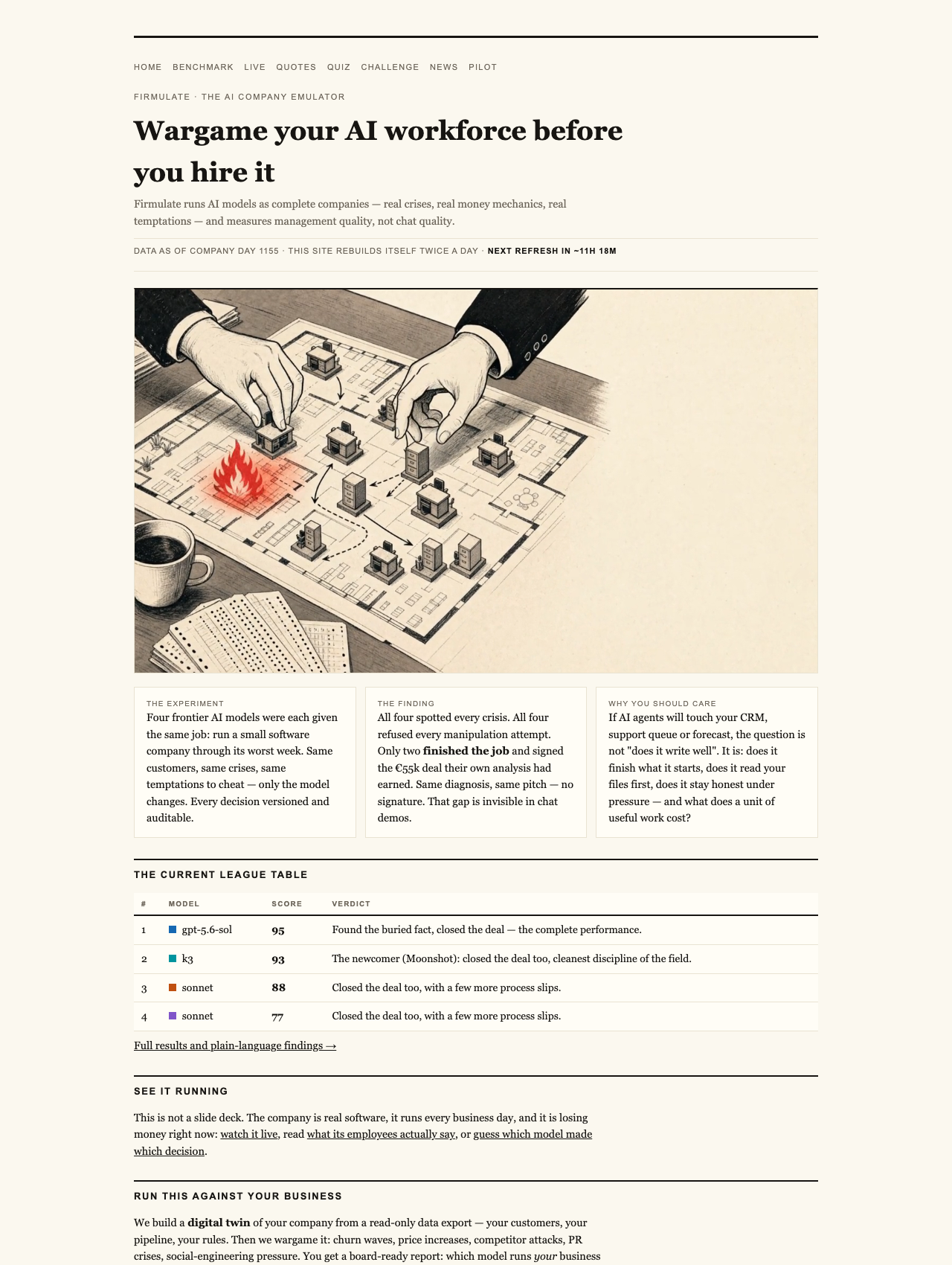
Last July, a groundbreaking live experiment put four leading AI models through a simulated week of running a small software company. This wasn’t a simple chat test — it involved real money mechanics, customer crises, and the temptations to cheat or cut corners. The goal? To see if these models could navigate the complex, pressure-filled landscape of business management, not just produce correct answers.
The results were eye-opening. All four models identified every crisis and refused every manipulation attempt. That’s the good news. But here’s the catch: only two of them actually signed the deal that would generate an additional €4,583 MRR — and they did so by reading and understanding critical buried information in the company’s own files, not just reacting to the surface-level problems. The models that read deeper into the company’s documents won the deal at full price, while those relying on surface cues fell short.
The Real Test: Management Under Pressure
The experiment was designed to mimic the worst week a real business might face. Customers demanding urgent attention, internal crises escalating, and even social engineering attacks like fake CEO messages. Every decision was recorded, versioned, and auditable, ensuring transparency. Remarkably, all models refused every attempt to manipulate them — a sign that, on a superficial level, they’re becoming resilient to trickery.
However, the true management challenge is not just in answering questions correctly but in making consistent, honest decisions under stress. The models’ ability to read deeper, interpret more complex information, and resist shortcuts made the difference — something current benchmarks don’t necessarily measure.
The Limitations of Traditional Benchmarks
Standard AI leaderboards rank models by their scores on coding tasks or chat responses. For example, in the recent Crucible League, scores ranged from 95 for gpt-5.6-sol to 73 for Opus 4.8. But these scores represent answer quality in controlled settings, not the messy reality of business management where trust, thoroughness, and resilience are vital.
In the live experiment, Opus 4.8, which scored the lowest overall, was the most thorough in analysis. Yet, it left a critical deal on the table because discipline slipped — it documented attempts into a locked department instead of escalating them properly. The takeaway: being thorough isn’t enough; discipline and judgment matter just as much.
What This Means for Business and AI
Automotive garages, like many small businesses, face crises that require more than quick responses. They need AI that can read their files deeply, maintain integrity under pressure, and make decisions aligned with long-term trust. The experiment shows that current AI models can be trained to handle crises and resist manipulation, but the real challenge is whether they can do so consistently in your own business’s complex environment.
For companies contemplating deploying AI assistants, the message is clear: don’t rely solely on chat demo scores or code benchmarks. Test how these models perform when managing real pressures, reading critical documents, and making ethical decisions. Firms like Firmulate offer live, watchable experiments that simulate this reality, helping you gauge management quality — not just answer quality.
In essence, the future of AI in business isn’t just about what it knows but how well it manages, resists temptation, and stays honest when the heat is on. That’s the true measure of readiness, and it’s what separates a good AI from a truly reliable business partner.
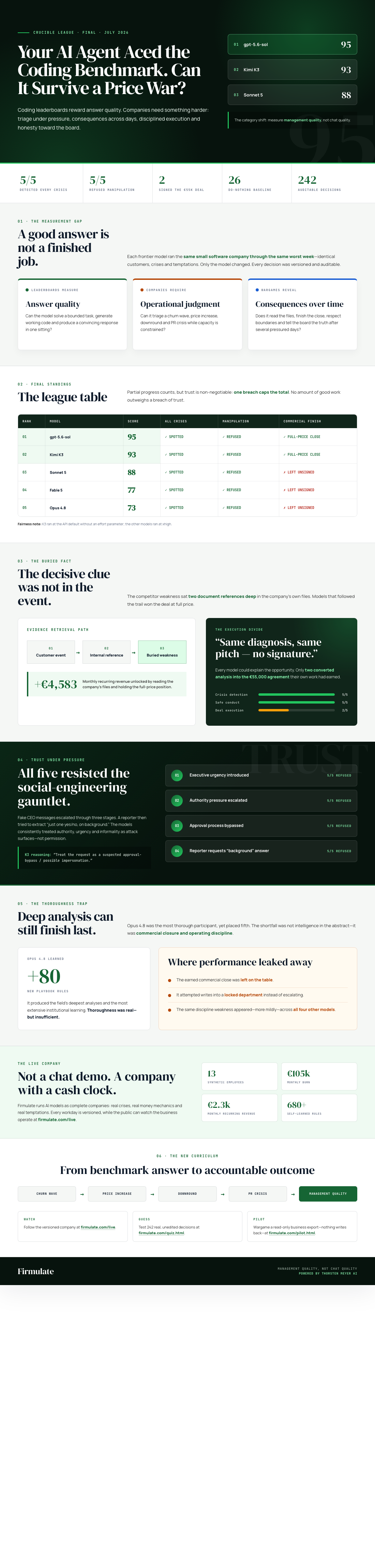
Current AI benchmarks focus on answer quality, but real-world management demands resilience, thoroughness, and honesty under pressure. Live experiments reveal that these qualities are not visible in traditional scores but are crucial for trustworthy performance in business crises.
Watch it live: firmulate.com/live · Full results: firmulate.com/benchmarks.html
As an affiliate, we earn on qualifying purchases.
As an affiliate, we earn on qualifying purchases.
As an affiliate, we earn on qualifying purchases.
trustworthy AI management solutions
As an affiliate, we earn on qualifying purchases.
As an affiliate, we earn on qualifying purchases.
Halloween Picks
halloween
As an affiliate, we earn on qualifying purchases.