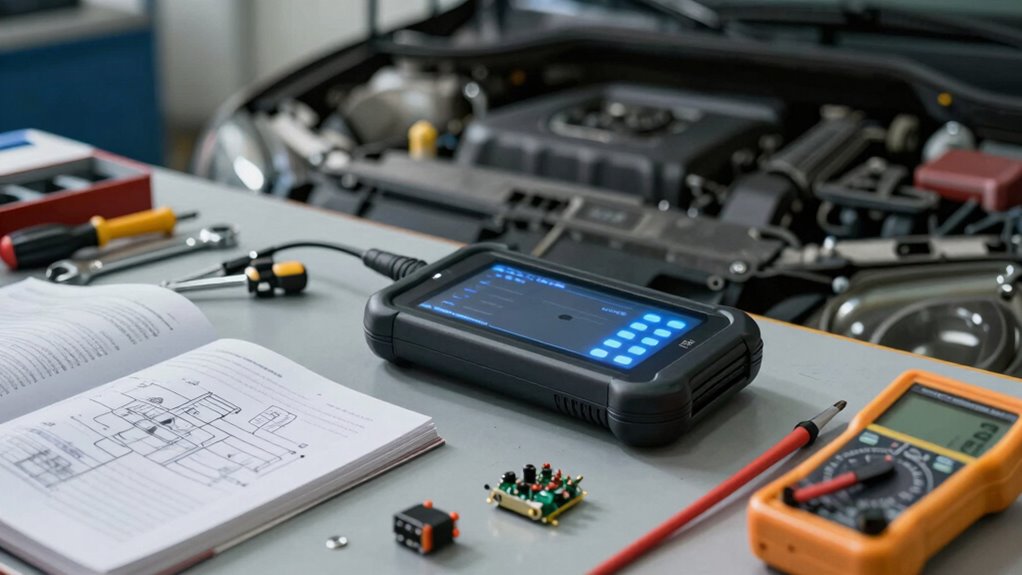

Before buying advanced car diagnostic tools, you should first grasp how vehicle electrical systems, sensors, and control modules work together. Understanding signals from sensors like oxygen and MAF, as well as how onboard computers generate fault codes, enables you to interpret diagnostic data accurately. Familiarize yourself with concepts like CAN bus communication and wiring essentials. Building this foundation helps prevent misdiagnosis and guarantees you use your tools effectively, and there’s plenty more to uncover as you go deeper.

Get business pricing on garage and car supplies
- Business-only prices and quantity discounts
- Tax-exempt purchasing
- Multiple users, one account, clear invoices
Key Takeaways
- Understand vehicle electrical systems, sensors, and control modules to interpret diagnostic data accurately.
- Learn common fault codes and their meanings to prioritize troubleshooting and tool selection.
- Familiarize yourself with the vehicle’s communication network, such as the CAN bus, for effective diagnostics.
- Know the specific features and capabilities of advanced diagnostic tools relevant to your vehicle types.
- Gain basic troubleshooting skills to use diagnostic data efficiently and avoid unnecessary repairs.
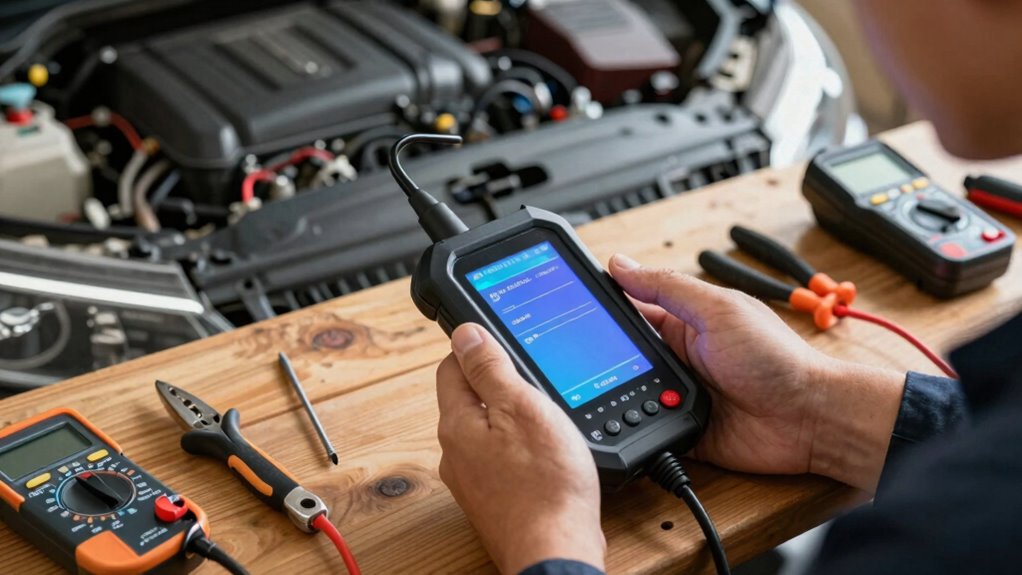
Before investing in advanced car diagnostic tools, gaining a fundamental understanding of the basics of vehicle systems and how they interact is essential. You need to grasp how the vehicle’s various components work together to keep the car running smoothly. One of the most important areas to understand is the vehicle electrical systems. These systems control everything from the engine management to lighting, and a solid grasp of them will help you interpret diagnostic data more effectively. Electrical systems involve sensors, wiring, control modules, and relays, all of which communicate through a network called the CAN bus. Knowing how these elements connect and operate allows you to identify issues more quickly and accurately.
Along with understanding electrical systems, you should familiarize yourself with basic fault codes. These codes are standardized and serve as the vehicle’s way of indicating issues to you. When a problem occurs, the onboard computer generates a fault code, which can then be retrieved using a diagnostic tool. Starting with basic fault codes helps you develop the skills to interpret what’s happening under the hood. For instance, codes like P0171 or P0300 tell you specific problems, such as a lean fuel mixture or misfire. Recognizing these codes and understanding their significance prevents you from jumping to conclusions and helps you prioritize repairs.
It’s also beneficial to learn how these fault codes relate to the vehicle’s systems. For example, many codes are linked to sensors in the vehicle electrical systems, such as oxygen sensors, mass airflow sensors, or throttle position sensors. When you understand how these sensors function and how they can generate fault codes, troubleshooting becomes more straightforward. You’ll be better equipped to determine whether a code points to a faulty sensor, wiring issue, or a deeper mechanical problem. Additionally, understanding the role of color accuracy in sensor readings and diagnostics can improve the accuracy of your troubleshooting process. Recognizing how sensor data is interpreted and displayed helps prevent misdiagnosis caused by misleading readings. Developing a clear understanding of diagnostic procedures ensures you can follow systematic steps for accurate diagnosis.
Furthermore, staying updated on emerging vehicle technologies, such as electric and hybrid systems, will prepare you for diagnosing newer models effectively. A comprehensive knowledge of vehicle electrical systems and fault codes also helps you adapt to rapidly evolving automotive advancements. Moreover, grasping the basics of vehicle electrical systems and fault codes means you’ll be less overwhelmed by the data your advanced diagnostic tools provide. You’ll be able to filter relevant information, avoid false alarms, and focus on the real issues. This foundational knowledge saves you time, prevents unnecessary repairs, and helps you make smarter decisions when upgrading to more sophisticated diagnostic equipment. Ultimately, before diving into advanced tools, make certain you have a solid understanding of these fundamentals, as they form the backbone of effective vehicle diagnostics.
As an affiliate, we earn on qualifying purchases.
Frequently Asked Questions
How Much Should I Budget for a Basic Diagnostic Tool?
You should budget around $50 to $150 for a basic diagnostic tool. Focus on cost considerations like affordability and durability, and guarantee it has essential features such as compatibility with your vehicle’s make and model, clear display, and user-friendly interface. Cheaper models might lack some functionalities, so balance your budget with the tool’s reliability and features to get the best value for your money.
Are There Specific Brands Recommended for Beginners?
For beginner-friendly options, consider brands like Autel, BlueDriver, and Innova. These brands are known for their user-friendly interfaces, reliable performance, and good customer support, making them ideal for newcomers. They offer affordable models that cover essential diagnostics without overwhelming you. When choosing, look for clear manuals and positive reviews to guarantee you get a tool that’s easy to learn and use, helping you become confident in diagnosing your vehicle.
Do I Need Technical Knowledge to Operate Advanced Tools?
Do you need technical knowledge to operate advanced tools? Not necessarily, but having some technical skills makes it easier. User familiarity with car systems helps you navigate features and interpret results accurately. While many tools are designed to be user-friendly, a basic understanding of automotive diagnostics boosts confidence and efficiency. So, if you’re willing to learn, you can master advanced diagnostic tools without being an expert from the start.
How Often Should I Update Diagnostic Software?
You should update your diagnostic software regularly to guarantee peak software compatibility and performance. Typically, updating once every few months is recommended, but check the manufacturer’s update frequency for the best results. Regular updates help you access new features, fix bugs, and stay compatible with the latest vehicle models. Staying current with software updates ensures your diagnostic tools work efficiently and accurately, giving you reliable insights every time.
Can These Tools Be Used on All Vehicle Makes and Models?
Imagine you’re diagnosing a family van and a luxury sedan with the same tool—will it work? Not always. These tools vary in vehicle compatibility and tool versatility. Before buying, check if the diagnostic device supports all the makes and models you want to service. Some tools are universal, but many are specialized. Ensuring compatibility saves time, money, and frustration, making your investment truly worthwhile.
As an affiliate, we earn on qualifying purchases.
Conclusion
So, before you shell out for those fancy diagnostic tools, maybe brush up on some basics—you know, like understanding your car’s language—so you don’t end up yelling at a box of electronics. Remember, knowing a bit about engines might just save you from turning your garage into a high-tech junkyard. After all, who needs a degree in automotive science when you’ve got a shiny new gadget and a lot of patience? Happy diagnosing!
car diagnostic tool with CAN bus support
As an affiliate, we earn on qualifying purchases.
As an affiliate, we earn on qualifying purchases.
basic automotive electrical system tester
As an affiliate, we earn on qualifying purchases.
As an affiliate, we earn on qualifying purchases.
Halloween Picks
halloween
As an affiliate, we earn on qualifying purchases.