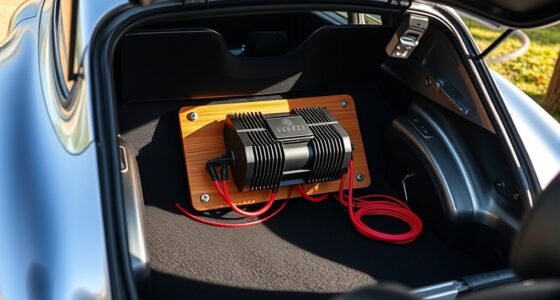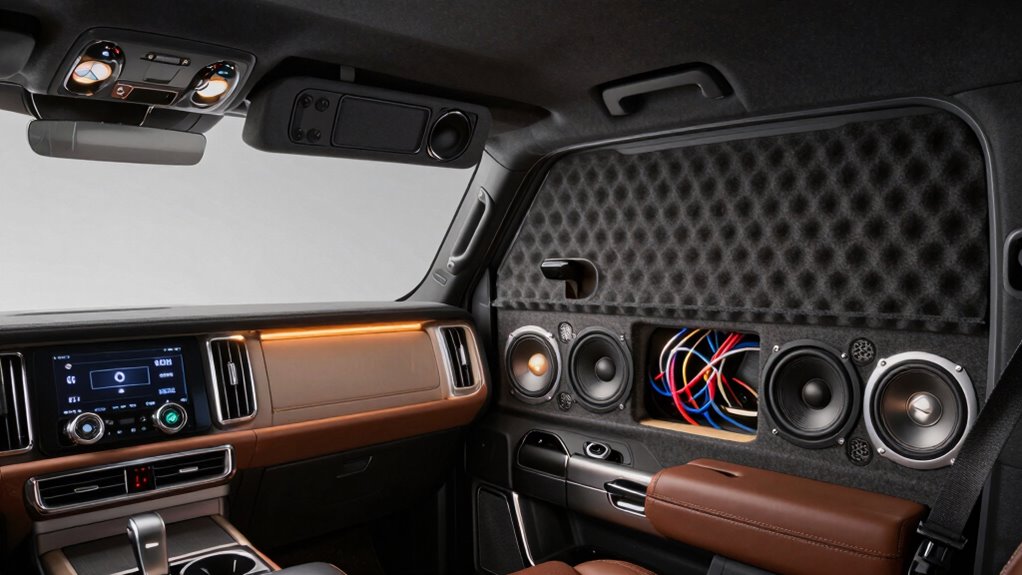

When upgrading your vehicle’s audio, consider each vehicle type’s interior size and layout. Sedans have limited space, so you need to focus on precise speaker placement at ear level for clarity. Trucks and SUVs offer larger areas, allowing for flexible speaker locations and immersive sound. Also, pay attention to electrical systems—larger vehicles handle higher power components better. With the right approach, you can make the most of your upgrade—keep exploring to discover more tips.
Key Takeaways
- Consider interior size and layout to determine optimal speaker placement and avoid cluttering limited sedan space.
- Leverage larger vehicle space in trucks/SUVs for multiple speaker locations and immersive sound experiences.
- Match power requirements and electrical system capacity specific to each vehicle type to prevent damage or weak performance.
- Prioritize precise speaker positioning at ear level in sedans for better imaging, while utilizing flexible placement in trucks/SUVs.
- Conduct tailored sound calibration to address unique acoustic environments and maximize audio clarity in each vehicle category.
Upgrading the audio system in your vehicle isn’t a one-size-fits-all process; instead, it requires considering the unique characteristics and usage of trucks, SUVs, and sedans. Each vehicle type has different interior layouts, space constraints, and typical environments, which influence how you should approach your upgrade. One of the most critical factors is speaker placement. In sedans, the confined cabin means you need to carefully position speakers to optimize sound staging and imaging without cluttering the limited space. Properly placing speakers at ear level and aiming them toward the listening position ensures clearer, more balanced audio. Conversely, in trucks and SUVs, the larger interior allows for more flexibility. You can experiment with multiple speaker locations—door panels, rear decks, or even custom enclosures—to achieve a more immersive experience. However, keep in mind that in bigger vehicles, the placement of speakers impacts sound dispersion, so strategic positioning is essential to avoid dead zones or overly boomy bass. Additionally, considering the acoustic environment of each vehicle can significantly improve sound quality. Power requirements also vary depending on your vehicle type. Sedans typically have a more limited electrical system, so choosing amplifiers and speakers with moderate power demands helps prevent draining your battery or causing electrical issues. You might opt for components that are designed to operate efficiently at lower power levels. In contrast, trucks and SUVs often have larger alternators and more robust electrical systems, allowing you to install higher-powered amplifiers and more demanding speakers to get louder, clearer sound. But even with these vehicles, it’s vital to match the power ratings of your speakers and amplifiers. Overpowering can cause distortion or damage, while underpowering won’t give you the full audio punch you’re seeking. Ensuring proper sound calibration is also essential for achieving optimal audio quality without distortion or imbalance. Properly balancing your power requirements ensures your upgraded system performs optimally without risking system failure.

KICKER Speakers 6.5 inch for Honda Civic (Coupe, Sedan) 2016-2021 Upgrade Kit – 4 Pack of CS Series with Adapters and Harness, Coaxial 6 1/2 Car Audio Front Door and Rear Deck Speaker CSC65, 46CSC654
PACKAGE OF 6 ITEMS – Kicker 46CSC654 6 ½ inch speakers (2 pairs), Vixen Go VGH-72-7800 speaker harness…
As an affiliate, we earn on qualifying purchases.
As an affiliate, we earn on qualifying purchases.
Frequently Asked Questions
Do Vehicle Size and Shape Impact Speaker Placement Options?
Yes, vehicle size and shape considerably impact speaker placement options. Larger vehicles like trucks and SUVs offer more space, allowing for more flexible speaker placement that enhances the acoustic environment. Sedans, being more compact, limit placement choices, which can affect sound quality. You should consider how the vehicle’s interior layout influences speaker positioning to optimize sound distribution and achieve the best audio experience in each vehicle type.
How Does Interior Noise Level Influence Audio Upgrade Choices?
Higher interior noise levels make you prioritize soundproofing techniques to improve audio clarity. You’ll want to invest in soundproof mats and insulation, which reduce road noise and enhance sound quality. Additionally, choose speakers with high durability that can withstand vibrations and temperature changes. These upgrades guarantee your sound system performs well despite noisy environments, giving you a richer, clearer listening experience no matter your vehicle type.
Are Certain Audio Components Better Suited for Specific Vehicle Types?
You might think all audio components work equally well across vehicle types, but that’s not true. For better audio quality and manageable installation complexity, choose components suited for your vehicle. For trucks and SUVs, opt for powerful amplifiers and rugged speakers that handle interior noise. Sedans benefit from compact, high-fidelity components. Selecting the right gear guarantees ideal sound without complicated installs, giving you the best listening experience based on your vehicle’s design.
What Are the Cost Differences in Upgrading Audio Systems Across Vehicles?
You’ll find that the cost differences in upgrading audio systems vary by vehicle type, largely influenced by subtopic relevance and your upgrade priorities. Trucks and SUVs often need larger, more powerful components, which can increase costs. Sedans might require less extensive upgrades, making them more budget-friendly. Prioritizing features like sound quality or bass response impacts your overall expenses. Ultimately, your choice of components and vehicle size determine your upgrade costs the most.
How Do Power Requirements Vary Between Trucks, SUVS, and Sedans?
Power requirements vary considerably among trucks, SUVs, and sedans due to differences in electrical demands and power compatibility. Trucks often have larger electrical systems, allowing for higher power audio components without issues. SUVs typically have moderate demands, while sedans usually require lower power inputs. You should consider your vehicle’s electrical capacity before upgrading, ensuring your new audio system’s power needs align with what your vehicle can safely support.
truck SUV immersive sound system components
As an affiliate, we earn on qualifying purchases.
As an affiliate, we earn on qualifying purchases.
Conclusion
Now, picture yourself behind the wheel, the open road stretching ahead, your favorite song filling the cabin with crystal-clear sound. Whether you’re in a truck, SUV, or sedan, understanding how each vehicle’s unique design influences your audio upgrades helps you create a personalized concert hall on wheels. With the right choices, every drive becomes an immersive experience, turning your vehicle into a sanctuary of sound where music surrounds you like a warm embrace.

BOSS Audio Systems R1100M Monoblock Car Amplifier – 1100 High Output, 2-8 Ohm Stable, Low/High Level Inputs, Low Pass Crossover, MOSFET Power Supply
DIMENSIONS: 10.43" x 9.21" x 2.25", WEIGHT: 4.37 lbs
As an affiliate, we earn on qualifying purchases.
As an affiliate, we earn on qualifying purchases.

Car Sound Deadening Roller Metal Installation Tool 3 Pcs for Auto Noise Roller Car Sound Deadener Application Installation Tool Rolling Wheel Interior Accessories
HIGH QUALIT: Our sound deadening noise roller handle is made of wood, the rolling wheel is made of…
As an affiliate, we earn on qualifying purchases.
As an affiliate, we earn on qualifying purchases.