To develop good diagnostic habits as a non-mechanic, approach problems systematically rather than guessing. Pay close attention to details, such as sounds, visuals, or patterns, and ask targeted questions to narrow down causes. Test solutions carefully, observe changes, and stay patient through multiple attempts. Keep track of your findings and learn from each experience. If you keep refining these habits, you’ll improve your ability to identify issues more efficiently.
Key Takeaways
- Approach problems methodically by gathering clues and analyzing potential causes without jumping to conclusions.
- Pay close attention to visual, auditory, and behavioral cues to identify subtle signs of issues.
- Ask targeted questions about recent changes and recurring patterns to narrow down possible causes.
- Test solutions systematically, observing results carefully and reevaluating as needed.
- Continuously learn through manuals, tutorials, and expert advice to improve diagnostic skills over time.
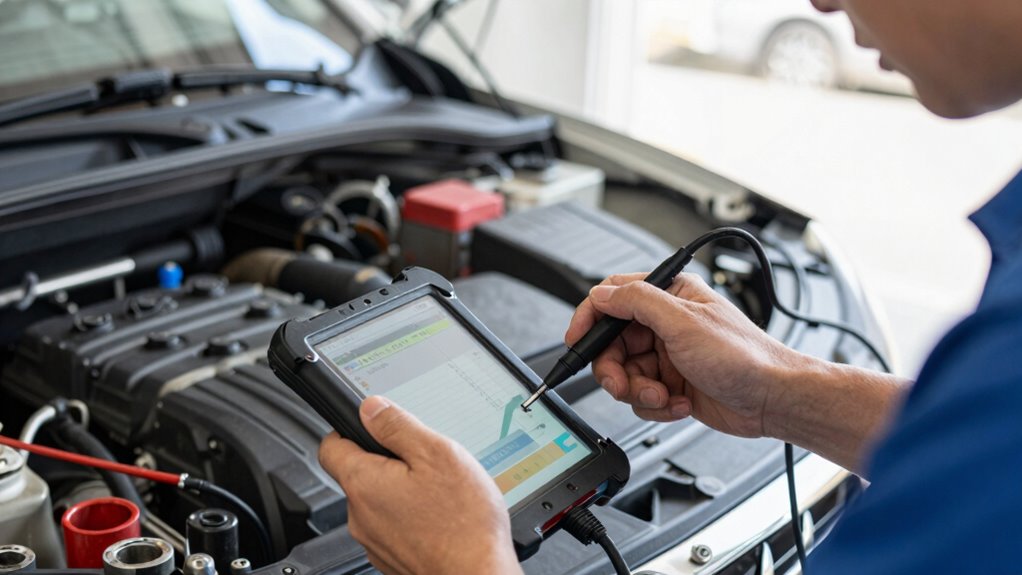
When you’re not a mechanic but still need to diagnose issues effectively, developing good diagnostic habits is essential. The foundation of these habits is a strong troubleshooting mindset, combined with sharp observation skills. Instead of jumping to conclusions or guessing, you approach problems systematically, gathering clues and analyzing what might be causing the issue. This mindset keeps you calm and focused, preventing frustration from clouding your judgment. It’s about viewing every problem as a puzzle to solve, rather than an insurmountable obstacle.
Develop a systematic troubleshooting mindset and sharpen your observation skills to diagnose issues confidently and effectively.
Observation skills play a crucial role here. You’ll want to pay close attention to any visual cues, sounds, smells, or changes in how the device or system behaves. For example, if a machine isn’t starting properly, you check for warning lights, leaks, loose wires, or unusual noises. These small details often point to the root cause. Developing a habit of thorough observation helps you notice patterns that might otherwise go unnoticed. Over time, you begin to recognize common signs that indicate specific issues, making your troubleshooting more efficient. Recognizing contrast ratios and how they affect image quality can be analogous to noticing subtle differences in symptoms or signs in troubleshooting. Additionally, understanding how different components interact can deepen your diagnostic insights. Having a solid understanding of the interactions of components can significantly streamline your diagnostic process. In some cases, understanding the proper maintenance routines can help prevent issues before they start.
A good diagnostic habit involves asking the right questions. Instead of assuming, you start with basic inquiries—what changed recently? When did the problem start? Does it happen consistently or intermittently? By framing your questions carefully, you narrow down possibilities and avoid wasting time on unlikely causes. Keep track of your observations and answers, either mentally or with notes, so you can spot trends or recurring issues.
Another key habit is patience. Rushing through troubleshooting often leads to overlooked clues or incorrect assumptions. Take your time to examine the problem from different angles. Test potential solutions methodically, and observe what changes with each step. If something doesn’t improve, don’t keep trying the same thing blindly. Instead, reassess your observations and consider alternative causes. This iterative process, fueled by a troubleshooting mindset, helps you become more effective at diagnosing problems on your own.
Finally, develop a habit of continuous learning. Read manuals, watch tutorials, and ask knowledgeable friends or professionals for advice. Each new piece of information enhances your observation skills and broadens your understanding of common issues. The more you learn, the better equipped you are to troubleshoot accurately. Incorporating ongoing education into your routine ensures you stay updated on new troubleshooting techniques and potential problems. With a combination of a troubleshooting mindset and keen observation skills, you can diagnose many problems confidently, even without being a trained mechanic.

ANCEL AD310 Classic Enhanced Universal OBD II Scanner Car Engine Fault Code Reader CAN Diagnostic Scan Tool, Read and Clear Error Codes for 1996 or Newer OBD2 Protocol Vehicle (Black)
CEL Doctor: The ANCEL AD310 is one of the best-selling OBD II scanners on the market and is…
As an affiliate, we earn on qualifying purchases.
As an affiliate, we earn on qualifying purchases.
Frequently Asked Questions
How Can I Tell if a Diagnosis Is Accurate?
You can tell if a diagnosis is accurate by applying self-assessment techniques, like reviewing your reasoning and considering alternative explanations. Maintain a diagnostic mindset, staying open to new information and questioning initial assumptions. Cross-check your conclusions with observable evidence, client feedback, or test results. If your assessment consistently aligns with outcomes and withstands scrutiny, you’re likely on the right track. Regular reflection and seeking second opinions also enhance diagnostic accuracy.
What Tools Are Essential for Non-Mechanical Diagnostics?
Ever notice how a chance encounter with a reliable tool can boost your diagnostic accuracy? For non-mechanical diagnostics, vital tools include a well-stocked notebook for detailed observations, a reliable testing kit, and digital apps for data analysis. Tool selection is key; choose user-friendly, precise instruments that match your needs. These tools help you gather accurate information, improve decision-making, and guarantee your diagnoses are spot-on every time.
How Do I Handle Conflicting Information During Diagnosis?
When you encounter conflicting information during diagnosis, you should rely on sensor calibration and diagnostic checklists to clarify issues. Cross-check data from different sensors, ensuring they’re properly calibrated. Follow your checklists step-by-step to verify each component’s function. If inconsistencies persist, re-calibrate sensors and repeat diagnostics. Staying methodical helps you identify the true problem and avoid jumping to conclusions, ensuring accurate, reliable results every time.
When Should I Seek Professional Help?
When your DIY assessment and symptom tracking reveal persistent issues or worsening symptoms, it’s time to seek professional help. Don’t ignore warning signs as if they’re fleeting clouds—recognize when they gather into a storm. If your efforts don’t bring clarity or relief, or if symptoms interfere with daily life, a healthcare professional can steer you toward the right diagnosis and treatment. Trust your instincts; they’re your best compass.
How Can I Improve My Diagnostic Skills Over Time?
You can improve your diagnostic skills by cultivating a strong diagnostic mindset and honing your observation techniques. Focus on asking clear questions and actively listening to details, while paying close attention to subtle clues. Practice regularly by analyzing problems methodically, and reflect on your mistakes to learn from them. Over time, these habits help you develop sharper intuition, making your diagnoses more accurate and efficient.

DIGITAL MULTIMETER BASICS: A Beginner's Guide to Testing, Measuring, and Troubleshooting Electronic Circuits
As an affiliate, we earn on qualifying purchases.
As an affiliate, we earn on qualifying purchases.
Conclusion
Mastering good diagnostic habits isn’t about knowing every detail—it’s about gentle curiosity and open-mindedness. When you approach problems with patience and a willingness to learn, you build trust and uncover solutions that might otherwise stay hidden. Remember, sometimes the best insights come from quiet observation and careful listening. By nurturing these habits, you create a space where understanding deepens naturally, guiding you toward success without unnecessary pressure or haste.

Windshield Repair Inspection Mirror – 3X Magnification Auto Glass Chip & Crack Tool for Rock Chip Repair
Front and back image shown – pkg only includes one mirror
As an affiliate, we earn on qualifying purchases.
As an affiliate, we earn on qualifying purchases.

Decibel Meter, TopTes TS-501B Sound Level Meter with 2.25” Backlit LCD Screen, Portable SPL Tester with A/C Weighted, Range 30-130dB, MAX/MIN, Data Hold, Use for Home, Noisy Neighbor, Factory – Orange
2.25-inch LCD Screen with Backlight: This TS-501B sound level meter is measured noise levels are expressed in decibels…
As an affiliate, we earn on qualifying purchases.
As an affiliate, we earn on qualifying purchases.