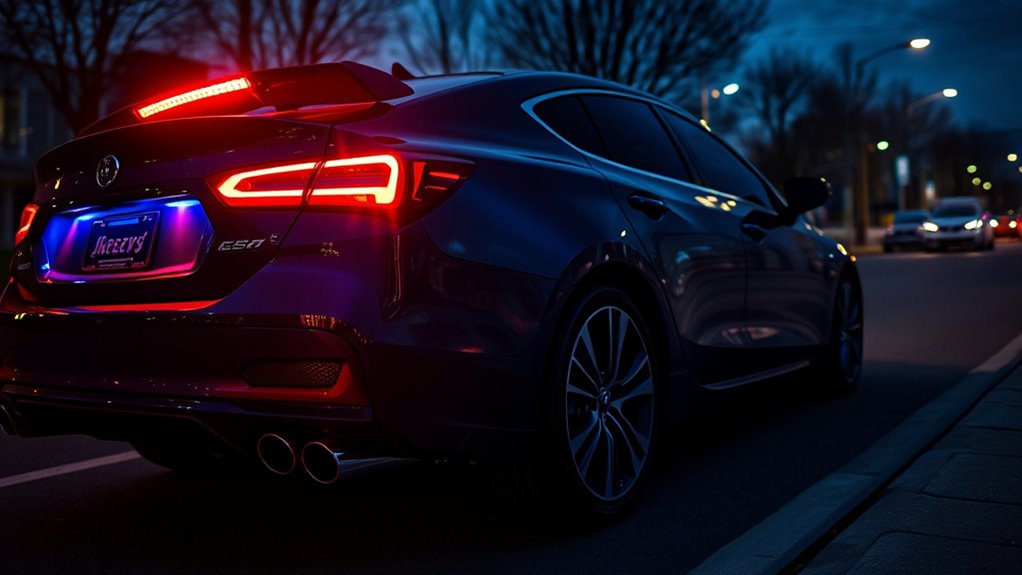
When adding flashing lights to your car, it’s vital to follow local laws to stay legal and safe. Use colors permitted for non-emergency vehicles, like amber or yellow, and avoid red or blue unless you’re an official emergency responder. Make certain your lights are visible from a distance without causing glare, and only activate them during emergencies or roadside stops. Stick to approved patterns and placement to avoid fines or confusion—more details will help guarantee your setup stays within the law.
Key Takeaways
- Use only legally approved colors like amber/yellow for non-emergency vehicle warning signals, and avoid red or blue unless authorized.
- Ensure flashing patterns are simple and recognizable, complying with local laws to prevent confusion with official emergency signals.
- Mount emergency strobes in designated locations, such as the roof or rear, following legal guidelines to avoid obstruction or safety issues.
- Activate flashing lights only during emergencies or breakdowns; misuse can lead to legal penalties or fines.
- Verify local regulations before installation to ensure your DIY emergency strobes meet legal standards and avoid impersonation charges.
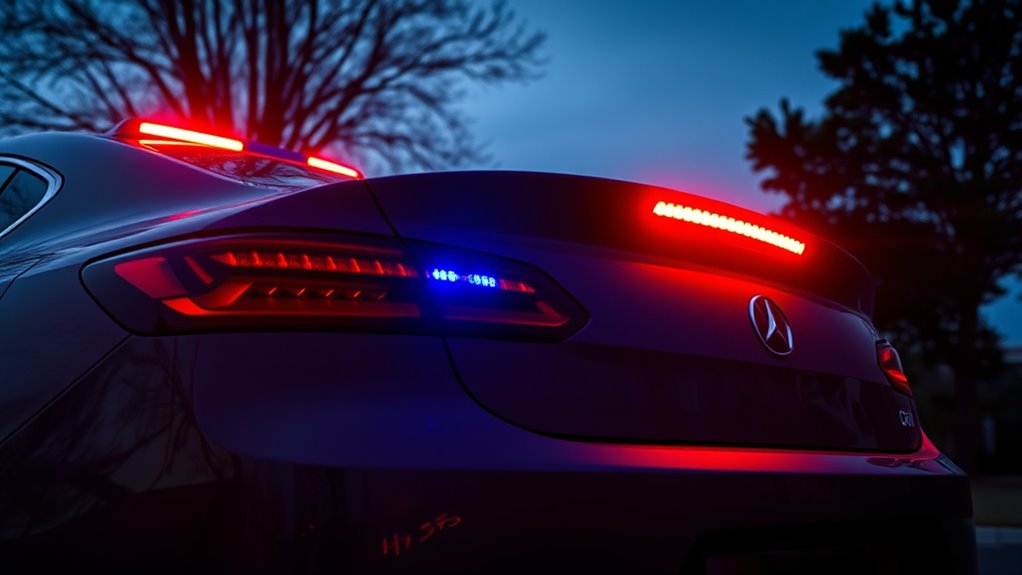
During an emergency, visibility can be a matter of life and death, so having a reliable warning signal is essential. If you’re considering adding DIY emergency strobes to your vehicle, you’re taking a proactive step toward increasing safety on the road. However, it’s vital to understand that not all flashing lights are created equal, and legal compliance plays a significant role in guaranteeing your modifications are both effective and lawful. Your goal should be to enhance vehicle safety without unintentionally violating traffic laws or causing confusion for other drivers.
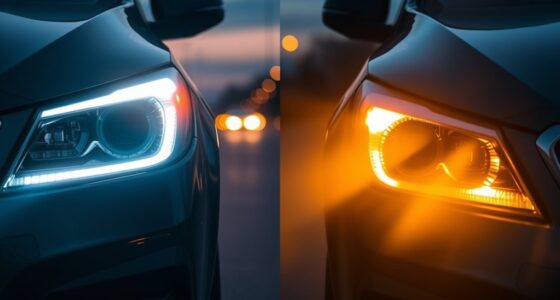
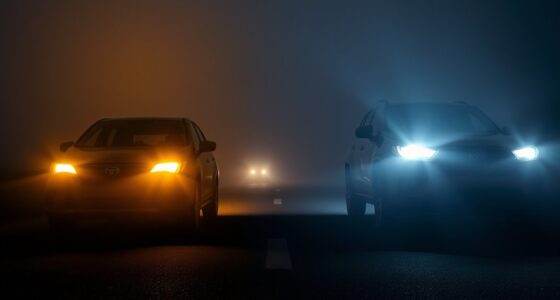
First, you need to recognize that vehicle safety isn’t just about protecting yourself but also about preventing accidents and ensuring your signals are clearly understood by others. When installing emergency strobes, using lights that are bright enough to be seen from a distance is crucial, but they must also be designed to avoid blinding or distracting other drivers. Many jurisdictions specify the colors and flashing patterns permitted for emergency lighting. For example, red and blue lights are typically reserved for emergency vehicles, while amber or yellow strobes are often used for hazard signaling or construction vehicles. Using the wrong color can lead to legal issues, including fines or even confiscation of your equipment.
Legal compliance is another critical aspect of adding DIY emergency strobes. Laws governing vehicle lighting vary depending on where you live, so it’s your responsibility to research local regulations before making modifications. Some areas require that emergency lights be mounted in specific locations or that they only operate in certain conditions. Installing flashing lights that are too bright or that can be mistaken for official emergency vehicle signals can also be problematic, potentially leading to charges of impersonating law enforcement. To avoid this, stick to approved colors and flashing patterns, and ensure your strobes are only used when needed, such as during breakdowns or roadside emergencies. Additionally, choosing lights that mimic official emergency lighting can help you stay within legal standards and avoid misunderstandings.
Frequently Asked Questions
Can I Legally Use DIY Emergency Strobes on Public Roads?
You generally can’t legally use DIY emergency strobes on public roads because vehicle modification laws restrict flashing lights to official emergency vehicles. Using homemade strobes may interfere with traffic safety and could lead to fines or penalties. Always check your local regulations before modifying your vehicle’s lighting. For safety and legality, consider purchasing approved emergency lighting or consult with authorities to ensure your setup complies with traffic safety laws.
Are There Specific Colors Required for Emergency Vehicle Strobes?
You should know that strobe color regulations are strict; most areas require emergency vehicle strobes to be red or blue, as studies show these colors are most effective in signaling authority and caution. Specific color requirements for emergency vehicle strobes help prevent confusion on the road and guarantee safety. Always check local laws for exact color requirements, as some regions may have additional regulations or allowances for certain colors.
What Are the Penalties for Illegal Flashing Lights?
If you use illegal modifications like unauthorized flashing lights, you risk fines, vehicle impoundment, and even license suspension. Law enforcement enforces vehicle regulations strictly, and illegal flashing lights can be mistaken for emergency vehicles, leading to dangerous situations. Always guarantee your modifications comply with local laws to avoid penalties. Staying within legal guidelines protects you from costly fines and legal trouble while keeping your vehicle safe and compliant.
Do Different States Have Varying Regulations for Emergency Strobes?
Yes, different states have varying regulations for emergency strobes. You need to check your state’s specific flashing light laws because rules about colors, placement, and usage can differ markedly. Some states allow certain colors only for emergency vehicles, while others may have restrictions on aftermarket modifications. Always stay informed about your state’s regulations to avoid penalties and ensure your emergency strobes are legal and safe to use.
How Bright Can DIY Strobes Be Without Breaking the Law?
You can’t just choose any brightness level for your DIY strobes; exceeding about 200 candela per flash may violate traffic laws and vehicle modification rules. Many states regulate the intensity of emergency lights, so staying within legal limits helps avoid fines or vehicle issues. Remember, brighter isn’t always better—too much can distract or confuse other drivers, making it essential to follow local traffic laws when installing flashing lights on your car.
Conclusion
So, go ahead and add those flashy, attention-grabbing strobes to your car—just don’t forget to check the law first. After all, nothing says “responsible driver” like risking a hefty fine or flashing everyone you pass. Remember, safety is key, but a little legal compliance never hurt anyone—well, unless you’re trying to turn your ride into a disco on wheels. Stay legal, stay safe, and keep those emergency lights within the law’s glow.