To align your headlights correctly, park your vehicle on a level surface about 25 feet from a wall and turn on the lights. Mark the beam centers with tape and adjust the headlight screws, aiming the beams slightly below the lens centerline for proper focus. Make certain both beams are even and not dazzling oncoming drivers. For detailed steps tailored to your vehicle type, keep going—you’ll find everything you need to perfect your headlight alignment.

Get business pricing on garage and car supplies
- Business-only prices and quantity discounts
- Tax-exempt purchasing
- Multiple users, one account, clear invoices
Key Takeaways
- Park the vehicle on a level surface 25 feet from a flat wall and mark headlight centers with tape.
- Turn on headlights and observe the beam pattern, ensuring the brightest part is slightly below the lens centerline.
- Locate and adjust the headlight screws gradually, aiming for even, level beams without blinding oncoming traffic.
- For vintage or luxury vehicles, follow manufacturer guidelines and avoid improper adjustments that cause glare.
- After adjustments, test the headlights by driving or rechecking the wall setup to confirm proper alignment and no dazzling.
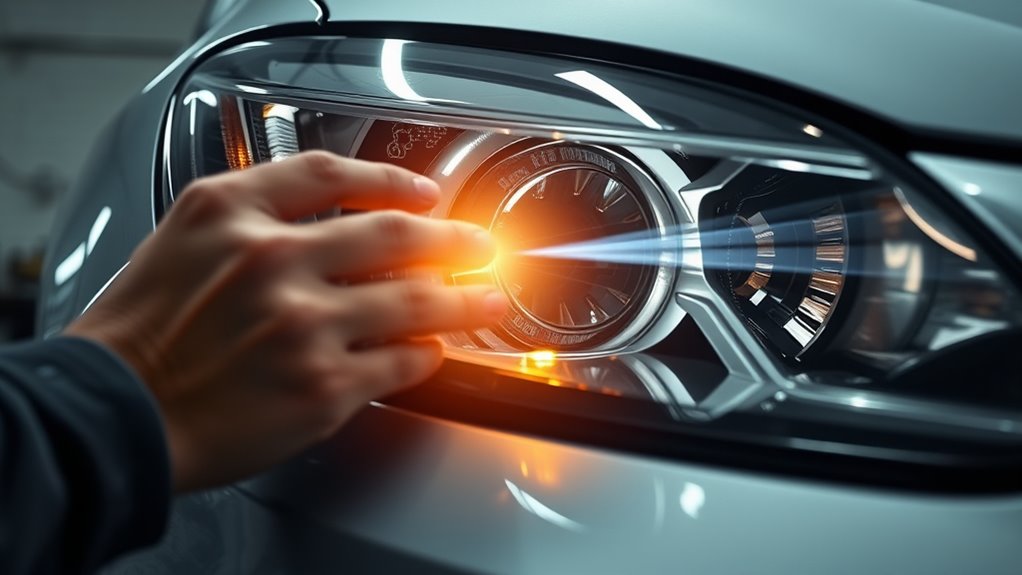
Proper headlight alignment is essential for safe driving and ideal visibility at night. When your headlights are properly aimed, you can see the road clearly ahead, and other drivers aren’t dazzled by misaligned beams. Whether you own a luxury car or are working on a vintage restoration project, making sure your headlights are correctly aligned is a task you can tackle yourself with the right tools and techniques. It’s more than just a maintenance chore; it’s a safety upgrade that can improve your driving experience significantly.
Proper headlight alignment enhances safety and visibility for all drivers.
If you own a luxury car, you already know the importance of precision and attention to detail. Many high-end vehicles come with sophisticated headlight systems, making proper alignment even more crucial to avoid glare and ensure optimal visibility. You might be surprised to learn that even vintage restoration projects benefit from headlight adjustments. Restoring a classic car often involves refurbishing or replacing headlights, and improper alignment can diminish the vintage charm while compromising safety. Ensuring your restored headlights are correctly aimed preserves the authentic look of your vintage vehicle while providing safe, effective illumination.
The process begins by parking your car on a level surface, about 25 feet away from a flat wall. Turn on your headlights and mark the center of each beam on the wall using painter’s tape or masking tape. This gives you a visual reference to evaluate your headlight aim. Adjust your vehicle’s headlights by locating the adjustment screws, usually accessible from the back or the top of the headlight assembly. For luxury cars with complex systems, consult the owner’s manual for specific instructions. For vintage restorations, you might need to access the screws directly or remove some panels to reach them.
When adjusting, aim for the brightest part of the beam to be slightly below the centerline of the headlight lens, and ensure the beams are evenly aligned. For vintage vehicles, it’s especially important to avoid high beams that shine too far upward or outward, which can cause glare. The goal is a focused, level beam pattern that illuminates the road efficiently without blinding oncoming drivers. Make small adjustments and test the results by driving at night or using a wall to check the alignment again.
As an affiliate, we earn on qualifying purchases.
Frequently Asked Questions
How Often Should I Realign My Headlights?
You should realign your headlights at least once a year or if you notice decreased beam accuracy or misaligned light patterns. After any impact, such as hitting a pothole or minor collision, it is crucial to check your headlight calibration. Regular checks ensure peak visibility and prevent dazzling other drivers. Proper alignment maintains beam accuracy, improves safety, and keeps you compliant with road regulations.
Can I Use Household Tools for Headlight Adjustment?
You can try using household tools for headlight adjustment, but it’s not ideal. Basic items like screwdrivers or a ruler can help make minor adjustments, but they lack precision. For accurate headlight alignment, it’s best to use proper headlight adjustment tools or seek professional help. Household tools might work temporarily, but they can lead to improper alignment, causing glare or reduced visibility, so consider investing in the right equipment for safety.
What Are Signs My Headlights Need Realignment?
You’ll notice your headlights need realignment if they appear uneven or if your beams seem dimmer or misdirected. Headlight damage or improper adjustment can cause these issues, making it harder to see at night and blinding other drivers. If you see spots of damage or if your lights aren’t shining straight ahead, it’s a clear sign you should check and realign your headlights to guarantee safety and avoid dazzling others.
Is Headlight Alignment Different for LED and Halogen Lights?
Like tuning a fine instrument, aligning LED and halogen headlights requires attention to beam pattern and bulb compatibility. While the basic process is similar, LED lights often have different beam patterns and may need specific adjustments or adapters to guarantee proper alignment. You should check your vehicle’s manual or consult a professional, as improper alignment can dazzle other drivers and reduce your visibility.
Can Misaligned Headlights Cause Legal Issues?
Misaligned headlights can cause legal issues because they might lead to legal penalties if you’re pulled over for unsafe driving. Plus, if you’re in an accident, insurance claims could be denied or complicated if your headlights aren’t properly aligned. To avoid these problems, make sure your headlights are correctly aimed, and consider checking their alignment regularly. Properly aligned beams keep you safe and help you stay within legal limits.
As an affiliate, we earn on qualifying purchases.
Conclusion
Now that you’ve mastered the art of headlight alignment, your beams will cut through the night like a lighthouse guiding ships safely home. No more dazzle or blind spots—just perfectly focused light that’s as precise as a surgeon’s scalpel. Think of your headlights as your car’s eyes, sharp and clear, ready to pierce the darkness. With this skill, you’re not just driving; you’re illuminating your path with confidence and control.
As an affiliate, we earn on qualifying purchases.
As an affiliate, we earn on qualifying purchases.
Fall Picks
fall essentials
As an affiliate, we earn on qualifying purchases.