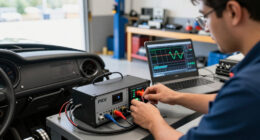
To add an amp to your old car for bigger sound, start by choosing an amplifier that matches your speakers’ power and impedance. Install the amp securely near the audio system, running high-quality cables to prevent signal loss. Proper speaker placement helps achieve even sound coverage, and setting the right gain avoids distortion. If you keep these tips in mind, you’ll open impressive audio upgrades—continue exploring to get all the details.

Get garage and car supplies delivered free — and shop member deals
- Fast, free delivery on millions of items
- Access to Prime Big Deal Days deals on October 6–7
- Prime Video, Amazon Music and more included
Key Takeaways
- Match the amplifier’s power output with your speakers’ RMS ratings for clear, distortion-free sound.
- Ensure speaker impedance matches the amplifier’s specifications to prevent damage and optimize performance.
- Properly wire and connect components using quality cables to reduce signal loss and avoid noise.
- Position speakers at ear level and facing toward listeners for even sound distribution and clarity.
- Use a suitable power source, install a fuse, and follow safety precautions to protect your system and vehicle.

If you want to boost your car’s audio quality and volume, installing a car amplifier is one of the most effective solutions. A good amplifier can transform your listening experience, making your music clearer, louder, and more dynamic. To get the most out of your upgrade, pay attention to how you handle speaker placement and power ratings. These factors are vital for achieving balanced sound and avoiding damage to your system.
When considering speaker placement, think about where your speakers are located and how they interact with the amplifier. Proper placement ensures even sound distribution and prevents sound waves from bouncing around inefficiently, which can cause distortion. If your speakers are poorly positioned—say, mounted too far from the listener or facing away—you might not notice the full benefits of your new amp. Aim to position speakers at ear level and directly facing the driver or passenger, if possible. This way, the sound reaches you clearly without interference or muffling, allowing the amplifier’s power to be fully realized. Additionally, understanding your power ratings and how they relate to speaker capabilities helps in achieving a balanced and safe audio setup.
Proper speaker placement at ear level ensures clearer sound and full amplifier performance.
Power ratings are another key aspect. Your amplifier’s power output should match or slightly exceed the speaker’s RMS (Root Mean Square) power handling capacity. If your amp’s power is too high for your speakers, you risk damaging them with excessive volume or distortion. Conversely, if it’s too low, your sound won’t be as loud or clear as it could be. Always check the RMS ratings of your speakers and choose an amplifier that can deliver a steady, clean power level without pushing the limits. This balance ensures you get loud, distortion-free sound without risking damage or sacrificing clarity.
Additionally, consider the impedance of your speakers—measured in ohms—and make sure your amplifier is compatible. Mismatched impedance can lead to poor sound quality or even harm your equipment. Once you’ve matched the power ratings and speaker impedance, focus on the wiring. Use quality cables and secure connections to prevent signal loss or noise. Proper wiring also helps the amplifier operate efficiently, giving you more consistent sound and reducing the risk of overheating.
As an affiliate, we earn on qualifying purchases.
Frequently Asked Questions
Can I Install an Amplifier Myself Without Professional Help?
Yes, you can do a DIY installation of an amplifier, but you should be confident in your skills. Follow safety precautions like disconnecting the battery and working in a dry environment. Read the amplifier’s manual carefully, and gather the right tools. If you’re comfortable with wiring and car electronics, it’s doable. However, if you’re unsure, consider professional help to avoid potential damage or safety risks.
Will Adding an Amp Damage My Car’s Electrical System?
Adding an amp won’t damage your car’s electrical system if you follow proper electrical safety and power management practices. Make certain your system can handle the additional draw by upgrading your battery or alternator if needed. Use quality wiring and proper fusing to prevent shorts or overloads. With careful installation, your car’s electrical system remains safe, and you’ll enjoy improved sound without risking damage.
How Do I Choose the Right Amplifier Size for My Car?
To select the right amplifier size, first consider your speakers’ compatibility and power handling. You want an amp that matches or slightly exceeds your speakers’ power capacity without overdriving them. Check the impedance ratings to guarantee compatibility. If your speakers handle more power, opt for a bigger amp, but avoid underpowering or overpowering, which can cause damage. Balancing these factors ensures ideal sound and safety.
Is There a Difference Between Mono and Stereo Amplifiers?
Mono versus stereo amplifiers differ mainly in their channel count. Mono amps, with one channel, focus on powering a single speaker or subwoofer, providing powerful bass. Stereo amps have two channels, offering balanced sound for multiple speakers. If you want rich, full-range sound, go stereo. For deep bass or dedicated subwoofers, a mono amplifier is ideal. Choose based on your desired sound setup and channel needs for the best listening experience.
What Are the Signs That My Amplifier Needs Repair or Replacement?
If your amplifier shows signs like speaker distortion or overheating issues, it’s time to repair or substitute it. You might notice distorted sound even at low volumes, indicating internal problems. Overheating can cause your amp to shut down or produce a burning smell. Don’t overlook these signs; addressing them promptly helps prevent further damage and ensures your sound system works smoothly and safely.
As an affiliate, we earn on qualifying purchases.
Conclusion
Now that you know how to add an amp to your old car, you’re all set to boost your sound system and enjoy a richer listening experience. Just remember, tackling this project is like opening a can of worms — it might seem tricky at first, but with patience and the right steps, you’ll find it’s worth the effort. Before long, you’ll be cruising with bigger, better sound that truly turns heads.
As an affiliate, we earn on qualifying purchases.
As an affiliate, we earn on qualifying purchases.
Halloween Picks
halloween
As an affiliate, we earn on qualifying purchases.