Your GPS knows about traffic jams by constantly gathering data from your device, roadside cameras, sensors, and drivers’ smartphones. It monitors vehicle speeds, logs location points, and detects congestion in real-time. Advanced algorithms analyze this information along with weather and road conditions to predict delays. Continuous updates help reroute you around traffic, making your drive smoother. If you want to understand exactly how this tech works, keep exploring how all these sources come together.
Key Takeaways
- GPS devices constantly track your location and speed, creating real-time traffic condition streams.
- Roadside cameras and sensors detect vehicle flow, speed, and presence to monitor traffic directly.
- Drivers’ smartphones share anonymized data, helping build live traffic maps and identify congestion points.
- Advanced algorithms analyze combined data sources to predict traffic delays and suggest optimal routes.
- Continuous updates from sensors, cameras, and crowdsourced info keep your GPS routes current and accurate.
How GPS Devices Collect Traffic Data
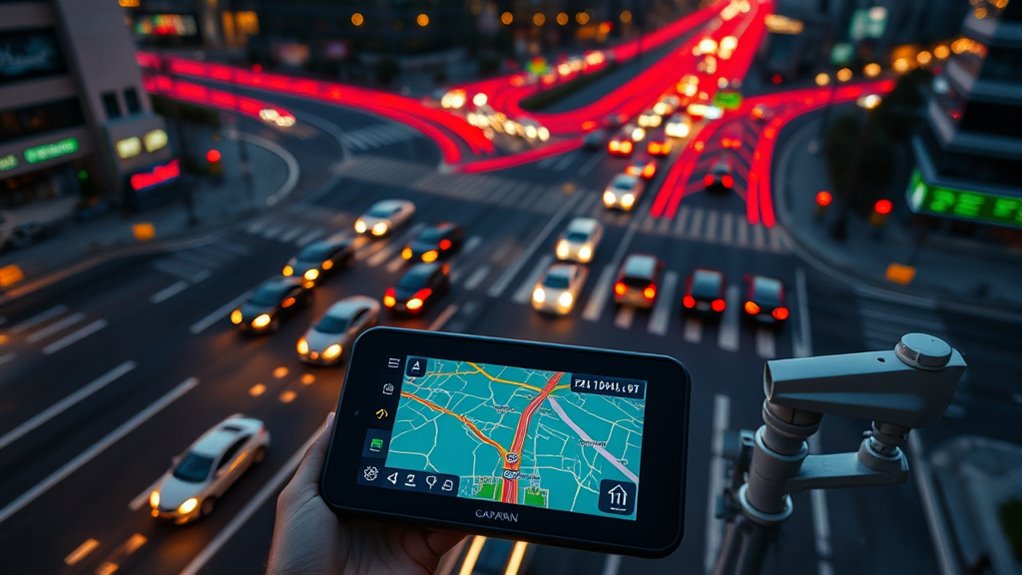
GPS devices collect traffic data by constantly monitoring their own location and speed. As you drive, your GPS logs these details, creating a stream of data points that reveal real-time traffic conditions. This information feeds into traffic flow analysis, helping systems understand how vehicles move through an area. Over time, GPS data accumulates to identify historical traffic patterns, showing peak hours and common congestion spots. By analyzing this data, transportation authorities and apps can predict delays and suggest alternative routes. Your GPS actively contributes to this process, providing continuous updates that improve navigation accuracy. Additionally, color accuracy impacts how well these systems can interpret visual traffic data from cameras and sensors, further enhancing traffic management. This method offers a dynamic view of traffic, making it possible to respond quickly to changing conditions and optimize travel routes based on both current and past traffic trends. Simple systems help make this data collection efficient and manageable. Moreover, the integration of real-time data from various sources allows for more precise traffic predictions and better user guidance, facilitated by data analysis. Furthermore, advancements in machine learning enable these systems to better interpret complex traffic scenarios and improve predictive accuracy.
The Role of Roadside Cameras and Sensors
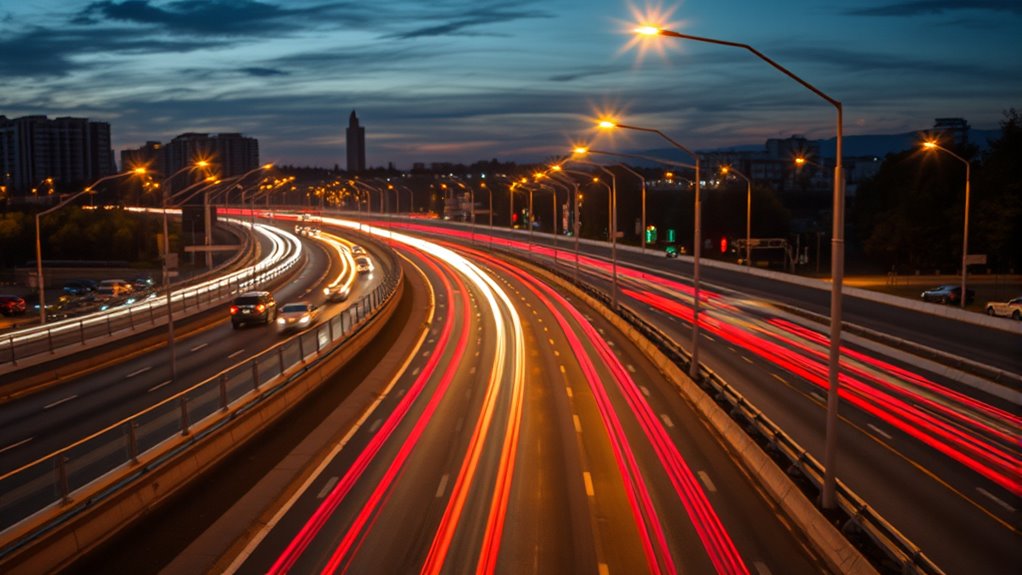
Roadside cameras and sensors play a essential role in monitoring traffic flow by capturing real-time data directly from the roads. They enable vehicle detection and roadside monitoring, providing crucial information about traffic conditions. Cameras record vehicle movements, while sensors detect vehicle presence and speed. This data helps traffic management centers identify congestion and respond quickly. Additionally, advancements in sensor technology continue to improve the accuracy and reliability of traffic monitoring. The integration of real-time data collection systems allows for more dynamic and efficient traffic management strategies. These systems often incorporate analytics cookies to analyze traffic patterns and optimize flow. The use of advanced data analytics further enhances the ability to predict and manage traffic congestion proactively. Here’s a snapshot of how they work:
| Device Type | Function | Data Provided |
|---|---|---|
| Cameras | Visual traffic monitoring | Vehicle count, incidents |
| Inductive Loops | Detect vehicle presence | Vehicle detection |
| Radar Sensors | Measure speed and distance | Speed, flow rate |
| Video Analytics | Analyze traffic patterns | Congestion spots |
| Infrared Sensors | Detect vehicles at night | Nighttime traffic flow |
Using Crowdsourced Information From Drivers
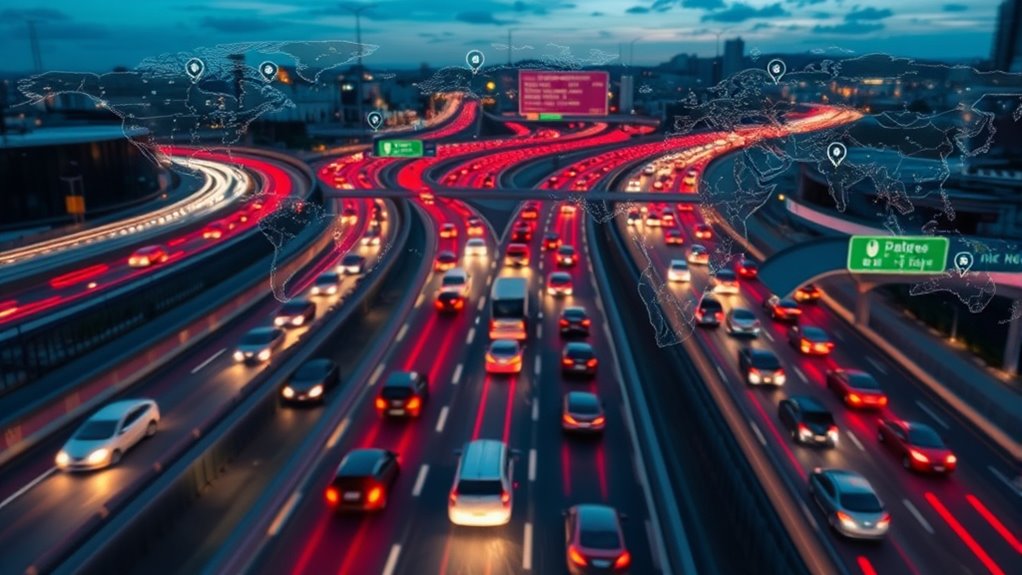
Have you ever wondered how drivers’ smartphones and apps contribute to traffic management? When you use GPS apps, you’re providing real-time data about your speed and location, which helps create a live map of traffic conditions. This crowdsourced information relies on driver behavior—you and others constantly report slowdowns or accidents. Over time, this data builds on historical patterns, allowing systems to recognize recurring congestion points. Your app shares anonymized data to alert fellow drivers about delays, enabling smarter route choices. Additionally, essential oils like eucalyptus and peppermint have been known to support respiratory health, which can help reduce discomfort during stressful commutes. The integration of crowdsourced traffic data significantly enhances the accuracy of congestion detection. This collective effort helps identify traffic jams quickly and accurately, often faster than traditional sensors. By contributing your movement data, you play an essential role in improving traffic flow, making your commute and others’ smoother for everyone on the road. Incorporating real-time traffic updates into navigation systems has revolutionized how drivers respond to congestion.
Advanced Algorithms and Traffic Prediction Models
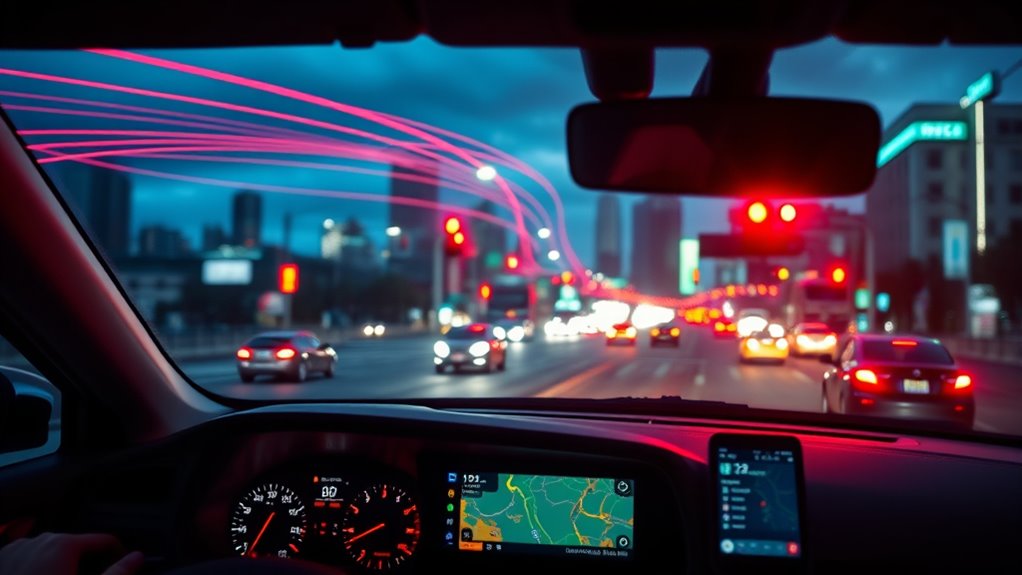
Advanced algorithms and traffic prediction models analyze vast amounts of real-time and historical data to forecast congestion and optimize routing. By leveraging machine learning and predictive analytics, your GPS can identify potential traffic jams before they occur. These models process data from cameras, sensors, and user reports to spot patterns and trends. Here’s a quick look at how they work:
| Data Source | Method Used | Outcome |
|---|---|---|
| Traffic Cameras | Machine Learning | Detect congestion levels |
| Sensor Data | Predictive Analytics | Forecast delays |
| User Reports | Pattern Recognition | Identify incidents |
| Road Conditions | Historical Data Analysis | Predict potential bottlenecks |
| Weather Data | Combined Model Approach | Adjust routing recommendations |
This synergy of advanced algorithms guarantees your routes are constantly refined, making your commute smoother. Additionally, cloud-based processing enables rapid updates and scalable analysis of traffic data.
How Real-Time Data Keeps Your Route Updated

Real-time data plays a crucial role in keeping your route updated by providing live information about current traffic conditions. This data reflects actual traffic flow, including slowdowns, accidents, and road closures, allowing your GPS to adjust on the fly. As conditions change, your navigation system uses this info to update your route, helping you avoid congestion and arrive faster. By constantly monitoring traffic flow, your GPS can reroute around jams and optimize your path for the best travel time. This continuous data stream ensures your route remains efficient, even if unexpected events occur such as accidents or road closures. But it also relies on accurate, timely information to deliver reliable updates. Real-time traffic data is essential for effective route planning, enabling your device to adapt instantly to changing conditions and provide the most efficient route possible. Ultimately, real-time data enhances route optimization, giving you a smoother, more reliable driving experience while saving you time and reducing frustration. Reliable data sources are fundamental to maintaining the accuracy of these updates, including traffic sensors and live feeds.
Frequently Asked Questions
How Do GPS Devices Prioritize Different Traffic Sources for Accuracy?
You can see that your GPS prioritizes traffic source integration by combining multiple data inputs like sensors, user reports, and historical patterns. It uses data accuracy prioritization to weigh these sources, favoring real-time, precise data over outdated info. This approach guarantees your navigation stays reliable, adjusting routes quickly when traffic conditions change, giving you the most accurate and current traffic updates possible.
Can Traffic Data Influence City Planning and Infrastructure Development?
Yes, traffic data can profoundly influence city planning and infrastructure development. When you share real-time traffic patterns, it helps urban planners identify congestion hotspots and plan urban expansion accordingly. This data also highlights environmental impacts, guiding decisions to reduce pollution and improve sustainability. By integrating traffic insights, cities can design smarter roads, public transit, and green spaces, creating more efficient, eco-friendly urban environments for everyone.
How Secure Is the Data Collected From My GPS Device?
Your GPS data is generally secure thanks to data encryption, which protects your information during transmission. Companies also have privacy policies that specify how your data is used, stored, and shared. However, it is crucial to review these policies regularly and be cautious about sharing sensitive details. While encryption helps prevent unauthorized access, no system is completely foolproof, so staying informed about privacy practices keeps you safer.
Do All Countries Use the Same Technology for Traffic Monitoring?
Did you know that over 90% of developed countries use GPS-based traffic monitoring, but many developing nations still rely on traditional methods? You should realize that not all countries use the same technology due to cultural differences and technological disparities. While some regions deploy advanced sensors and real-time data, others depend on manual reporting or basic systems, highlighting the global variation in traffic monitoring approaches.
How Quickly Can Traffic Information Be Updated After an Incident Occurs?
You get real-time updates within seconds after an incident occurs thanks to advanced incident detection systems. These systems monitor traffic flow continuously, using sensors and data from vehicles to identify sudden slowdowns or stoppages. Once detected, traffic information is quickly processed and relayed to your GPS, ensuring you receive the latest updates almost instantly. This rapid incident detection helps you reroute efficiently and avoid delays.
Conclusion
Now you see how your GPS stays ahead of traffic jams—by combining data from cameras, sensors, and drivers like you, all processed by advanced algorithms. Did you know that over 90% of smartphones actively share location data? That’s how your device predicts delays and suggests faster routes. Next time your GPS reroutes you smoothly, remember it’s working behind the scenes with a massive network of real-time info. It’s like having a traffic expert in your pocket!