A good car diagnostic scanner pays for itself the first time it saves you a trip to the mechanic, but the range in this category is huge — from $25 code readers that just clear a check engine light to bidirectional tools that can command modules and run active tests. My best overall pick is the FOXWELL NT604 Elite, because it goes beyond basic engine codes into ABS, SRS, and transmission diagnostics at a mid-range price. For pure value, the ANCEL AD310 remains the simplest plug-and-play option, while the Innova 5610 is the most capable tool here for serious DIYers who want bidirectional control. The main tradeoff you’ll face is between simplicity and capability: cheap scanners are foolproof but shallow, and advanced tools cost more and take time to learn. Read on for the full breakdown of all 14.

Get business pricing on garage and car supplies
- Business-only prices and quantity discounts
- Tax-exempt purchasing
- Multiple users, one account, clear invoices
Complete the kit


Key Takeaways
- Sub-$40 scanners like the ANCEL AD310 and MOTOPOWER MP69033 all read and clear the same generic OBD2 codes — paying more only makes sense once you need ABS, SRS, transmission, or live-data depth.
- Only the Innova 5610 in this lineup offers true bidirectional control, which is the dividing line between DIY troubleshooting and professional-grade diagnostics.
- Bluetooth app-based scanners (FIXD, Innova 5210, the iOS/Android 5.4 model) are the most beginner-friendly for interpreting codes, but they depend on your phone and a subscription-free app to stay useful.
- Battery testing quietly became a differentiator this year — the BluSon YM319 and the generic battery-tester models pair charging-system checks with code reading, which matters if your no-start problems aren’t engine codes.
- The FOXWELL NT604 Elite won best overall because it hits the sweet spot most buyers actually need: four-system coverage and live data at roughly half the price of a bidirectional tool.
| Launch G700 OBD2 Scanner, Car Code Reader with Live Data & I/M Check |  | Best Overall Plug-and-Play Scanner | Model Number: Creader G700 | Supported Vehicles: Most 12V gasoline and diesel vehicles 1996+ | Protocols Supported: OBD2/EOBD | VIEW LATEST PRICE | See Our Full Breakdown |
| Innova 5210 OBD2 Scanner & Engine Code Reader, Bluetooth Compatible with Car Repair App |  | Best for App-Guided Repairs | Compatibility: Most US, Asian, and European vehicles 1996+ | Functions: Code reading, ABS codes, battery testing, live data, oil reset, smog check | Connectivity: Bluetooth | VIEW LATEST PRICE | See Our Full Breakdown |
| ANCEL AD410 Enhanced OBD2 Scanner, Vehicle Code Reader for Check Engine Light |  | Best Value Code Reader | Compatibility: 1996+ US vehicles, many 2000+ EU/Asian vehicles | Display: 2.4-inch color screen | Protocols Supported: CAN, ISO9141, KWP2000, J1850 VPW, J1850 PWM | VIEW LATEST PRICE | See Our Full Breakdown |
| BluSon YM319 OBD2 Scanner Diagnostic Tool with Battery Tester |  | Best for Battery Health and Reporting | Model Number: YM319 | Compatibility: Most 1996+ US, EU, and Asian vehicles, light trucks, SUVs | Key Functions: Fault code read/clear, battery health monitoring, live data recording | VIEW LATEST PRICE | See Our Full Breakdown |
| MOTOPOWER MP69033 Car OBD2 Scanner Code Reader |  | Best Basic Budget Pick | Model Number: MP69033 | Display: 2.8-inch LCD with backlight | Supported Protocols: 9 protocols including OBD II & CAN | VIEW LATEST PRICE | See Our Full Breakdown |
| OBD2 Scanner with Battery Tester |  | Best Two-in-One Value | Display: 2.8-inch HD color screen | Compatibility: All 1996+ OBD2 vehicles, EU models 2003+ | Functions: Engine diagnostics, transmission, emissions readiness, battery testing | VIEW LATEST PRICE | See Our Full Breakdown |
| Autel MS309 OBD2 Scanner Universal Car Engine Fault Code Reader |  | Best Budget Code Reader | Compatibility: OBD II vehicles from 1996 onward (US) | Functions: Read/clear codes, DTC definitions, freeze frame, vehicle info, I/M readiness | Display: On-screen menu with code definitions | VIEW LATEST PRICE | See Our Full Breakdown |
| Innova 5610 OBD2 Bidirectional Scan Tool |  | Best Premium Pick | Functions: Bidirectional controls, real-time data, dealership-level resets | Compatibility: Most 1996–2023 vehicles (varies by make/model) | App: RepairSolutions2 with wireless connectivity | VIEW LATEST PRICE | See Our Full Breakdown |
| OBD2 Scanner Diagnostic Tool for iOS & Android, Bluetooth 5.4 |  | Best Wireless Option | Connectivity: Bluetooth 5.4, iOS & Android | Compatibility: 96% of car makes and models (1996–present) | Protocols: 9 supported | VIEW LATEST PRICE | See Our Full Breakdown |
| VDIAGTOOL VD10 OBD2 Scanner Code Reader for Car Diagnostics |  | Best Warranty for Beginners | Display: 2-line LCD with backlight | Compatibility: Post-1996 US, post-2006 EU, post-2009 Asian vehicles, all OBDII protocols | Supported Codes: Generic, manufacturer-specific, pending | VIEW LATEST PRICE | See Our Full Breakdown |
| FOXWELL NT604 Elite OBD2 Scanner with ABS SRS Transmission Diagnostics |  | Best for Multi-System Home Diagnostics | Model Number: NT604 Elite | Systems Supported: Engine, ABS, SRS, Transmission | Vehicle Compatibility: 60+ brands worldwide | VIEW LATEST PRICE | See Our Full Breakdown |
| FOXWELL NT301 OBD2 Scanner Live Data Diagnostic Code Reader Tool for Check Engine Light |  | Best Value for Engine-Only Diagnosis | Brand: FOXWELL | Model Number: NT301 | Weight: 0.16 kg | VIEW LATEST PRICE | See Our Full Breakdown |
| FIXD Bluetooth OBD2 Scanner – Car Diagnostic Check Engine Code Reader |  | Best App-Based Wireless Pick | Compatibility: OBD2 vehicles 1996+ (gasoline & hybrid), 2006+ (diesel) | Connectivity: Bluetooth | Supported Issues: Over 39,000 | VIEW LATEST PRICE | See Our Full Breakdown |
| ANCEL AD310 Classic Enhanced Universal OBD II Scanner Car Engine Fault Code Reader | 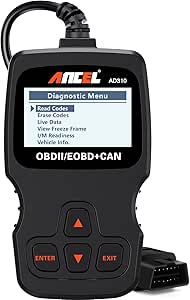 | Best Bare-Bones Backup Tool | Weight: 12 ounces | Dimensions: 8.9 x 6.9 x 1.4 inches | Cable Length: 2.5 feet | VIEW LATEST PRICE | See Our Full Breakdown |
| car diagnostic scanner | Compatibility | Display |
|---|---|---|
| Launch G700 OBD2 Scanner | — | Live data, real-time curves |
| Innova 5210 OBD2 Scanner & Eng | Most US, Asian, and European vehicles 1996+ | — |
| ANCEL AD410 Enhanced OBD2 Scan | 1996+ US vehicles, many 2000+ EU/Asian vehicles | 2.4-inch color screen |
| BluSon YM319 OBD2 Scanner Diag | Most 1996+ US, EU, and Asian vehicles, light trucks, SUVs | — |
| MOTOPOWER MP69033 Car OBD2 Sca | — | 2.8-inch LCD with backlight |
| OBD2 Scanner with Battery Test | All 1996+ OBD2 vehicles, EU models 2003+ | 2.8-inch HD color screen |
| Autel MS309 OBD2 Scanner Unive | OBD II vehicles from 1996 onward (US) | On-screen menu with code definitions |
| Innova 5610 OBD2 Bidirectional | Most 1996–2023 vehicles (varies by make/model) | — |
| OBD2 Scanner Diagnostic Tool f | 96% of car makes and models (1996–present) | — |
| VDIAGTOOL VD10 OBD2 Scanner Co | Post-1996 US, post-2006 EU, post-2009 Asian vehicles, all OBDII protocols | 2-line LCD with backlight |
| FOXWELL NT604 Elite OBD2 Scann | — | — |
| FOXWELL NT301 OBD2 Scanner Liv | Most 1996+ gasoline vehicles, light trucks, SUVs; many 2000+ European and Asian models | 2.8-inch color screen |
| FIXD Bluetooth OBD2 Scanner | OBD2 vehicles 1996+ (gasoline & hybrid), 2006+ (diesel) | — |
| ANCEL AD310 Classic Enhanced U | — | — |
More Details on Our Top Picks
Launch G700 OBD2 Scanner, Car Code Reader with Live Data & I/M Check
Among plug-in scanners in this lineup, the Launch G700 strikes the best balance between capability and simplicity. Unlike the MOTOPOWER MP69033, which is purely a code reader, the G700 adds real-time data curves and I/M emissions readiness checks, which means you can actually watch sensor behavior change instead of just reading a fault code. The dedicated quick-access buttons make a real difference when you’re standing in a driveway trying to cycle through menus fast. Compared with the ANCEL AD410, the G700 feels more polished for everyday troubleshooting, though neither covers ABS or SRS. That’s the tradeoff at this price: you get excellent engine diagnostics and nothing else. Still, for the majority of check-engine-light situations, this pick makes the most sense for buyers who want answers without an app or pairing hassle.
Pros:- True plug-in operation with no app, Bluetooth, or phone pairing required
- Live data with real-time curves goes beyond basic code reading
- Dedicated quick-access buttons speed up frequent diagnostics
- Broad compatibility with 12V gasoline and diesel vehicles from 1996 onward
Cons:- No ABS, SRS, or full-system diagnostics
- Incompatible with pure electric vehicles and heavy-duty trucks
Best for: DIY owners and hobbyist mechanics who want fast, no-app engine diagnostics with live data visualization on most 1996+ gas and diesel vehicles
Not ideal for: Owners of EVs or heavy-duty trucks, or anyone who needs ABS, SRS, or full-system coverage — this scanner is engine-only
- Model Number:Creader G700
- Supported Vehicles:Most 12V gasoline and diesel vehicles 1996+
- Protocols Supported:OBD2/EOBD
- Display:Live data, real-time curves
- Connectivity:Plug-in, no app or Bluetooth required
- Warranty:2 Years
Our verdict“Buy it if you want the most capable no-phone engine scanner here; skip it if your problems extend beyond the powertrain.”
Innova 5210 OBD2 Scanner & Engine Code Reader, Bluetooth Compatible with Car Repair App
The Innova 5210 earns its spot by doing something none of the plug-only scanners here can: it pairs with the free RepairSolutions2 app to translate fault codes into verified fix suggestions, parts lists, and repair costs. Where the BluSon YM319 stops at telling you what the code is, the 5210 helps you decide what to do about it — that’s the difference between a reader and a repair companion. It also covers ABS codes and battery testing, putting it a step ahead of the Launch G700 on breadth. The tradeoffs are real: ABS coverage varies by vehicle, so you’ll want to verify your model before buying, and some functions require the ignition in the ON position to return accurate results. For a driver who wants guidance rather than raw data, this model is better suited than any app-free rival in this roundup.
Pros:- RepairSolutions2 app turns codes into verified repair guidance at no subscription cost
- Covers ABS codes and battery testing in addition to standard engine diagnostics
- Works with most US, Asian, and European vehicles from 1996 onward
Cons:- ABS code coverage varies by make and model
- Requires ignition in the ON position for accurate readings
Best for: Drivers who want fault codes translated into concrete repair advice, verified fixes, and parts estimates via smartphone
Not ideal for: Buyers who want guaranteed ABS diagnostics on every vehicle — coverage needs per-model verification, so it’s unreliable as a primary ABS tool
- Compatibility:Most US, Asian, and European vehicles 1996+
- Functions:Code reading, ABS codes, battery testing, live data, oil reset, smog check
- Connectivity:Bluetooth
- App Support:RepairSolutions2 for iPhone & Android
- Coverage Verification:Yes
Our verdict“Choose it when you want help deciding how to fix the problem, not just what the problem is.”
ANCEL AD410 Enhanced OBD2 Scanner, Vehicle Code Reader for Check Engine Light
If the goal is simply answering why is my check engine light on for the least money, the ANCEL AD410 is the smartest spend in this batch. Its standout feature is a built-in database of over 42,000 DTC definitions, so you rarely have to search a code online — something the MOTOPOWER MP69033 also offers but with a smaller, plainer presentation. The AD410’s 2.4-inch color screen and live data view make it feel a class above basic readers, while free software updates keep definitions current. Against the Launch G700, it gives up the real-time data curves but typically costs noticeably less, which is the whole point of a value pick. The limitations mirror its price: engine and emissions codes only, no ABS or transmission, and no wireless connectivity. For a glovebox tool that gets pulled out a few times a year, those are tradeoffs most casual owners will happily accept.
Pros:- Massive built-in database of over 42,000 DTC lookups eliminates manual code searching
- Color screen with live data view at a budget-friendly price
- Free software updates keep code definitions current
- No app, phone, or batteries needed — powered from the OBD2 port
Cons:- No ABS, transmission, or SRS support
- No Bluetooth or wireless connectivity
Best for: Budget-conscious drivers who want a dependable glovebox scanner for occasional check-engine-light and smog-readiness checks
Not ideal for: Anyone diagnosing ABS, airbag, or transmission issues — this tool is strictly engine and emissions
- Compatibility:1996+ US vehicles, many 2000+ EU/Asian vehicles
- Display:2.4-inch color screen
- Protocols Supported:CAN, ISO9141, KWP2000, J1850 VPW, J1850 PWM
- Power Source:Vehicle’s OBD2 port
- Languages:Multilingual support
- Updates:Free software updates
Our verdict“The cheapest confident answer to a check engine light in this lineup, as long as your problems stay engine-side.”
BluSon YM319 OBD2 Scanner Diagnostic Tool with Battery Tester
The BluSon YM319 carves out a niche none of the other plug-in scanners here occupy: battery health monitoring plus cloud printing. If you’re trying to document a problem for a mechanic or track a slowly dying battery over weeks, the ability to pull a printed report gives this model a practical edge over the ANCEL AD410, which has no reporting function at all. Customizable shortcut keys also let you tailor the interface to the checks you run most — a thoughtful touch the MOTOPOWER MP69033 lacks entirely. Multilingual support spanning six languages makes it a reasonable choice for multilingual households too. The compromises are familiar: engine codes only, no ABS, SRS, or transmission coverage, and hybrids plus new-energy vehicles are off the table. The one-year warranty is also shorter than Launch’s two years. This pick makes the most sense for owners whose recurring worry is battery condition and having paper records of it.
Pros:- Built-in battery health monitoring is rare at this price point
- Cloud printing makes sharing diagnostic reports simple
- Customizable shortcut keys streamline frequently used checks
- Six-language support and broad 1996+ vehicle compatibility
Cons:- No ABS, SRS, or transmission diagnostics
- Not compatible with hybrid or new energy vehicles
- Only a 1-year warranty, half of what Launch offers
Best for: Owners tracking battery health over time or anyone who needs shareable printed diagnostic reports for mechanics and buyers
Not ideal for: Hybrid or EV owners, and buyers wanting system coverage beyond the engine — this tool stops at fault codes
- Model Number:YM319
- Compatibility:Most 1996+ US, EU, and Asian vehicles, light trucks, SUVs
- Key Functions:Fault code read/clear, battery health monitoring, live data recording
- Reporting:Cloud printing for report sharing
- Languages Supported:English, German, French, Spanish, Russian, Portuguese, Chinese
- Warranty:1 Year
Our verdict“Buy it for the battery testing and report printing; pass if you need anything beyond engine diagnostics.”
MOTOPOWER MP69033 Car OBD2 Scanner Code Reader
The MOTOPOWER MP69033 is the honest floor of this roundup: no battery tester like the BluSon YM319, no app guidance like the Innova 5210, just fast, reliable code reading on a clear 2.8-inch backlit LCD. What justifies its place is breadth and simplicity — it speaks nine protocols, which means fewer compatibility surprises on older or imported vehicles, and its 2.5-foot cable gives you room to work from the driver’s seat. Compared with the ANCEL AD410, it’s the more basic tool, but that simplicity is the feature: hand it to a teenager or a neighbor and they’ll figure it out in a minute. The drawbacks are exactly what you’d expect at this price — no ABS, airbag, or oil service functions, and it’s entirely dependent on the vehicle’s port for power. As a first scanner or a spare for a second car, this option stands out for doing one job without friction.
Pros:- Supports nine protocols for wide compatibility, including older and imported vehicles
- Large 2.8-inch backlit LCD is easy to read in dim garages
- Simple plug-in operation with no learning curve
- Compact, durable build with a flexible 2.5-foot cable
Cons:- Cannot read ABS, airbag, or oil service lights
- No internal battery — entirely dependent on vehicle power
Best for: First-time scanner buyers or anyone wanting a cheap, foolproof spare tool for a second car or new driver
Not ideal for: Anyone needing ABS, airbag, or oil service light functions — this reader handles engine codes only
- Model Number:MP69033
- Display:2.8-inch LCD with backlight
- Supported Protocols:9 protocols including OBD II & CAN
- Languages:English, German, Dutch, Spanish, French, Italian
- Cable Length:2.5 feet
- Power Source:Vehicle power via OBDII port
- Supported Vehicles:Most 1996+ US, EU, Asian cars
- Weight:10.2 ounces
Our verdict“The right choice when you want the cheapest tool that simply works; upgrade to the AD410 or G700 if you want live data depth.”
OBD2 Scanner with Battery Tester
This option stands out for combining engine code reading with genuine battery health testing in one affordable tool — something most scanners in this roundup, like the Autel MS309, simply don’t offer. Reading CCA, state of charge, and cranking system health translates directly into fewer surprise no-starts and smarter battery replacement decisions. Compared with the BluSon YM319, which also pairs a code reader with a battery tester, this model adds a 2.8-inch color screen and built-in code definitions, which makes results easier to interpret on the spot. The tradeoff is simplicity: there’s no wireless connectivity or app integration like the Bluetooth V011 offers, and battery metrics like internal resistance take some learning to interpret properly. For a DIY owner who wants to diagnose both the engine and the charging system without buying two tools, this pick makes the most sense.
Pros:- Combines engine diagnostics and battery testing (CCA, SOC, SOH, cranking and charging system) in one tool
- Plug-and-play setup with no steep learning curve
- Clear 2.8-inch color display with built-in DTC definitions
- Supports multiple protocols and 10 languages including English and Spanish
Cons:- No wireless connectivity or companion app for deeper data analysis
- Battery test results require some interpretation for non-technical users
- Limited to OBD2-compatible vehicles only
Best for: DIY mechanics who want engine diagnostics and battery health checks in a single affordable handheld tool
Not ideal for: Owners of pre-1996 vehicles or anyone wanting wireless app-based diagnostics and logging
- Display:2.8-inch HD color screen
- Compatibility:All 1996+ OBD2 vehicles, EU models 2003+
- Functions:Engine diagnostics, transmission, emissions readiness, battery testing
- Battery Testing:CCA, SOC, SOH, internal resistance, cranking & charging system
- Languages:10 including English and Spanish
- Connectivity:Plug and play via OBD2 port
- Warranty:18 months
Our verdict“A smart buy for DIY owners who want to catch both engine faults and failing batteries before they strand them.”
Autel MS309 OBD2 Scanner Universal Car Engine Fault Code Reader
When the goal is simply answering “why is my check engine light on?” for the least money, this model is the one to beat. It reads and clears generic and manufacturer-specific codes, pulls freeze frame data, and checks smog readiness — everything a DIY owner needs before a state inspection. Compared with the VDIAGTOOL VD10, it lacks live data streaming and the longer warranty, but it costs noticeably less and requires zero setup or registration. The MS309 sits below the ANCEL AD310 in raw feature depth yet holds its own with cleaner on-screen code definitions. The tradeoffs are real: there are no service functions, no TPMS support, and post-2017 FCA vehicles (Chrysler, Dodge, Jeep) are off-limits due to security locks. For occasional, no-frills diagnosis, this is the value benchmark others must justify beating.
Pros:- Very affordable with true plug-and-play operation, no registration needed
- Retrieves generic and manufacturer-specific codes with on-screen definitions
- Includes freeze frame data, vehicle info, and I/M smog readiness checks
- Reliable brand reputation in the budget scanner category
Cons:- Strictly basic OBDII functions — no advanced diagnostics or resets
- Cannot access codes on post-2017 FCA vehicles due to security restrictions
- No TPMS or other service functions
Best for: Budget-conscious car owners who mainly need to read, understand, and clear check engine codes
Not ideal for: Owners of post-2017 FCA vehicles or anyone needing live data, bidirectional tests, or service resets
- Compatibility:OBD II vehicles from 1996 onward (US)
- Functions:Read/clear codes, DTC definitions, freeze frame, vehicle info, I/M readiness
- Display:On-screen menu with code definitions
- Setup:Plug and play, no registration
- Warranty:12 months
Our verdict“The cheapest credible answer to a check engine light, as long as your needs never go beyond reading and clearing codes.”
Innova 5610 OBD2 Bidirectional Scan Tool
This is the most capable tool in this batch, and the price reflects it. Bidirectional controls mean it doesn’t just read data — it sends commands to vehicle systems, enabling dealership-level resets that basic readers like the Autel MS309 or ANCEL AD410 cannot touch. Pairing with the RepairSolutions2 app adds verified repair suggestions and wireless updates, while ASE-certified support in multiple languages backs it up. The tradeoffs: full functionality leans on a smartphone or tablet, and coverage varies by make and model — it’s rated for most 1996–2023 vehicles but is not universal, so buyers should verify compatibility before purchasing. Compared with the Innova 5210 elsewhere in this roundup, the 5610 justifies its premium with the bidirectional capability. This pick makes the most sense for a serious DIYer or shade-tree mechanic who wants professional-grade functions without a professional-grade subscription.
Pros:- Bidirectional controls enable advanced diagnostics and dealership-level resets
- Broad compatibility with most 1996–2023 vehicles
- Pairs with RepairSolutions2 app for verified repair info and wireless updates
- ASE-certified multilingual support and includes pouch, boot, and cables
Cons:- Requires a smartphone or tablet for full functionality
- Compatibility varies by make and model — not truly universal
- Meaningfully more expensive than basic code readers
Best for: Serious DIY mechanics who need bidirectional controls and reset functions beyond basic code reading
Not ideal for: Casual owners who just want occasional code checks — the price and smartphone dependence are overkill
- Functions:Bidirectional controls, real-time data, dealership-level resets
- Compatibility:Most 1996–2023 vehicles (varies by make/model)
- App:RepairSolutions2 with wireless connectivity
- Support:ASE-certified support, multiple languages
- Includes:Code reader with boot, manual, OBD2 cable, soft pouch, USB cable
- Weight:1.3 pounds
- Manufacturer:Innova Electronics Corporation
Our verdict“The closest thing to a shop-grade tool in this batch, for DIYers ready to move past read-only scanners.”
OBD2 Scanner Diagnostic Tool for iOS & Android, Bluetooth 5.4
This model takes a different approach than every handheld here: it’s a Bluetooth 5.4 dongle that turns your phone into the scanner. That translates into a bigger screen, visual live-data graphs, and the ability to log performance tests over time — something a fixed 2.8-inch display like the BluSon-adjacent two-in-one unit can’t match. Compared with the FIXD Bluetooth reader, the V011 supports nine protocols and claims coverage of 96% of makes and models from 1996 onward, with nine languages for broader households. The wireless convenience cuts both ways: setup requires the dedicated app, some advanced performance tests have a learning curve for newcomers, and code clearing is blocked until underlying repairs are made — a deliberate safety choice that may frustrate some users. For drivers who live on their phones and want diagnostics without another gadget in the glovebox, this is the natural fit.
Pros:- Bluetooth 5.4 provides fast, reliable wireless connection to iOS and Android
- Covers 96% of car makes and models from 1996 to present across 9 protocols
- App displays fault codes and live data visually for easier interpretation
- Supports multiple performance tests beyond basic code reading
Cons:- Requires the dedicated app and initial setup before use
- Cannot clear fault codes until underlying repairs are completed
- Advanced features may overwhelm complete beginners
Best for: Phone-first drivers who want live data graphs, performance testing, and app-based diagnostics on their own screen
Not ideal for: Users who dislike app setup and account management, or those wanting a standalone tool that works without a phone
- Connectivity:Bluetooth 5.4, iOS & Android
- Compatibility:96% of car makes and models (1996–present)
- Protocols:9 supported
- Functions:Fault code reading, live data streaming, performance tests
- Languages:English, German, Spanish, French, Italian, Portuguese, Dutch, Finnish, Chinese
Our verdict“The best choice for anyone who’d rather graph live data on their phone than squint at a handheld screen.”
VDIAGTOOL VD10 OBD2 Scanner Code Reader for Car Diagnostics
This option stands out less for flashy features and more for trust: a five-year warranty that dwarfs the 12–18 months typical of rivals like the Autel MS309, signaling real confidence in build quality. Feature-wise it sits a rung above basic readers — it adds live data streaming, freeze frame, and pending-code support on top of standard read/clear functions, with impressively broad coverage of US, EU, and Asian vehicles. The 2-line backlit LCD is readable but modest next to the color screen on the two-in-one battery tester model, and there’s no battery or wireless functionality at all — it powers entirely from the OBDII port, which is fine until you want to review data away from the car. For a first-time buyer who wants dependable, no-app, no-subscription diagnosis with the longest protection in this batch, this pick makes the most sense.
Pros:- Industry-leading 5-year warranty for peace of mind
- Live data streaming plus freeze frame and pending codes beyond basic readers
- Broad protocol coverage: post-1996 US, post-2006 EU, post-2009 Asian vehicles
- Simple plug-and-play operation with backlit LCD
Cons:- Basic 2-line LCD display feels dated next to color-screen rivals
- No internal battery — fully dependent on vehicle power via the OBDII port
- No wireless or app-based functionality
Best for: First-time scanner buyers who want live data and long-term reliability backed by a five-year warranty
Not ideal for: Users wanting battery testing, wireless connectivity, or a large color display
- Display:2-line LCD with backlight
- Compatibility:Post-1996 US, post-2006 EU, post-2009 Asian vehicles, all OBDII protocols
- Supported Codes:Generic, manufacturer-specific, pending
- Additional Features:Freeze frame data, I/M readiness, vehicle info retrieval, live data
- Power:Powered via OBDII port
- Languages:English, French, German, Spanish, Italian, Russian
- Warranty:5 years
Our verdict“A dependable starter scanner whose five-year warranty outlasts anything else at this price.”
FOXWELL NT604 Elite OBD2 Scanner with ABS SRS Transmission Diagnostics
Most budget code readers, including the ANCEL AD310 further down this list, stop at emission-related engine faults. The FOXWELL NT604 Elite goes a step further by reading ABS, SRS, and transmission systems, which is where the real money-saving potential lives — a single ABS or airbag diagnosis at a shop often costs more than this tool itself. Compared with the NT301 from the same brand, this model covers far more ground, though it still isn’t a full service tool.
The tradeoffs are real: there’s no oil reset or battery registration, and it can’t clear SRS crash data, so collision repairs remain a shop job. Compatibility also varies by make and year, so verifying your vehicle before buying saves disappointment. For a hands-on owner who wants system-level insight without subscription fees, this pick makes sense.
Pros:- Reads engine, ABS, SRS, and transmission systems
- Lifetime free updates with no subscription fees
- Works across 60+ vehicle brands worldwide
- Ships in a durable protective case
Cons:- No maintenance functions like oil reset or battery registration
- Cannot clear SRS crash or collision data
- Compatibility varies by make, model, and year
Best for: DIY owners who want to diagnose ABS, airbag, and transmission warning lights at home before paying a shop
Not ideal for: Owners wanting maintenance service functions like oil resets or battery registration — this tool doesn’t do them
- Model Number:NT604 Elite
- Systems Supported:Engine, ABS, SRS, Transmission
- Vehicle Compatibility:60+ brands worldwide
- Update Service:Lifetime free updates
- Included Components:Diagnostic cable, USB cable, quick start guide, user manual, protective case
- Case:Solid protective case
Our verdict“Buy this if a warning light beyond the check-engine icon is what you actually need to understand — not just clear.”
FOXWELL NT301 OBD2 Scanner Live Data Diagnostic Code Reader Tool for Check Engine Light
The NT301 occupies a sweet spot that pure-basic readers miss. While the ANCEL AD310 handles read-and-clear duties well enough, this model adds live data graphing, O2 sensor testing, and EVAP testing — features that let a DIYer actually watch a sensor misbehave instead of guessing from a code. That difference matters when you’re deciding whether a repair is urgent or trivial.
Where it falls short of the sibling NT604 Elite is scope: engine and emissions only, with no ABS, SRS, or transmission access. And unlike the wireless FIXD, everything happens on the device itself, which some will find limiting and others will find freeing — no phone, no app, no pairing friction. At just 0.16 kg with a bright 2.8-inch color screen, it’s the tool to grab for a check-engine-light decision, not whole-car analysis.
Pros:- Live data graphing plus O2 sensor and EVAP testing
- Compatible with over 10,000 vehicles including European and Asian models
- Plug-and-play design with bright 2.8-inch color display
- Lifetime free updates
Cons:- Limited to OBD2 vehicles from 1996 onward
- Lacks ABS, SRS, and transmission coverage of pricier scanners
- Requires a compatibility check before purchase
Best for: Budget-conscious DIYers who want live sensor data and graphing for check-engine diagnosis without a subscription
Not ideal for: Owners chasing ABS, airbag, or transmission faults — this is an emissions and engine tool only
- Brand:FOXWELL
- Model Number:NT301
- Weight:0.16 kg
- Display:2.8-inch color screen
- Supported Protocols:KWP2000, J1850 VPW, ISO9141, J1850 PWM, CAN
- Compatibility:Most 1996+ gasoline vehicles, light trucks, SUVs; many 2000+ European and Asian models
- Features:Live data graphing, I/M readiness, EVAP testing, O2 sensor testing, code reading/clearing
- Warranty:12 months
Our verdict“The smartest money spent if your questions start and end with the check engine light.”
FIXD Bluetooth OBD2 Scanner – Car Diagnostic Check Engine Code Reader
The FIXD takes a different approach from every handheld in this lineup: it stays plugged in under the dash and streams diagnostics to your phone over Bluetooth. Compared with the FOXWELL NT301, you give up the self-contained screen but gain plain-English explanations of over 39,000 issues, maintenance alerts, and repair cost estimates — context that raw code numbers simply don’t provide. For a driver who finds fault codes intimidating, that translation layer is the whole point.
The tradeoffs deserve honesty. The best features sit behind an upgrade after the free premium trial ends, so the real cost is higher than the sticker. Vehicle coverage also varies, and some functions depend heavily on make and model. Still, for continuous monitoring rather than occasional troubleshooting — something the ANCEL AD310 was never designed to do — this format stands out.
Pros:- Wireless smartphone diagnostics with no cables to manage
- Recognizes over 39,000 issues with clear explanations
- Maintenance alerts and repair cost estimates built in
- Compact and discreet enough to leave permanently installed
Cons:- Key features locked behind a paid upgrade
- Functionality varies by vehicle make and model
- Requires a compatible iPhone or Android device
Best for: Non-technical drivers who want plain-English explanations and ongoing maintenance alerts on their phone
Not ideal for: Buyers who want a one-time purchase — premium features require a paid upgrade after the trial
- Compatibility:OBD2 vehicles 1996+ (gasoline & hybrid), 2006+ (diesel)
- Connectivity:Bluetooth
- Supported Issues:Over 39,000
- App Features:Unlimited scans, repair recommendations, cost estimates, vehicle value, live mechanic support
- Platform Support:iPhone and Android
- Included:Free premium trial
Our verdict“Choose this if you want your car to explain itself in everyday language — and accept that the best features cost extra.”
ANCEL AD310 Classic Enhanced Universal OBD II Scanner Car Engine Fault Code Reader
Every roundup needs a floor, and the ANCEL AD310 defines it in a good way. It reads and clears engine codes, shows live data and freeze frames, and needs no batteries or charging — it draws power from the car itself. Compared with its sibling ANCEL AD410, this classic version strips things down further, and next to the FOXWELL NT301 it gives up graphing and advanced sensor tests in exchange for a lower price and dead-simple operation.
The limits are structural: it only sees emission-related faults, so a non-emission engine issue, ABS light, or airbag warning is invisible to it. Anyone who bought the NT604 Elite for multi-system coverage would find this frustrating as a primary tool. But as a glovebox backup for road trips and used-car inspections, its portability and instant readiness are hard to argue with.
Pros:- Supports all major OBDII protocols for broad compatibility
- No batteries or chargers needed — powered by the vehicle
- Compact and lightweight for glovebox or travel storage
- Fast, accurate engine code reading and clearing
Cons:- Only reads emission-related engine faults
- No ABS, SRS, or transmission diagnostics
- Incompatible with pre-1996 OBDI vehicles
Best for: Drivers wanting a cheap, always-ready glovebox tool for reading codes on the spot or checking a used car before purchase
Not ideal for: Anyone diagnosing ABS, SRS, transmission, or non-emission faults — this reader can’t see them
- Weight:12 ounces
- Dimensions:8.9 x 6.9 x 1.4 inches
- Cable Length:2.5 feet
- Supported Protocols:KWP2000, J1850 VPW, ISO9141, J1850 PWM, CAN
- Vehicle Compatibility:1996+ US, 2000+ EU and Asian cars, light trucks, SUVs
- Power Source:Vehicle-powered, no batteries required
Our verdict“A no-frills spare that earns its place through price and simplicity, not capability.”

How We Picked
I ranked these scanners by asking what a buyer actually does with the tool after plugging it in. Diagnostic depth came first: a scanner that only reads generic powertrain codes serves a different buyer than one covering ABS, airbag, and transmission modules. Usability mattered just as much — menu logic, screen size, and whether the device explains codes in plain English or dumps raw P-codes at you. Live data and I/M readiness support separated tools that help you verify a repair from ones that just erase a warning light.
From there I weighed build quality, update policy, and price-to-capability ratio. Several cheap scanners in this list are functionally identical, so ranking among them came down to ergonomics and brand support. At the premium end, the Innova 5610 earned its spot purely on capability, not price. The final ordering roughly mirrors how much diagnostic work each tool can genuinely take off a mechanic’s plate per dollar spent.
Factors to Consider When Choosing Car Diagnostic Scanner
Before picking a scanner from the list above, it helps to understand what actually separates a useful tool from a paperweight. These are the factors that shaped my ranking — and the mistakes I see buyers make most often.
Generic Codes vs. Multi-System Coverage
Every scanner sold in the US after 1996 must read generic OBD2 powertrain codes, which means the $25 tool and the $300 tool read the same check-engine data at a basic level. What you pay extra for is access to manufacturer-specific codes and non-engine modules like ABS, airbags, and transmission. If your ABS light is on, a cheap code reader will often show nothing at all — that’s not a fault, it’s a limitation of the protocol. The most common buyer mistake is assuming a scanner that “reads all cars” also reads all systems; those are two completely different claims. Decide up front whether you only chase check-engine lights or want whole-car visibility, because that single decision eliminates half the options on the market.
Handheld vs. Phone-Based Scanners
Bluetooth dongles paired with a phone app (like FIXD or the Innova 5210) are cheaper, have bigger screens by default, and often translate codes into plain English — great for beginners. The tradeoff is dependence on app quality, phone battery, and ongoing subscription policies; an app that gets paywalled or abandoned turns your scanner into e-waste. Dedicated handhelds like the FOXWELL and ANCEL units work standalone, hold their value better, and survive a glovebox for years. My general advice: casual drivers who check codes once or twice a year can go phone-based, but anyone who diagnoses regularly should own a handheld. If you do choose Bluetooth, verify the app is free and well-reviewed before buying the hardware.
Live Data and Bidirectional Capability
Reading a code tells you what the computer noticed; live data tells you why. Watching oxygen sensor voltages, fuel trims, or coolant temperature in real time is how you distinguish a bad sensor from a wiring fault or a genuine mechanical problem. Scanners at this price point vary widely in how many data parameters they stream and how readable the graphs are. Bidirectional control — the ability to send commands to the vehicle, like cycling fuel pumps or ABS bleed routines — exists only on the Innova 5610 here, and it’s the feature that justifies professional pricing. If you rebuild project cars or maintain a fleet, bidirectional support is worth every extra dollar; if you just want to know why the light is on, it’s money spent on capability you’ll never touch.
Vehicle Coverage and Update Policies
Coverage claims like “works on all 1996+ vehicles” are true for generic OBD2 but can hide gaps in model-specific support, especially for European cars and hybrids. Check the manufacturer’s compatibility list for your exact make and model before buying — this is the number-one reason scanners get returned. Update policy matters more than buyers expect: some brands offer lifetime free updates, others charge after the first year, and a few abandon older hardware entirely. A scanner is a multi-year purchase, and a tool that can’t learn new models ages badly. Free lifetime updates effectively lower the long-term cost even when the sticker price looks higher.
Don’t Overpay for Features You Won’t Use
The scanner market is full of upsell features — battery testers, I/M readiness shortcuts, print functions, multilingual menus — that sound valuable but rarely change a buying decision. That said, two “extras” genuinely earn their keep: I/M readiness checks before an emissions test, and battery/charging system tests if you’ve ever chased a mystery no-start. Everything else should be treated as tiebreakers between otherwise equal tools. The buyers who end up disappointed are usually the ones who bought a professional-tier scanner for occasional check-engine curiosity and found the menus impenetrable. Match the tool’s complexity to how often you’ll actually plug it in.
Frequently Asked Questions
Will a cheap OBD2 scanner actually tell me what’s wrong with my car?
Partially. Any compliant scanner will read the stored trouble code and its generic definition, so you’ll know the computer flagged, say, a misfire on cylinder 3 or an evap leak. What it won’t tell you is the root cause — a misfire code could be a spark plug, a coil, an injector, or low compression. Tools with live data, like the FOXWELL NT301 or Launch G700, let you watch sensor behavior to narrow the cause down. Think of cheap scanners as symptom readers and advanced ones as diagnostic assistants. If you plan to fix the car yourself rather than just verify a mechanic’s quote, spend the extra money on live-data capability.
Is it safe to clear a check engine light with a scanner before an emissions test?
You can clear it, but it usually backfires. Clearing codes also resets the car’s readiness monitors, and most emissions testing stations will fail or reject a vehicle whose monitors show “not ready.” The I/M readiness feature on tools like the Launch G700 and FOXWELL models exists specifically to check monitor status before you waste a test appointment. The smarter workflow is to fix the underlying problem, then drive normally for a few days until the monitors complete. Also remember that if the fault is still present, the light will simply return — clearing it doesn’t fix anything. Use the clear function for confirming a repair, not hiding a problem.
Do I need a bidirectional scan tool, or is that overkill for a DIYer?
For most DIYers, yes, it’s overkill. Bidirectional tools like the Innova 5610 can send commands to vehicle modules — activating solenoids, running fuel pump tests, or bleeding ABS brakes — which is genuinely necessary for certain repairs and diagnostics. But if your typical job is reading codes, replacing sensors, and resetting the light, a solid multi-system scanner under $100 covers 90% of the work. Bidirectional capability makes sense if you work on older cars where you need to run component tests, maintain multiple family vehicles, or want to avoid shop diagnostic fees on complex electrical faults. Be honest about how deep your repairs go before paying the premium.
Are Bluetooth phone scanners as good as handheld units?
For basic code reading, they’re functionally equivalent — the dongle pulls the same data regardless of what displays it. Phone scanners actually win on screen size, plain-English code explanations, and repair-cost estimates, which is why I recommend them for beginners. Their weaknesses are phone battery drain, occasional Bluetooth pairing frustration, and the risk that the app adds subscription fees later, as has happened with some brands. Handheld units win on reliability, standalone operation, and long-term resale value. If you keep a scanner in the car for emergencies, a handheld that always works beats an app that needs an update before it will connect.
What does the battery tester feature actually add on scanners like the BluSon YM319?
It addresses a failure mode that code readers can’t: a no-start or intermittent electrical problem that never triggers a trouble code. A built-in battery test checks cranking voltage and charging system output, telling you whether the battery, alternator, or starter circuit is the culprit. This matters because a surprising share of “check engine” fears are actually marginal batteries, and jump-starting repeatedly without diagnosis kills batteries early. The feature costs very little to include, so scanners that bundle it — like the BluSon YM319 and the generic battery-tester models in this list — are good value if your vehicle sits for days at a time or has electrical gremlins. If your car runs daily and starts reliably, treat it as a nice-to-have rather than a deciding factor.
Conclusion
The right car diagnostic scanner depends entirely on how you use it. For best overall, the FOXWELL NT604 Elite covers engine, ABS, SRS, and transmission at a price most serious DIYers can justify. The best value pick is the ANCEL AD310 — it does the fundamentals flawlessly for around $25, and the MOTOPOWER MP69033 is right behind it if that one’s out of stock. Beginners should start with the FIXD or the Bluetooth-compatible Innova 5210, whose plain-English app removes the intimidation factor entirely. At the premium end, the Innova 5610 is the only bidirectional tool here and the clear choice for advanced repairs. For specific needs: the Launch G700 for emissions-prep with I/M checks, the BluSon YM319 for battery and charging diagnostics, and the FOXWELL NT301 or Autel MS309 if you want live data on a tight budget. Whatever you choose, buy for the repairs you actually make — not the ones you imagine.
Columbus Day / Indigenous Peoples' Day Picks
long weekend sales
As an affiliate, we earn on qualifying purchases.