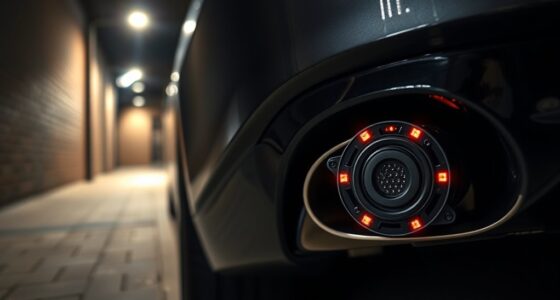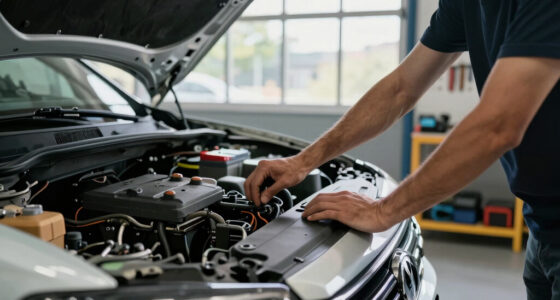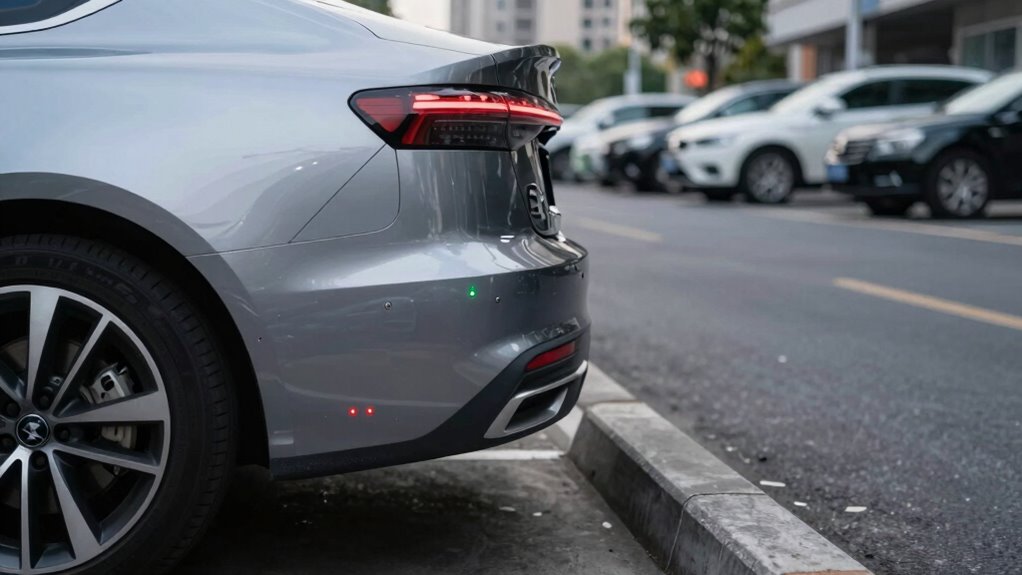

Parking sensors help you avoid obstacles during daily driving by providing real-time alerts as you maneuver, especially in tight spots or crowded areas. They detect objects like cars, poles, or pedestrians you’d miss with mirrors or cameras, reducing the risk of collisions. Sensors make reversing in low-light or bad weather safer and easier. Proper installation and maintenance guarantee they stay effective. Curious how these small devices make a big difference? Keep exploring to learn more.
Key Takeaways
- Provide real-time alerts to avoid obstacles during parking and reversing maneuvers.
- Detect objects hidden from mirrors or cameras, reducing collision risks.
- Assist in tight spaces and parallel parking by guiding precise maneuvers.
- Warn pedestrians or shopping carts in crowded or low-visibility areas.
- Enhance safety during low-light or poor weather conditions with audible proximity alerts.
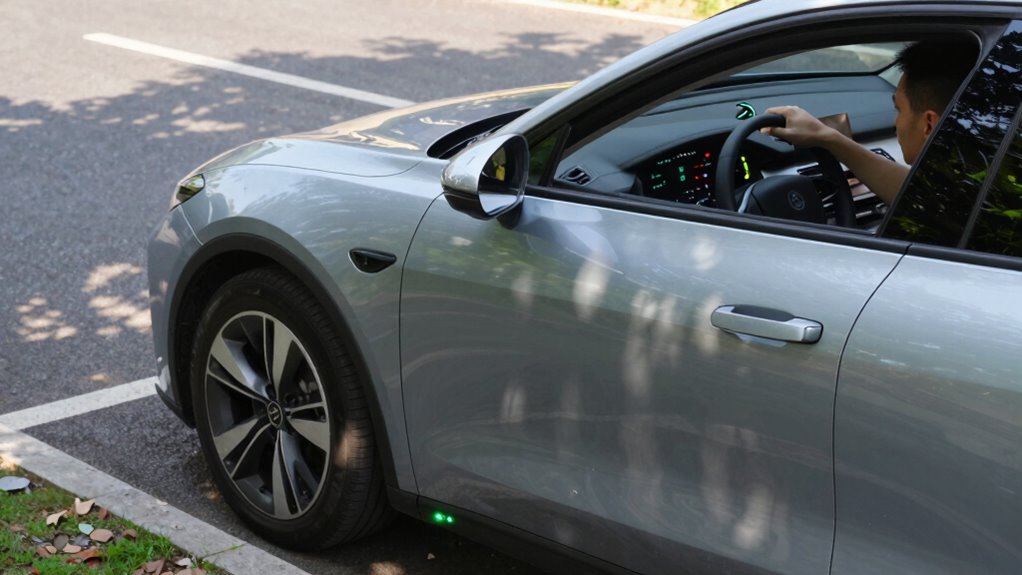
Parking sensors have become an essential tool for daily drivers, making parking easier and safer. When you’re guiding through tight spots or busy parking lots, these sensors give you real-time feedback, alerting you to obstacles you might not see. Proper sensor installation is vital to guarantee they work effectively. Usually, the sensors are mounted on the bumpers, connected to your vehicle’s electrical system. A professional installation can guarantee that the sensors are positioned correctly and calibrated properly, which helps prevent false alerts and guarantees you get accurate readings. Once installed, maintaining your parking sensors is just as important as initial setup. Regular parking sensor maintenance involves cleaning the sensors to remove dirt, mud, or snow that can interfere with their sensitivity. You should inspect the sensors periodically for cracks or damage and replace any faulty units promptly to keep your system reliable.
In real driving situations, parking sensors are especially helpful when you’re backing into tight spaces or parallel parking on busy streets. As you reverse, the sensors continuously scan the area behind your vehicle, providing audible alerts that increase in frequency as you get closer to an obstacle. This immediate feedback helps you avoid hitting other cars, poles, or walls, saving you from costly repairs or awkward situations. If you’re parking in a crowded lot, sensors can also alert you to pedestrians or shopping carts that might be out of your line of sight, giving you peace of mind. They’re particularly beneficial in low-light or poor weather conditions, where visibility is limited, and your mirrors or cameras might not give the full picture. Additionally, understanding how molecular-scale circuits are developed can enhance the design of more advanced sensor systems in the future. Moreover, advancements in sensor technology are increasingly influenced by developments in various scientific fields, including nanotechnology.
You might wonder how to keep your parking sensor system functioning efficiently. Besides sensor installation and parking sensor maintenance, guaranteeing your vehicle’s electrical connections are secure is key. Corrosion or loose wiring can cause sensor malfunctions, so it’s worth periodically checking these connections, especially if you notice inconsistent alerts. When cleaning the sensors, use a soft cloth and mild cleaning solution to avoid scratching or damaging the sensors. If you notice a decline in performance, consult your vehicle’s manual or a professional technician. Regular calibration might be necessary after certain repairs or sensor replacements to keep the system precise. Staying informed about vehicle safety features can also help you better utilize your parking sensors and other driver assistance tools.

ELSNU Car Parking Sensors Kit Reverse Radar parktronic System Auto Electronics Vehicle Back Assistant Reverse 8 Sensor (Black)
When the product is working, the sensor emits ultrasonic waves. When encountering an obstacle, the ultrasonic waves are…
As an affiliate, we earn on qualifying purchases.
As an affiliate, we earn on qualifying purchases.
Frequently Asked Questions
Do Parking Sensors Work in All Weather Conditions?
Parking sensors generally work in most weather conditions, but their effectiveness depends on proper sensor calibration and weather resistance. Extreme weather like heavy rain, snow, or dirt can obstruct sensors, causing false alerts or reduced sensitivity. Regularly cleaning sensors and ensuring they’re correctly calibrated helps maintain performance. While many sensors are designed to withstand harsh weather, checking your vehicle’s specifications guarantees peak functioning in all conditions.
Can Parking Sensors Detect Small or Low-Profile Objects?
You might find parking sensors struggle with small object detection or low profile obstacle awareness, but they’re not entirely useless. While sensors can sometimes miss tiny or flat objects, many modern systems are improving their sensitivity to detect these hazards more reliably. Just remember, they’re a helpful tool, but you shouldn’t rely solely on them—trust your mirrors and eyes, especially when dealing with low-profile obstacles.
How Reliable Are Parking Sensors Over Time?
Parking sensors are generally reliable over time, but their accuracy depends on proper sensor calibration. If sensors aren’t calibrated correctly, you might experience false alarms or missed detections, reducing trust in their reliability. Regular maintenance, like cleaning sensors and making sure they’re correctly calibrated, helps maintain their effectiveness. Over time, sensors can wear out, so replacing them when they become faulty ensures continued safety and reduces false alarms.
Are Parking Sensors Compatible With All Vehicle Models?
Parking sensors aren’t compatible with all vehicle models, so you’ll need to verify vehicle compatibility before installation. Some sensors are designed specifically for certain makes and models, while others are universal. Additionally, proper sensor calibration is essential to guarantee accuracy. If you choose sensors compatible with your vehicle and make sure they’re correctly calibrated, you’ll enjoy reliable parking assistance without any issues.
Do Parking Sensors Require Professional Installation?
Think of parking sensors as your car’s personal guiding stars—most don’t require professional installation, but sensor calibration and installation complexity can vary. You might find some systems straightforward, like plugging in a familiar gadget, while others demand a skilled touch to guarantee everything aligns perfectly. If you’re comfortable with basic DIY tasks, you could handle simple setups; otherwise, a professional can fine-tune the sensors to keep your parking journey smooth and safe.
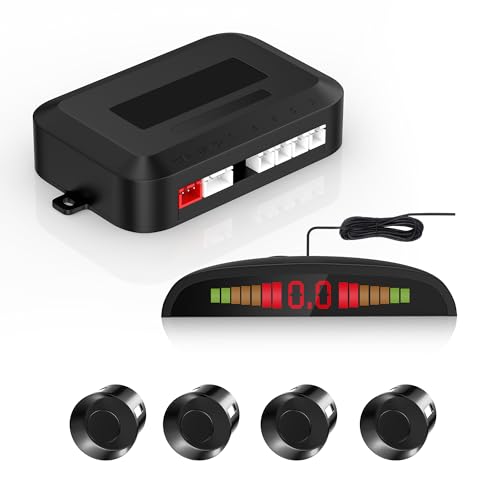
Car Reverse Backup Sensor – Universal Parking Sensors for Car with 4 Rear Sensors, LED Distance Display & Beep Alert – Backup Sensor Kit for Cars, SUVs, Trucks (Black)
Parking Sensors for Cars with Hole Saw This reverse parking sensor kit comes with a universal hole saw…
As an affiliate, we earn on qualifying purchases.
As an affiliate, we earn on qualifying purchases.
Conclusion
Parking sensors truly make daily driving safer and easier. Did you know that vehicles equipped with parking sensors reduce minor accidents by up to 30%? By alerting you to obstacles you might not see, these sensors help prevent costly dents and scrapes. Whether you’re parking in tight spots or backing out of crowded driveways, they boost your confidence and safety. Embrace parking sensors, and enjoy a smoother, more secure driving experience every day.

K&F CONCEPT 24mm Full Frame Sensor Cleaning Kits, with 20ml Sensor Cleaner
【6 Pieces of 24mm Sensor Cleaning Swabs】 Tailored according to the size of the Full frame frame sensor;Smudge-and…
As an affiliate, we earn on qualifying purchases.
As an affiliate, we earn on qualifying purchases.

Promata PSW-81 12-24V Wireless Parking Sensor, Wireless Parking Kit with 4 58Hkz Sensors for Car Truck Trailer, Upside Down Display with Adjustable Alarm Volume
[Upside Down Digital Display]:Adjust the display orientation for optimal visibility,and get an accurate distance reading through the digital…
As an affiliate, we earn on qualifying purchases.
As an affiliate, we earn on qualifying purchases.