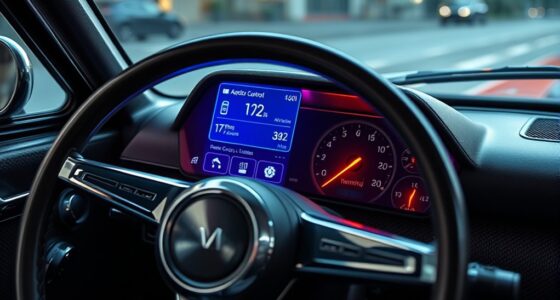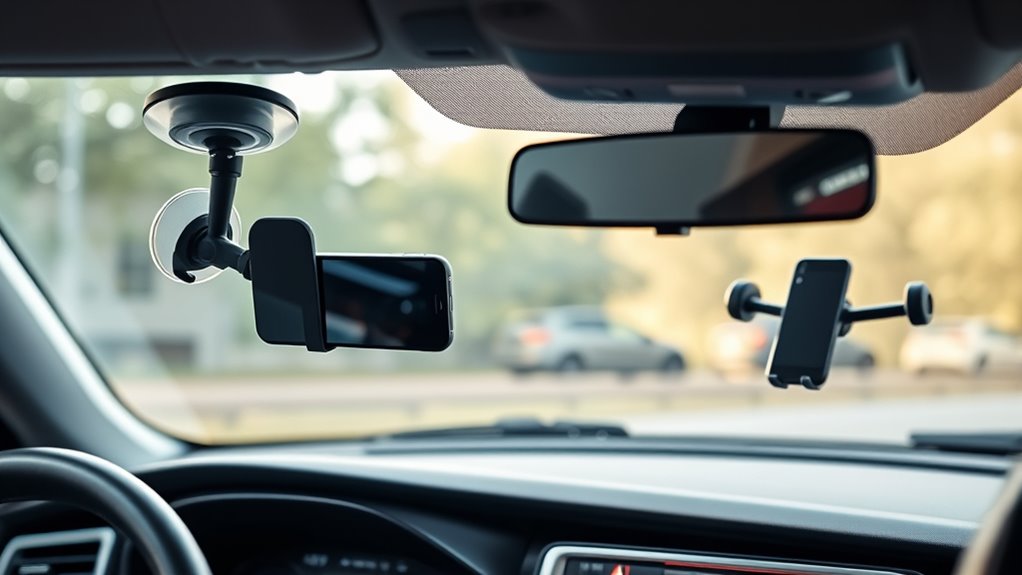

When choosing between a windshield or dash mount for your phone, you need to take into account your state’s laws, as they vary and can affect legality and safety. Windshield mounts are easy to see and use but may be illegal if they obstruct your view in some areas. Dash mounts often comply better with regulations and reduce distractions. To make certain you stay compliant and safe, it’s helpful to understand specific laws, so keep exploring for more details.

Get business pricing on garage and car supplies
- Business-only prices and quantity discounts
- Tax-exempt purchasing
- Multiple users, one account, clear invoices
Key Takeaways
- Check your state’s laws to determine if windshield or dash mounts are permitted and under what visibility restrictions.
- Windshield mounts are convenient but may be illegal if they obstruct your view or interfere with mirrors in some states.
- Dash mounts often comply better with legal requirements, especially where laws restrict windshield obstructions.
- Proper installation is essential for both types to prevent safety hazards, such as blocking airbags or dashboard controls.
- Always ensure your phone holder is securely mounted and compliant with local regulations to avoid fines or legal issues.

When choosing a mount for your phone or GPS device, you might wonder whether a windshield or dash mount is the better option. The decision isn’t just about convenience; it’s also about complying with mounting regulations that vary across states. Some states have strict rules about where you can place your device to guarantee safety and avoid fines. You need to be aware of these regulations because improperly mounted devices can distract you while driving, increasing the risk of accidents. Ensuring device safety isn’t just about avoiding tickets; it’s about keeping yourself and others safe on the road.
State laws often specify where you can and cannot place a phone or GPS device. For example, some states prohibit mounting a device directly in your line of sight, such as on the windshield, if it obstructs your view. Others restrict mounting locations to prevent obstruction of mirrors or dashboard controls. These regulations are designed to minimize distractions, making it vital that you choose a mounting position that aligns with local laws. Before you buy or install a mount, it’s wise to check your state’s specific rules, as they can vary considerably from one place to another.
A windshield mount might seem convenient because it’s easy to see and access, but in some states, it may be illegal if it obstructs your view or interferes with your line of sight. Conversely, a dash mount often offers a more discreet option, potentially helping you stay within legal limits. However, dash mounts need to be installed properly to avoid interfering with airbags or dashboard controls, which could compromise device safety. No matter which mount you choose, guaranteeing that it’s securely attached and doesn’t obstruct your view is vital for safe driving. Additionally, considering vehicle safety features when installing your device can help prevent unintended interference or hazards.
When considering mounting options, think about how the device’s position impacts your safety and compliance with local laws. If your state has strict regulations, a dash mount might be a safer choice because it can be positioned lower and out of your direct line of sight. On the other hand, some states allow windshield mounts as long as they don’t block your view, but it’s still essential to verify these rules. Whichever option you select, make sure it’s installed correctly and doesn’t interfere with your ability to operate your vehicle safely. Remember, device safety and adherence to mounting regulations go hand in hand for a smooth, legal, and safe driving experience.
As an affiliate, we earn on qualifying purchases.
Frequently Asked Questions
Are There Specific States With Stricter Phone Holder Laws?
Yes, some states have stricter hands-free regulations to combat distracted driving. For example, California and New York enforce tough laws that prohibit holding your phone while driving, requiring you to use mounts or voice commands. These laws aim to reduce distractions and improve safety. If you’re in a state with strict distracted driving laws, you should choose your phone holder carefully, ensuring it complies with local regulations to avoid fines or penalties.
How Do Laws Differ for Commercial Versus Personal Vehicles?
In commercial vehicles, laws are stricter to guarantee vehicle safety, often banning windshield mounts and requiring dash or console mounts. For example, a delivery driver might face fines if they use a windshield mount while driving. Personal vehicle laws are more lenient, but mounting preferences still matter. You should always check your state’s specific regulations to stay compliant and prioritize safety, regardless of vehicle type.
Can Using a Phone Holder Lead to Legal Penalties?
Using a phone holder can lead to legal penalties if you’re caught violating distracted driving laws, especially if you’re holding or using your phone while driving. Enforcement challenges may make penalties inconsistent, but authorities can still issue fines or citations. To avoid legal trouble, always verify your phone is mounted legally on your windshield or dashboard, following your state’s specific laws, and never use your phone while actively driving.
Are There Age Restrictions for Installing Phone Mounts?
Imagine planting a delicate seed; similarly, age restrictions for installing phone mounts are usually about safety rather than age itself. Most states don’t specify strict age limits but emphasize following installation guidelines suitable for your vehicle. If you’re a parent or guardian, guarantee the device is installed responsibly, keeping it within safe reach for your age group. Prioritize safety, follow manufacturer instructions, and always adhere to local laws.
Do Laws Vary for Different Types of Phone Holders?
Yes, laws differ for different types of phone holders, focusing on driver safety and mounting locations. Some states restrict windshield mounts because they can block views, while others permit dash mounts, provided they don’t obstruct your view of the road. Always check your local regulations to make certain your phone holder’s placement is legal and safe, helping you avoid fines and stay focused on driving.
windshield phone holder legal in my state
As an affiliate, we earn on qualifying purchases.
As an affiliate, we earn on qualifying purchases.
Conclusion
In the battle of windshield versus dash mounts, knowing your state’s laws isn’t just a detail—it’s your ultimate weapon against a ticket storm of epic proportions. Choose wisely, or you might find yourself in a legal maze so convoluted it rivals the labyrinth of ancient myth. Remember, the right mount isn’t just about convenience; it’s your shield against the chaos of unintended violations. Stay informed, stay legal, and drive with confidence—your future self will thank you.
As an affiliate, we earn on qualifying purchases.
vehicle GPS mount compliant with laws
As an affiliate, we earn on qualifying purchases.
As an affiliate, we earn on qualifying purchases.
Columbus Day / Indigenous Peoples' Day Picks
long weekend sales
As an affiliate, we earn on qualifying purchases.