TL;DR

Get business pricing on garage and car supplies
- Business-only prices and quantity discounts
- Tax-exempt purchasing
- Multiple users, one account, clear invoices
University of Michigan researchers, working with Toyota Research Institute, built and tested a steering wheel with inflatable air sacs that signal a semi-autonomous system’s intended steering and let a driver push back. In a driving simulator, participants spent less time resisting the system and reported lower effort and frustration, but the test does not establish how the design would work in real cars.
University of Michigan researchers, working with the Toyota Research Institute, built and tested a steering wheel that uses inflatable air sacs to show what a semi-autonomous driving system intends to do and let the driver respond. The simulator study suggests the design may reduce conflict between drivers and assistance systems, though it has not established how the wheel would perform on public roads or in production cars.
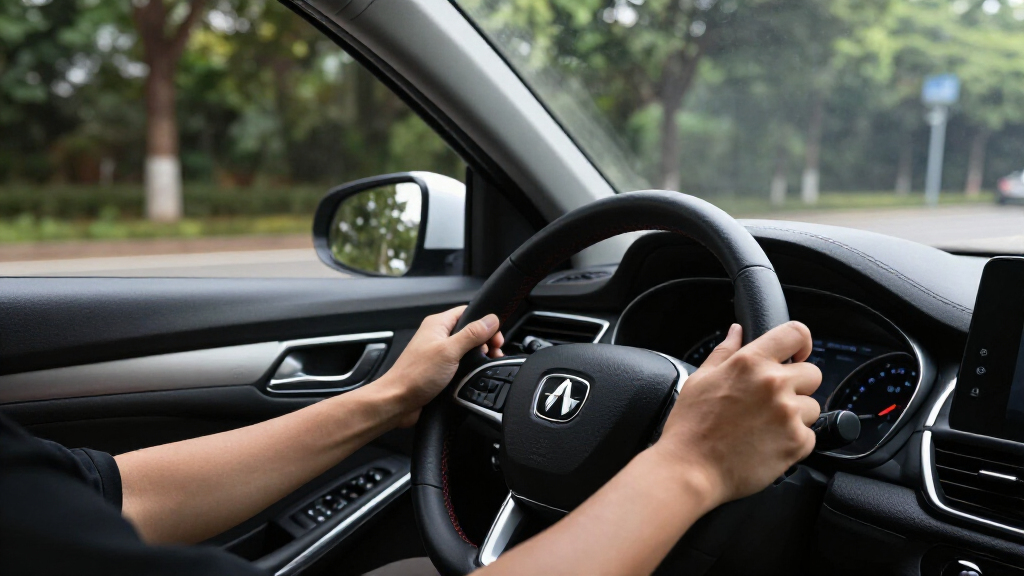
The wheel places inflatable haptic zones at roughly the 10 o’clock and 2 o’clock positions, where drivers commonly hold the wheel. When the assistance system intends to steer left, for example, air sacs on the left side inflate. A driver who disagrees can press down on them to deflate them. If the system continues to indicate a left turn, it can send pulses of air that the driver feels through the wheel.
The researchers’ aim is to make interaction two-way, rather than relying only on warning lights and chimes or requiring a driver to take over forcefully. In many current driver-assistance systems, an action such as pressing the brake can disengage the assistance. The proposed wheel offers another way to signal disagreement while communicating with the system.
To assess the idea, the team put participants in a driving simulator and asked them to navigate a turn where unexpected obstacles could appear. According to the study description and a University of Michigan press release, drivers spent less time fighting the assistance technology, braked less, and showed more confidence in their maneuvers. They also reported lower effort, frustration and physical demand. These are reported results from a simulator test, not evidence of performance in ordinary road use.
Driver-assistance systems can steer or otherwise help with driving while still requiring a person to remain attentive. That creates a shared-control problem: the system may act on the road while the driver wants to correct or reject what it is doing. A clear way for each to communicate could matter when a driver disagrees with an intended maneuver, particularly if an abrupt intervention currently cancels assistance.
The reported results suggest that a tactile interface may change how drivers respond, not just alert them to a system action. Participants spent less time resisting the system, and the researchers reported that drivers were more likely to regain trust after a system mistake. The study also found a potential risk: some participants became too trusting. Trust and attention are central concerns for systems that assist but do not remove the driver’s responsibilities.
The work does not show that an air-sac wheel is necessary or preferable to other designs. It points to one possible interface for managing shared control; whether it offers a practical advantage outside a simulator remains open.
smart steering wheel with haptic feedback
As an affiliate, we earn on qualifying purchases.
As an affiliate, we earn on qualifying purchases.
From Warnings to Tactile Feedback
Fully autonomous driving remains a longer-term goal, while systems that provide some automated assistance still depend on an attentive human driver. In the source report, the University of Michigan research is framed around reducing ambiguity when people and machines share control. The project involved Michigan Engineering researchers and the Toyota Research Institute, which provided funding.
Existing systems often communicate through lights and chimes, and drivers can intervene through familiar controls such as the brake or steering wheel. The proposed design adds physical feedback at the driver’s hands and a way to push against an intended action without relying only on a takeover that may switch the assistance off. The source also notes that Mercedes’ MB.Drive Assist Pro accepts inputs such as a steering-wheel tug or brake tap without completely disengaging. That example shows that two-way control can be approached without a breathing wheel.
““lower effort, frustration, and physical demand””
— University of Michigan press release, as reported by The Drive
As an affiliate, we earn on qualifying purchases.
Road Performance Still Untested
The supplied report describes a simulator study and does not say that the wheel has been tested on public roads, approved for use in a vehicle, or selected for production. It also does not provide participant numbers, detailed performance figures, or enough information to assess how the results might vary across drivers and driving conditions.
The researchers reported that some participants became too trusting of the assistance after it made a mistake. How often that happened, how serious the effect was, and how the interface might guard against overreliance are not specified in the source material. It is also unclear whether drivers would find the inflating air sacs intuitive or comfortable during everyday use.
The report does not establish that this hardware works better than other ways to let a driver communicate with an assistance system. No vehicle launch, deployment schedule or further test milestone is given.
semi-autonomous vehicle control device
As an affiliate, we earn on qualifying purchases.
As an affiliate, we earn on qualifying purchases.
Further Testing Would Set the Course
The source material does not announce a next test, product decision or release date. Further evaluation would need to establish whether the simulator findings hold up in real driving conditions, including how drivers respond to unexpected hazards and system errors over time.
Any later assessment would also need to examine whether tactile cues help drivers stay engaged without encouraging excessive trust, and how the wheel compares with simpler steering or brake inputs. Until such results or a product announcement are reported, the air-sac wheel remains a research concept, not a confirmed feature of a car available to buyers.
driver system interaction steering wheel
As an affiliate, we earn on qualifying purchases.
As an affiliate, we earn on qualifying purchases.
Key Questions
What does the breathing steering wheel do?
Air sacs in the wheel inflate to indicate a semi-autonomous system’s intended steering direction. Drivers can press them to push back, and the system can send pulses of air as further feedback.
Who developed the steering wheel?
University of Michigan researchers developed and tested it with researchers from the Toyota Research Institute, which provided funding, according to the source report.
Was the wheel tested on public roads?
The report describes a driving simulator test. It does not report testing on public roads.
What did drivers report during the test?
The University of Michigan press release said participants reported lower effort, frustration and physical demand. The study description also reported less time spent fighting the assistance system and less braking.
Is the steering wheel going into production?
The source material does not say that a carmaker plans to put the wheel into production. It describes a research design, with no confirmed launch or deployment schedule.
Source: rss
Halloween Picks
halloween
As an affiliate, we earn on qualifying purchases.