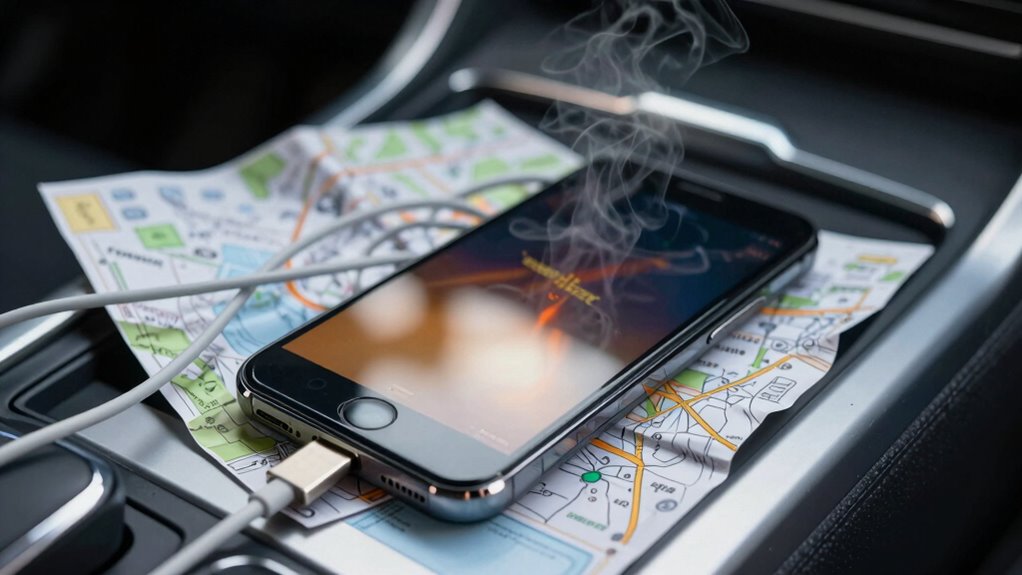

When your phone overheats, it wastes battery quickly, leaving you stranded or forcing you to stop often. Heat can weaken signals, making navigation less accurate and slowing down updates. It also slows down your device, causing delays or shutdowns that disrupt your route. Managing heat is essential for a reliable setup, so if you keep going, you’ll discover key ways to prevent overheating and keep your navigation smooth and dependable.

Get garage and car supplies delivered free — and shop member deals
- Fast, free delivery on millions of items
- Access to Prime Big Deal Days deals on October 6–7
- Prime Video, Amazon Music and more included
Key Takeaways
- Overheating drains the battery quickly, risking device shutdown during navigation.
- Excess heat weakens GPS signals, causing inaccurate or lost navigation updates.
- Thermal issues slow down or pause navigation apps, delaying route changes.
- High temperatures trigger device shutdowns to prevent damage, disrupting guidance.
- Overheating hampers overall device responsiveness, reducing safety and driving confidence.
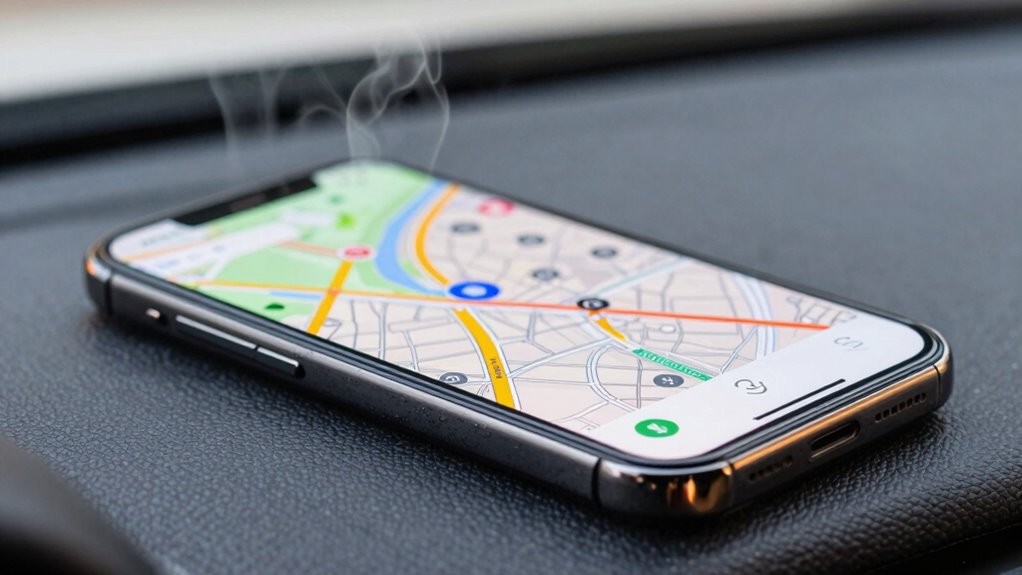
When your phone overheats during a long drive, it can quickly turn a smooth navigation experience into a frustrating ordeal. Overheating doesn’t just make your device uncomfortable to hold; it can cause significant issues that sabotage your trip. One of the most immediate problems is battery drain. As your phone’s temperature rises, the battery begins to deplete faster than usual because the device works harder to manage heat and maintain performance. This rapid battery loss can leave you stranded if you’re not prepared, especially in areas where charging options are limited. You might find yourself constantly looking for a power source, which interrupts your journey and adds stress to an already tense situation.
Overheating drains your battery quickly, risking being stranded without power during long drives.
In addition to battery drain, overheating can trigger signal disruption. Many smartphones automatically reduce power or disable certain functions to prevent further temperature increases. This can lead to weakened GPS signals or even complete loss of connectivity. Without a reliable signal, your navigation app can’t provide real-time directions, rerouting, or traffic updates. As a result, you might get lost or take longer routes, increasing your frustration and travel time. Signal disruption also affects your ability to communicate in emergencies or contact roadside assistance, compounding your worries on the road. Additionally, thermal management systems are essential because they help prevent your device from reaching critical temperatures that could cause shutdowns or damage.
Furthermore, when your phone gets too hot, it often slows down or pauses background processes, including navigation and mapping apps. This slowdown can cause delays in rerouting or updating your location, which is especially problematic in unfamiliar areas or high-traffic zones. The device’s thermal management systems may even force shutdowns to protect internal components, abruptly ending your navigation session altogether. These interruptions can leave you guessing about your next turn or destination, making your drive stressful and unsafe. To prevent this, some devices include thermal regulation features that help maintain optimal operating temperatures during extended use. Additionally, proper ventilation can significantly reduce the risk of overheating, especially in enclosed spaces like a car interior. Regularly cleaning your device’s vents and avoiding direct sunlight can further support these cooling efforts.
As an affiliate, we earn on qualifying purchases.
Frequently Asked Questions
How Can I Prevent My Phone From Overheating During Long Trips?
To prevent your phone from overheating during long trips, lower your screen brightness to reduce heat. Keep an eye on your battery health, as a degraded battery can cause excess heat. Also, avoid using intensive apps or leaving your phone in direct sunlight. Taking these steps helps maintain ideal temperature, ensuring your navigation setup stays reliable without risking damage from overheating.
Does Using Certain Apps Increase Phone Overheating Risks?
Think of your phone as a busy city; certain apps, especially those running in the background, are like traffic jams that cause chaos. These apps increase battery drain and generate heat, raising overheating risks. When you use resource-heavy apps, your device struggles to cool down, just like a city swelters during a heatwave. To protect your navigation setup, close unnecessary apps and keep your phone cool during long trips.
What Are the Signs My Phone Is Overheating While Navigating?
When your phone overheats during navigation, you’ll notice a sudden slowdown, screen flickering, or a hot surface on the back. Battery health may decline faster, and apps might crash unexpectedly. To prevent this, use cooling accessories like fans or cooling cases, and keep an eye on your device’s temperature. If it feels excessively hot, stop navigation, let your phone cool down, and consider reducing background apps to help manage heat.
Can External Factors Like Weather Affect Phone Overheating?
Yes, external factors like weather can definitely affect your phone’s overheating. Environmental factors such as direct sunlight, high temperatures, or temperature fluctuations can cause your phone to heat up faster. When the weather is hot or there are sudden temperature changes, your device struggles to cool down effectively, increasing the risk of overheating. To prevent this, keep your phone shaded and avoid exposing it to extreme weather conditions during navigation.
Are There Specific Phone Models Better Suited for Navigation?
Think of some phones as marathon runners—built for endurance. Models like the iPhone 13 or Samsung Galaxy S21 excel in navigation thanks to excellent battery efficiency and high screen resolution. They handle extended use without overheating, making your navigation smooth as silk. Selecting a device with strong battery life and crisp display guarantees your GPS remains reliable, even during long trips, so you won’t get lost in the heat.
smartphone thermal management case
As an affiliate, we earn on qualifying purchases.
As an affiliate, we earn on qualifying purchases.
Conclusion
So, next time your phone’s overheating ruins your navigation, remember: it’s not just a tech glitch, it’s a cosmic joke. Your trusty device, supposed to guide you smoothly, decides to turn into a portable sauna just when you need it most. Maybe it’s time to stop blaming the GPS and start blaming thermodynamics. After all, who knew that a little heat could turn your perfect setup into a blazing disaster?
As an affiliate, we earn on qualifying purchases.
car vent phone holder with cooling
As an affiliate, we earn on qualifying purchases.
As an affiliate, we earn on qualifying purchases.
Fall Picks
fall essentials
As an affiliate, we earn on qualifying purchases.