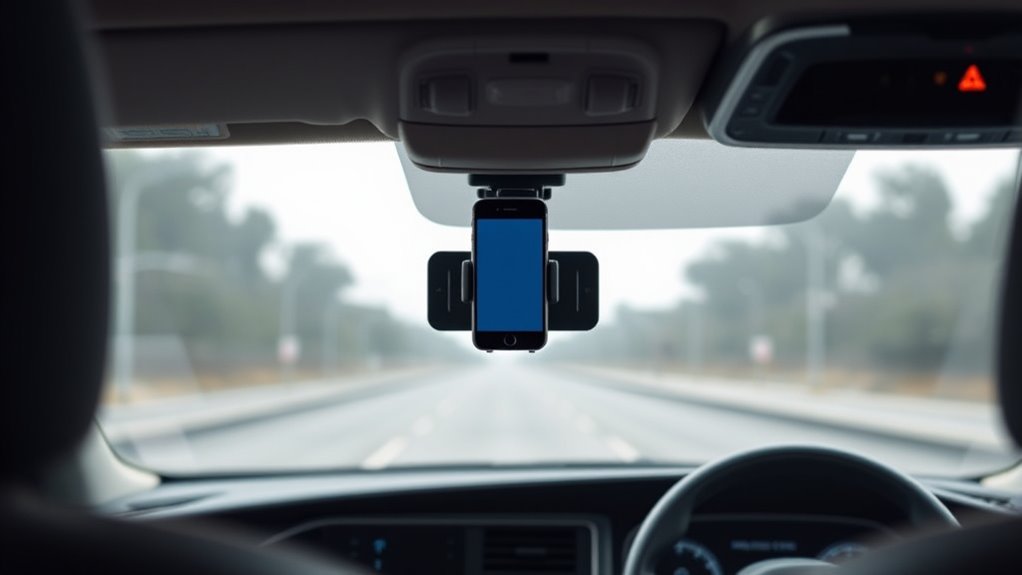

To mount your GPS or phone safely, choose a spot near the steering wheel or center dashboard for easy access and minimal distraction. Make sure the mount is on a stable, flat, and vibration-free surface away from climate vents and airbags. Adjust the device to eye level without blocking your view of traffic signs. Regularly check the position and stability, and keep the mount clear of obstructions. For more tips, continue exploring these expert suggestions.
Key Takeaways
- Place the mount near the steering wheel or center dashboard for easy access and minimal distraction.
- Choose a flat, stable surface like the dashboard or windshield, ensuring good adhesion and minimal vibration.
- Position the device at eye level to reduce neck movement and keep it within arm’s reach.
- Ensure the mount does not obstruct your view of traffic signs, signals, or the road.
- Regularly check and tighten the mount for stability, and adjust for optimal visibility and safety.
Choose the Optimal Viewing Height
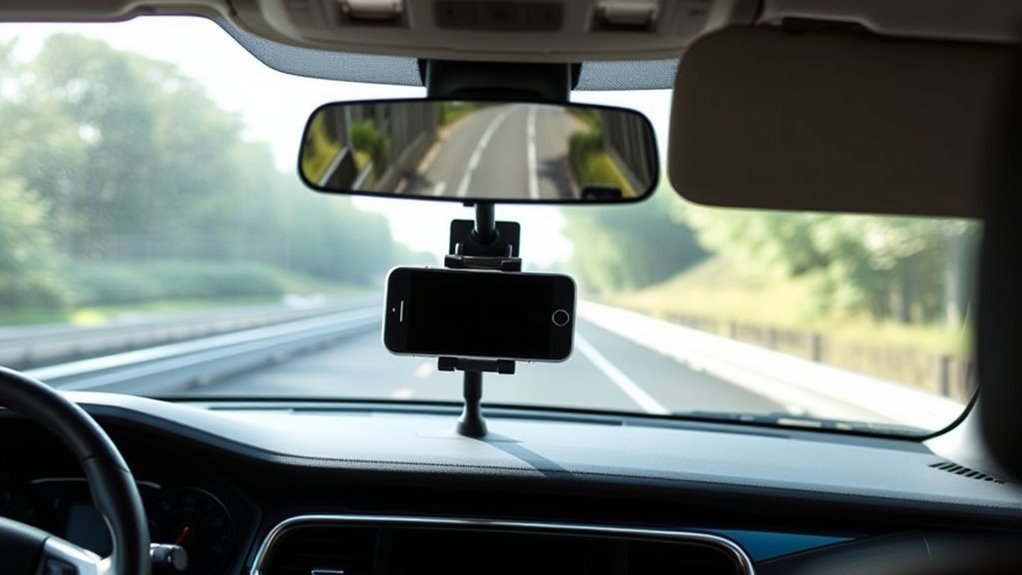
Choosing the right viewing height for your GPS or phone is essential for safe and easy navigation. When you position your device at the correct height, you reduce strain on your neck and eyes, ensuring ergonomic comfort during drives. Aim to place the mount so you can glance at your screen with minimal head movement, keeping your eyes on the road. Additionally, consider aesthetic integration; a well-placed mount blends seamlessly with your vehicle’s interior, creating a sleek, unobtrusive look. Proper height not only enhances safety but also vehicle interior design, making the setup feel natural and unobtrusive. Ensuring your mount is ergonomically positioned helps prevent fatigue during long drives. Remember, the ideal viewing height balances visibility, comfort, and style, helping you stay focused and relaxed on every journey. Electrical safety is also vital when installing mounts to prevent any potential hazards. Maintaining an ergonomic position can also improve overall driving comfort and reduce fatigue.
Select a Stable and Vibration-Free Spot
To keep your device secure, pick a spot with a smooth surface that minimizes movement. Stay away from areas with high vibrations, like near the engine or bumps in the road. A stable, vibration-free spot helps your device stay in place and makes navigation easier. Additionally, choosing a location with good mounting stability ensures your device remains secure during your drive. For optimal results, consider the type of mount that best suits your vehicle’s dashboard or windshield. Ensuring proper installation practices further enhances safety and device security during your trips. Selecting a mount designed for natural pools can also help maintain a secure hold on your device in various conditions. Incorporating Suprem fabric materials into your gear or accessories can provide added durability and comfort, ensuring your device and mount stay protected over time.
Choose a Smooth Surface
Finding a smooth surface for your GPS or phone is essential to guarantee stable navigation and prevent distractions. A flat, clean area ensures your mount stays secure and reduces chances of slipping. When considering surface selection, look for spots like your dashboard or windshield that are flat and free of bumps. Using a surface with appropriate adhesion properties can improve the longevity and stability of your mount, especially during longer drives. Additionally, selecting a non-porous surface can help prevent the adhesive from weakening over time. Ensuring the surface has proper surface compatibility can also enhance overall mount stability and prevent vibrations. Choosing a surface with consistent texture can further improve grip and reduce movement during driving. Here are some tips:
- Choose a surface with minimal texture for better adhesive options.
- Avoid textured or porous surfaces that can weaken grip.
- Clean the area thoroughly before mounting to enhance adhesion.
- Opt for smooth surfaces that won’t vibrate or shift during driving.
- Considering surface flatness can significantly improve the stability and durability of your mount.
Avoid High-Vibration Areas
Selecting a stable spot on your dashboard or windshield helps prevent your phone or GPS from bouncing or shifting while you drive. Avoid areas with high vehicle vibrations, which can cause your device to become unstable or difficult to see. Look for flat, solid surfaces away from the road surface’s rough patches or uneven sections. For example, avoid mounting near suspension-heavy areas like the dashboard corner over wheel wells. Consider these zones:
| Area | Vibration Level | Reason |
|---|---|---|
| Near tires | High | Excessive road surface bounce |
| Dashboard corner | Moderate | Slight vibrations from engine |
| Center dashboard | Low | Stable and vibration-free |
Choosing these spots guarantees a clear view and keeps your device securely in place. Proper mount placement is essential for safe driving and device stability. Additionally, selecting a location with minimal vibrations helps prolong the lifespan of your device and ensures consistent GPS accuracy. Recognizing vehicle vibration patterns can guide you in finding the most secure mounting point. Being aware of potential vibration sources within your vehicle can further improve your mounting decisions. Knowing how different mounting surfaces respond to vibrations can also help you select the best location.
Consider Accessibility and Reachability
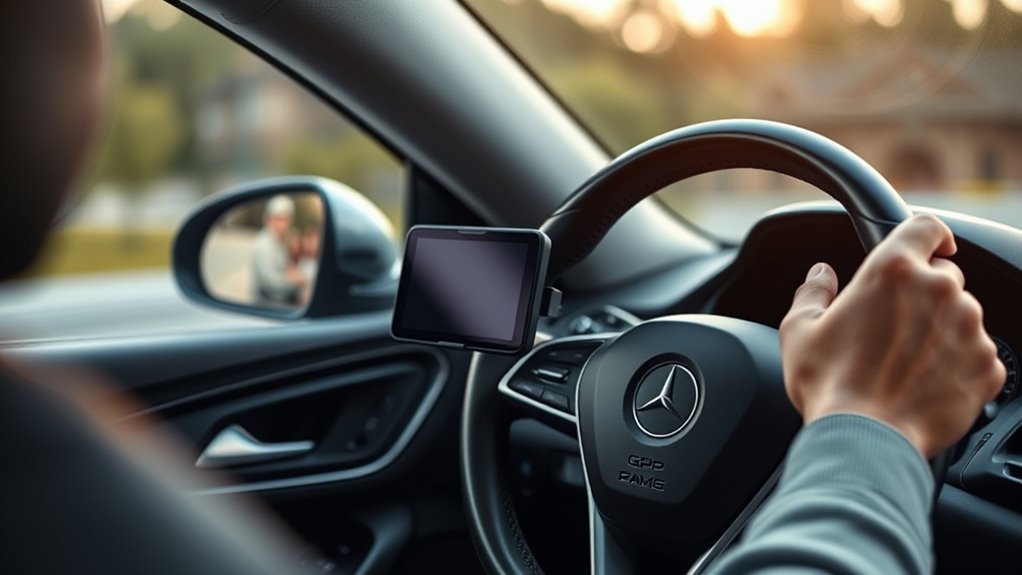
Make sure your device is easy to access during your drive so you can quickly check directions without distraction. Position it where it won’t block your view of the road or other important controls. Confirm you can reach it comfortably without stretching or straining, keeping safety top of mind. Ensuring proper placement and positioning can also help you stay alert and focused while driving. Additionally, consider accessibility and reachability to prevent unnecessary movement that could lead to accidents. Proper mounting technique is essential to maintain stability and prevent your device from shifting during sudden stops or turns.
Easy Access During Drive
To guarantee safe and convenient access to your GPS or phone while driving, positioning it within easy reach is essential. Proper placement ensures you stay focused on the road, not your device. Consider these tips:
- Place your mount on the dashboard for quick visibility without distraction.
- Use armrest positioning if your car has a suitable surface nearby for easy access.
- Ensure the mount allows you to glance at your device without turning your head considerably.
- Avoid mounting too low or too high, which could affect reachability and comfort.
Avoid Obstructing View
Ensuring your view isn’t obstructed is essential for safe driving. A poorly placed mount can cause dashboard glare or block your windshield, impairing visibility. To prevent this, choose a location that keeps your line of sight clear. Avoid mounting near the top of the dashboard or directly in front of your mirror. Instead, opt for a spot that doesn’t interfere with your peripheral vision or cause glare. Proper placement minimizes the risk of windshield obstruction and helps you stay alert. Keep in mind that accessibility matters too; your mount should be reachable without straining or shifting your focus from the road. Here’s a quick guide:
| Location | Pros | Cons |
|---|---|---|
| Dashboard corner | Less glare, easy reach | Potential obstructions |
| A-pillar area | Clear view, minimal glare | May interfere with visibility |
| Below the windshield | Keeps sightline open | Harder to access |
| Near steering wheel | Easy reach, quick access | Possible glare issues |
| Center dashboard | Balanced view, accessible | May block vents |
Reach Without Straining
Choosing a mount that’s easy to reach without stretching or shifting your focus keeps your attention on the road. Prioritize ergonomic design and reach optimization to prevent strain and guarantee quick, safe access. Consider these tips:
- Position your mount within arm’s length to avoid overextension.
- Select a location that aligns with your natural hand movement, like near your dashboard.
- Use adjustable mounts to customize height and angle for comfort.
- Test different positions to find the one that minimizes neck and eye movement.
Avoid Obstructing Your View of the Road
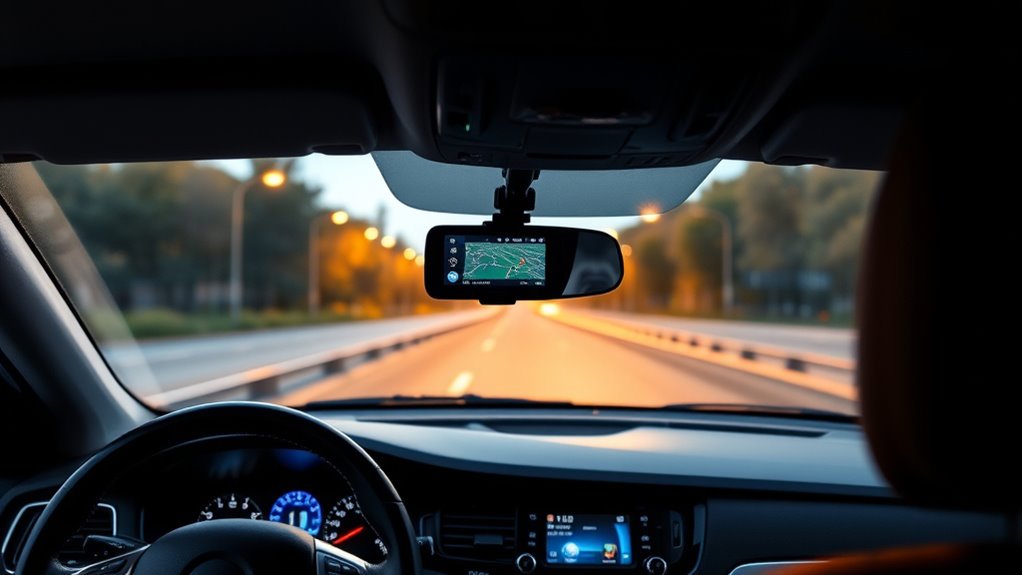
When mounting your GPS or phone in your car, you need to be mindful of your line of sight. Position the device so it doesn’t block your view of the road, especially the horizon and important traffic signs. Avoid placing it in spots that cause dashboard glare or reflect sunlight into your eyes, which can impair your vision. Sun exposure can also make screens hard to see, so consider mounting your device where it’s shielded from direct sunlight. Keep the device within easy reach without forcing you to look away from the road or turn your head. Staying aware of these details helps ensure your view remains unobstructed and safe, reducing distractions and keeping your focus where it should be—on driving.
Use the Right Mounting Surface
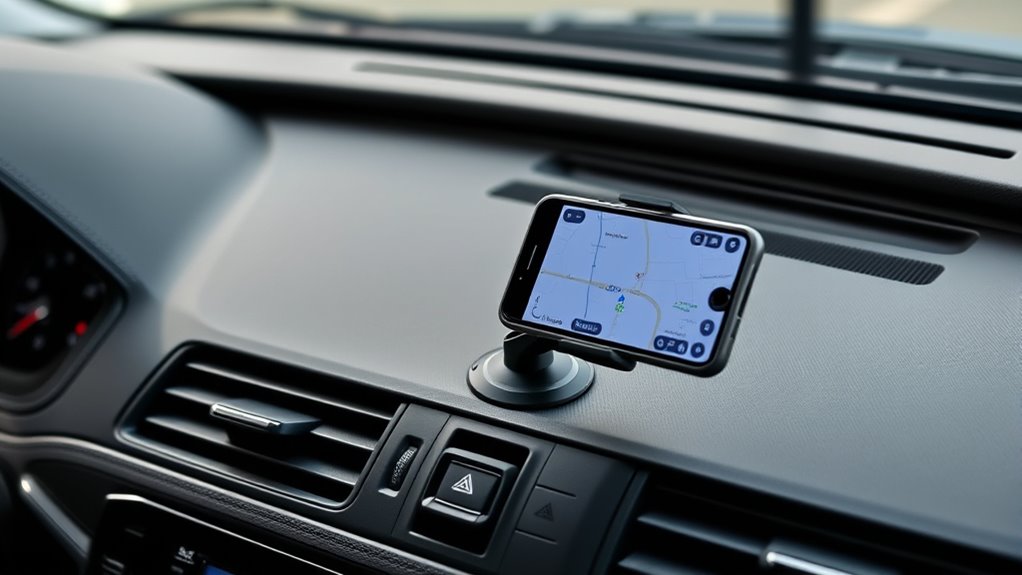
Selecting the right surface to mount your device is essential for both visibility and safety. Your goal is to guarantee clear dashboard placement that doesn’t interfere with your view of the road. Consider these options:
- Dashboard surface: Choose a flat, stable spot for ideal dashboard visibility.
- Windshield mount: Use a suction cup on the windshield if it doesn’t block your line of sight.
- Air vent: Attach to an air vent for quick access, but guarantee it doesn’t obstruct air flow or your view.
- Center console: Place on the console for easy reach, avoiding distractions while driving.
Prioritize surfaces that keep your device secure and visible without cluttering your dashboard. This guarantees safe, effective usage of your GPS or phone.
Position Away From Airbags and Moving Parts
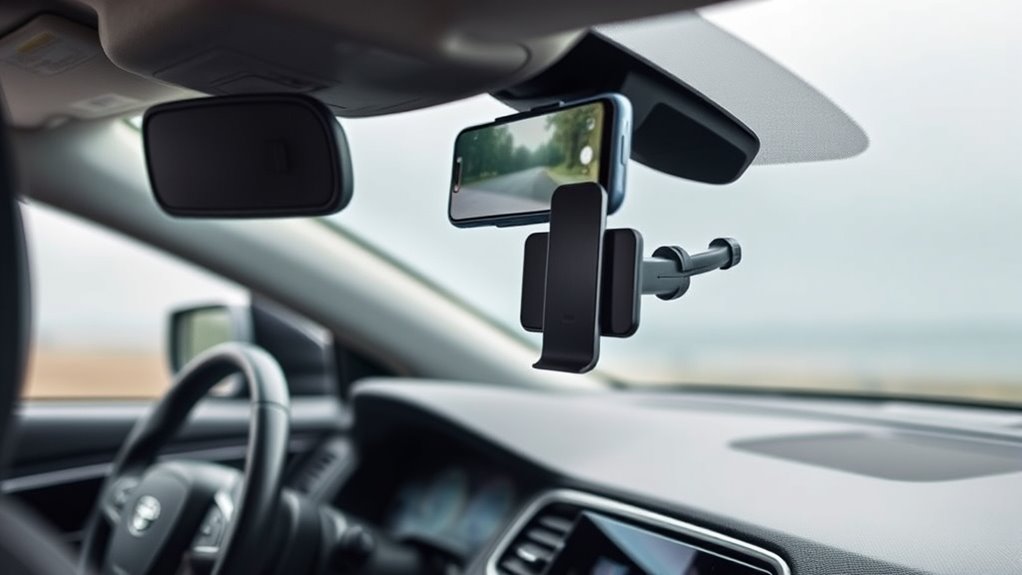
Positioning your device away from airbags and moving parts guarantees it remains a safe and effective navigation tool. During airbag deployment, a mounted device too close to the dashboard could be damaged or cause injury. Moving parts, like the steering column or dashboard components, can also interfere with your device’s stability or functionality. Avoid placing your mount near areas where airbags deploy or where parts shift suddenly. Keep your device in a spot that’s out of the way of these potential hazards, ensuring it won’t be dislodged or cause obstruction during sudden stops or collisions. Proper positioning minimizes risk and helps your device function smoothly, so you can focus on driving safely while navigation remains reliable.
Ensure Compatibility With Your Device
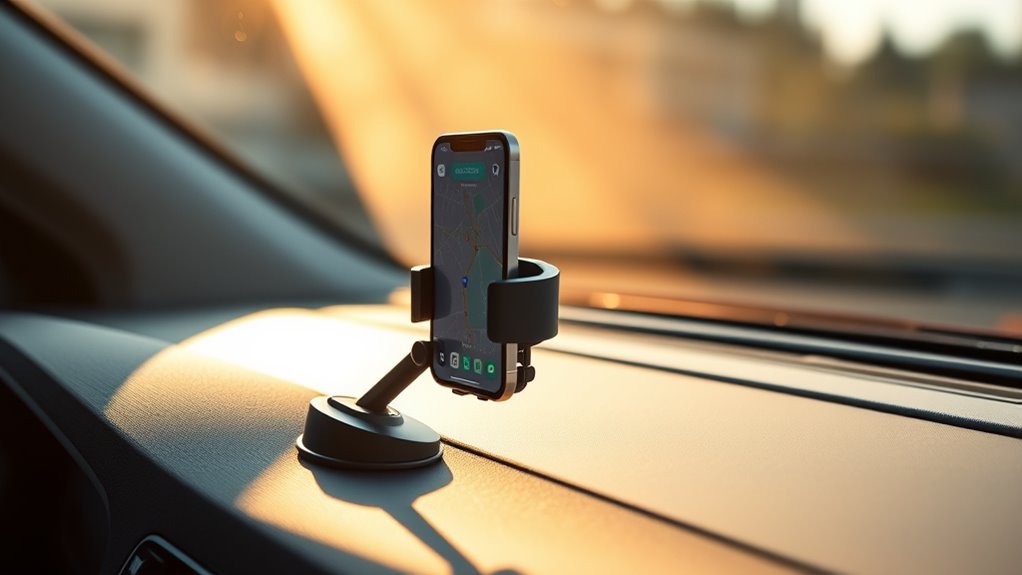
Before choosing a mount, make sure it fits your device’s size and shape. You also want to select a mount type that works well with your car’s interior and your usage habits. Checking these details guarantees a secure hold and easy access whenever you need it.
Device Size Compatibility
Ensuring your GPS or phone mount fits your device is essential for safe and effective use. To guarantee proper fit, consider your device size and how it interacts with various mount types. Here are key tips:
- Check the device dimensions against the mount’s adjustable range to ensure compatibility.
- Opt for mounts designed for larger or smaller devices if your device varies in size.
- Confirm the mount’s cradle or holder can securely grip your device without slipping.
- Be aware that some mounts are more adaptable for specific device sizes, so choose one that matches yours precisely.
Matching your device size with the right mount type prevents slipping or falling, ensuring steady visibility and safe driving. Always verify compatibility before purchasing.
Mount Type Suitability
Selecting the appropriate mount type is crucial to guarantee your device remains secure and accessible while driving. Your choice depends on your device’s size, weight, and how you use it. For example, a magnetic mount might suit smaller phones, but a larger GPS requires a sturdy, cradle-style mount. Consider durability considerations when choosing your mount type; a poorly made mount can fail, risking damage to your device or distracted driving. Confirm the mount type you select is compatible with your device’s shape and features, like cases or charging ports. Proper compatibility ensures stability and safety on the road. By matching your device with the right mount type, you’ll enjoy a secure, long-lasting setup that keeps your device within easy reach and minimizes distractions.
Test for Ease of Removal and Adjustment
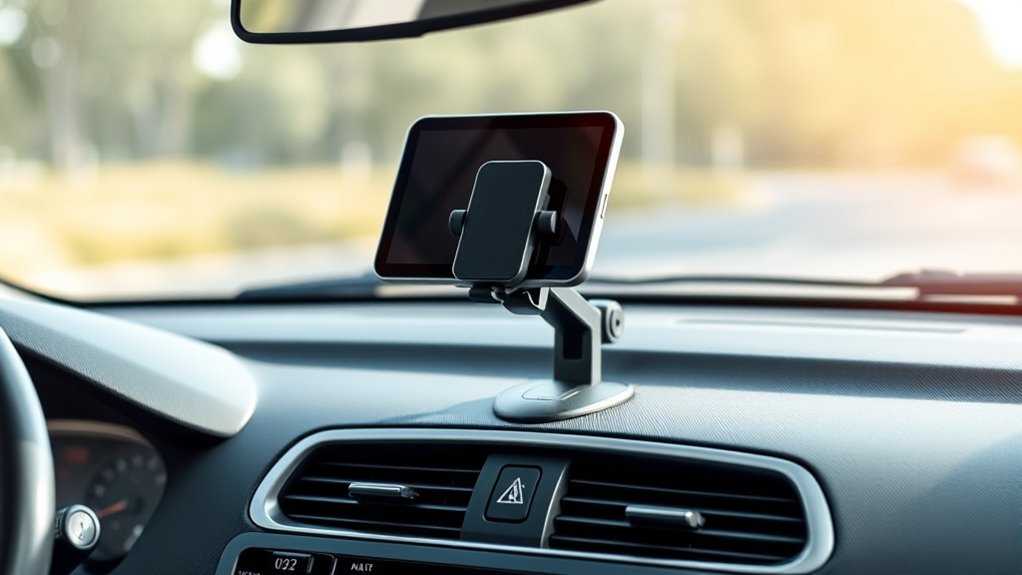
Testing how easily you can remove and adjust your GPS or phone mount is crucial to guarantee daily convenience. A good mount should offer smooth test removal ease and adjustment convenience without requiring excessive force or awkward maneuvering. To assess this, try these steps:
Ensure your mount offers easy removal and adjustment for daily driving convenience.
- Gently lift the device to see how easily it detaches from the mount.
- Adjust the angle or position to check for flexibility and stability.
- Confirm that the mount stays secure during minor vibrations.
- Ensure that removal and adjustment can be done quickly, without tools or frustration.
Keep Mounts Clear of Climate Controls and Vents
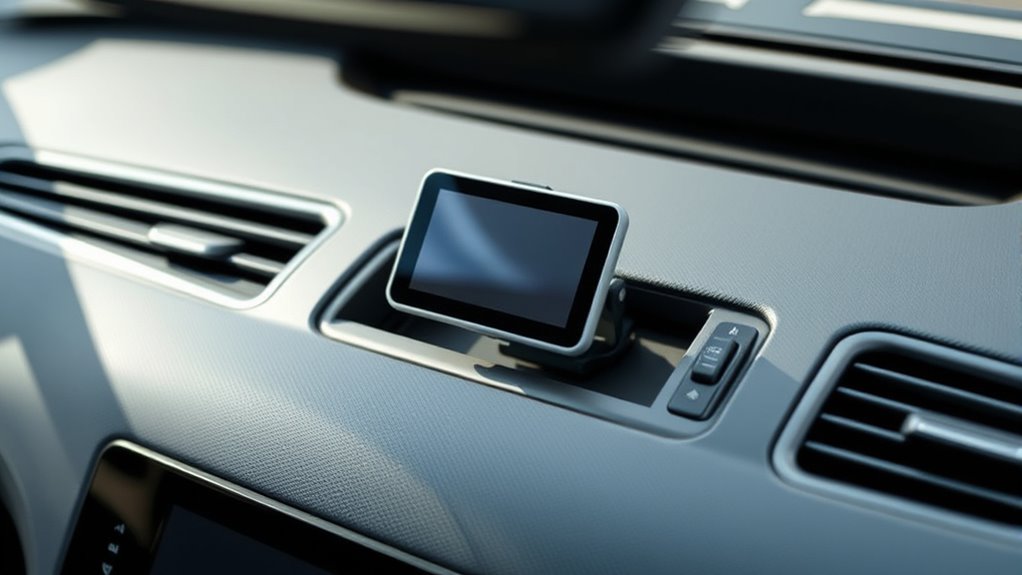
When positioning your mount, it’s important to keep it away from climate controls and vents. Proper climate vent placement guarantees your device isn’t affected by airflow, which can cause it to shake or fall. Additionally, avoid placing the mount too close to the dashboard clearance area, where heat and humidity from vents can damage your device or cause it to slip. Keep enough space so that airflow doesn’t interfere with visibility or operation. This also prevents accidental adjustments to climate controls, which could disrupt your focus while driving. By choosing a spot that is clear of climate vent placement and allows for adequate dashboard clearance, you’ll maintain both the safety and stability of your mount. This simple step ensures your device stays secure and accessible during your drive.
Regularly Check and Reposition as Needed
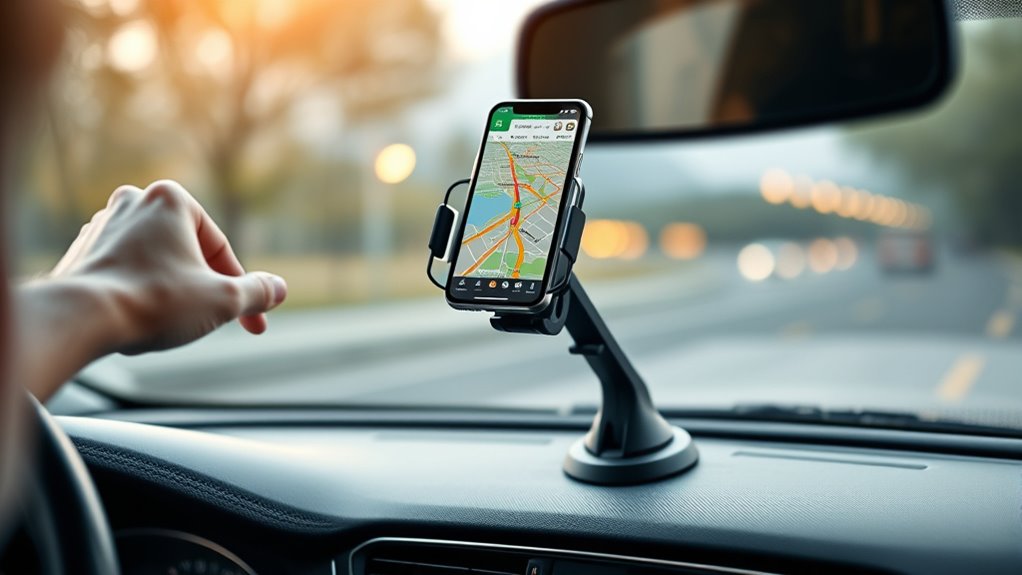
Because conditions in your vehicle can change over time, it’s essential to regularly check your mount’s position to guarantee it remains secure and effective. Over time, vibrations or temperature shifts can affect sensor calibration and vehicle compatibility, impacting your device’s stability. To keep your mount functioning at its best, consider these steps:
- Reassess the mount’s grip and tighten if needed.
- Verify the visibility and accessibility of your device.
- Ensure the mount still aligns with your eye level for safe viewing.
- Check that the mount’s position doesn’t interfere with airbags or sensors.
Regular inspections help maintain proper sensor calibration and vehicle compatibility, preventing distractions and ensuring your device stays securely in place. Reposition as necessary to keep your setup safe and effective.
Frequently Asked Questions
How Do I Choose the Best Type of Mount for My Vehicle?
To select the best mount for your vehicle, consider mount compatibility with your device and your car’s interior. Look for options that offer easy installation, so you can set it up quickly and securely. Think about your driving habits—if you need frequent access, opt for a mount with adjustable angles. Confirm it fits your vehicle’s dashboard or windshield comfortably, providing a stable view without obstructing your view.
What Safety Precautions Should I Take When Installing a Mount?
Think of installing your mount like threading a needle—precision matters. First, guarantee it won’t block airbags or interfere with their deployment, as airbags are your car’s airbags and safety nets. Securely attach the mount and manage cables to prevent distractions or entanglement. Double-check that the mount is stable and doesn’t obstruct your view. Taking these precautions keeps you safe and your device secure on every journey.
Can I Use the Same Mount for Different Devices?
Yes, you can use the same mount for different devices if it offers adapter compatibility and is a multi-device mount. Look for mounts with adjustable grips or quick-release features to easily swap devices. Guarantee the mount’s size and compatibility match your devices. This way, you save money and space while keeping your devices secure and accessible. Always double-check the specifications to confirm it fits your new device perfectly.
How Often Should I Replace or Upgrade My Phone or GPS Mount?
You should replace or upgrade your phone or GPS mount every couple of years to guarantee device durability and maintain aesthetic appeal. Over time, mounts can wear out, lose grip, or become outdated with new device sizes and designs. Regularly check for signs of wear, such as looseness or damage, and consider an upgrade if the mount no longer holds securely or clashes with your car’s interior, keeping your setup safe and stylish.
Are There Specific Mounts Recommended for Dashboards or Windshields?
Sure, because your car’s dashboard is basically begging for compatibility with every mount, right? For dashboards, pick mounts with sturdy suction cups designed for dashboard compatibility, or those that clamp onto vents. Windshield adhesives are great if you want a semi-permanent solution that won’t fall off during a sudden brake test. Just guarantee they’re strong enough to withstand sun, bumps, and your questionable driving skills.
Conclusion
By following these tips, you’ll turn your car into a high-tech command center, where your GPS or phone mount practically becomes an extension of your eye. Imagine your device effortlessly floating at the perfect height, never blocking your view or rattling like a maraca. With your mounts perfectly placed, you’ll glide through every drive like a smooth operator, steering with ease and style—making every trip feel like a breeze on a sunny day.