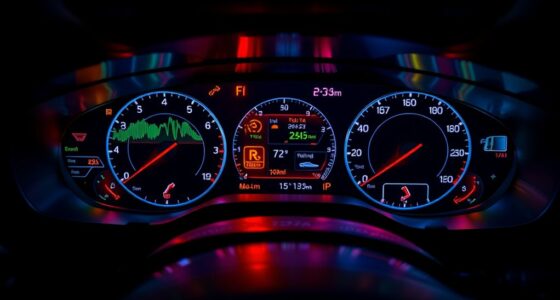
To prepare for emissions testing with tech, start by using diagnostic tools to check for faults and clear error codes related to sensors like oxygen sensors or catalytic converters. Make certain your vehicle’s software is up-to-date and calibrate sensors properly to guarantee accurate readings. Monitor live data during various drives to spot issues early. Staying proactive with maintenance and utilizing these tools increases your chances of passing smoothly—you’ll discover more helpful tips as you go along.

Get business pricing on garage and car supplies
- Business-only prices and quantity discounts
- Tax-exempt purchasing
- Multiple users, one account, clear invoices
Key Takeaways
- Regularly update your vehicle’s software to ensure emission control systems function correctly.
- Use diagnostic tools to run pre-test scans and identify potential sensor or system faults early.
- Calibrate sensors with specialized software for optimal emissions system performance.
- Check live data streams to monitor sensor responses and address issues proactively.
- Perform routine maintenance and keep records to ensure all emission-related components are functioning properly.
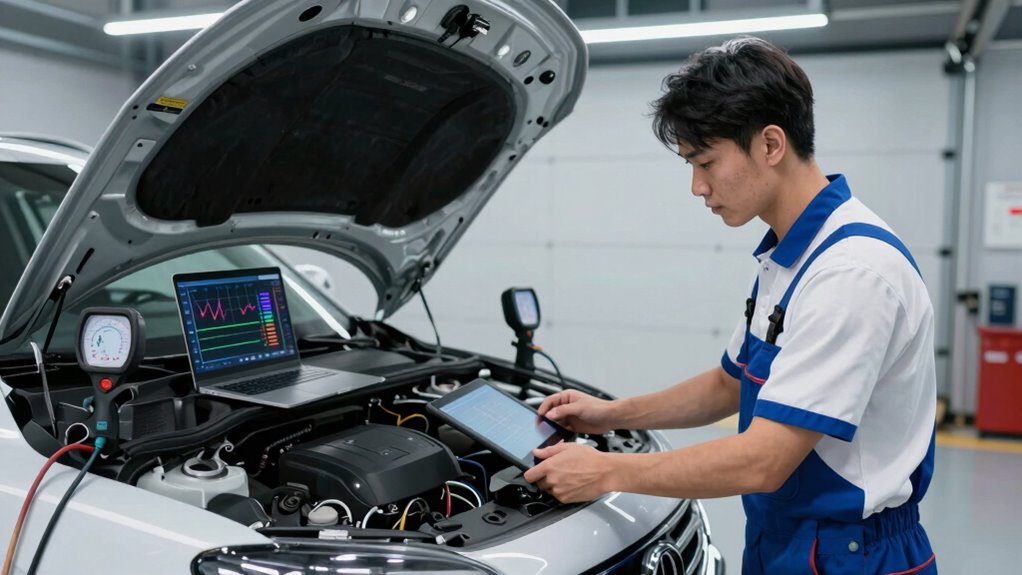
Have you ever wondered how technology can make the emissions testing process easier and more efficient? When preparing your vehicle for an emissions test, leveraging the right tools can save you time and help guarantee your vehicle passes smoothly. One of the most important steps is making sure your vehicle’s sensors are properly calibrated. Sensor calibration is essential because modern vehicles rely heavily on sensors to monitor emissions-related components. If these sensors aren’t accurately calibrated, they might send incorrect data, causing your vehicle to fail the test or trigger warning lights. Luckily, there are diagnostic tools available that can assist you in checking and calibrating these sensors before testing day. Using a diagnostic scanner, you can connect to your vehicle’s onboard computer system to identify any sensor faults or irregularities. These tools provide real-time data and error codes that pinpoint issues with oxygen sensors, catalytic converters, or other emissions-related parts. With this information, you can address potential problems beforehand, increasing your chances of passing the test on the first try.
In addition to sensor calibration, diagnostic tools play a key role in your emissions prep routine. These devices can scan your vehicle for trouble codes, giving you a clear picture of what might be causing emissions problems. Many diagnostic tools are user-friendly and compatible with smartphones or tablets, making it easy to perform a thorough check at home. By running a diagnostic scan, you can identify issues like misfires, faulty sensors, or engine malfunctions that could elevate emissions. Fixing these issues before your test not only improves your vehicle’s emissions performance but also helps avoid costly repairs or retests later on. Some diagnostic tools even offer live data streams, so you can watch how your vehicle’s sensors respond during different driving conditions, giving you a better idea of how your vehicle operates overall. Additionally, sensor calibration using specialized software ensures your vehicle’s emissions systems are functioning optimally, which is crucial for passing the test. Regularly monitoring your vehicle’s diagnostic data can help you stay ahead of potential problems and maintain compliance with environmental standards. Incorporating emissions-related components, such as the catalytic converter and oxygen sensors, into your maintenance routine can further enhance your vehicle’s readiness for testing. Keeping an eye on vehicle emissions standards and understanding their requirements can also help you stay compliant and avoid unexpected failures. Staying informed about emission control systems and their proper functioning can make a significant difference in your vehicle’s test results.
Using technology to prepare for emissions testing isn’t just about diagnostics; it also involves routine maintenance that you can track and manage with apps or software. Regularly updating your vehicle’s software and making sure all emission control components are functioning correctly can make a significant difference. By staying proactive and utilizing these diagnostic tools and sensor calibration techniques, you’re better equipped to identify potential issues early. This approach minimizes surprises during testing and boosts your confidence that your vehicle meets all environmental standards. In essence, when you harness the power of modern tech, you’re taking control of your vehicle’s emissions readiness, making the process smoother, quicker, and more reliable.
OBD2 diagnostic scanner for vehicles
As an affiliate, we earn on qualifying purchases.
As an affiliate, we earn on qualifying purchases.
Frequently Asked Questions
Can Mobile Apps Accurately Diagnose Emissions Issues?
Yes, mobile apps can accurately diagnose emissions issues through remote diagnostics. They connect to your vehicle’s onboard systems, providing real-time data and identifying potential problems early. This technology supports predictive maintenance, helping you address issues before they become costly or cause failed emissions tests. While they’re not perfect, these apps give you a reliable, accessible way to monitor your vehicle’s emissions health and stay ahead of potential problems.
Are There Specific Gadgets That Improve Emissions Test Success?
Yes, certain gadgets can boost your emissions test success. Diagnostic tools with advanced sensors help you identify issues early, ensuring proper sensor calibration before testing. Portable OBD-II scanners allow you to monitor your vehicle’s emissions-related data in real-time, guiding you to fix problems beforehand. By using these gadgets, you can improve your chances of passing emissions tests, saving time and avoiding costly repairs, all while maintaining your vehicle’s peak performance.
How Often Should I Use Tech Tools Before Testing?
Think of tech tools as your car’s health check-up—regular visits keep it running smoothly. You should use these tools weekly or bi-weekly, especially as your emissions test approaches. Adhering to maintenance schedules not only boosts your success chances but also reduces environmental impact. Staying proactive with tech helps catch issues early, making emissions testing less stressful and more successful, while also protecting our planet.
Can Online Tutorials Replace Professional Vehicle Diagnostics?
Online tutorials can’t fully replace professional vehicle diagnostics, especially when it comes to complex issues affecting emissions and vehicle maintenance. While tutorials help you understand basic repairs and emissions regulations, a trained technician uses specialized tools to accurately diagnose problems. Relying solely on online guides may lead to missed issues, risking failed emissions tests. For best results, combine tutorials with professional diagnostics to guarantee your vehicle meets emissions standards and runs efficiently.
Is There Software to Track Vehicle Emissions History?
Yes, there’s software available to track your vehicle’s emissions history, helping you stay compliant with emissions regulations. These apps often connect to your vehicle’s diagnostic system, logging maintenance and emissions data over time. By monitoring this info, you can identify potential issues early, improve vehicle maintenance, and guarantee your vehicle meets emissions standards. Using this tech reduces surprises at testing centers and keeps your vehicle running efficiently.
vehicle sensor calibration software
As an affiliate, we earn on qualifying purchases.
As an affiliate, we earn on qualifying purchases.
Conclusion
Using tech to prepare for emissions testing is like having a personal mechanic in your pocket—helping you catch issues early before they become costly. I once knew someone who used an app to monitor their car’s emissions in real-time, avoiding a failed test and hefty fines. Just like a GPS guides you through unfamiliar roads, technology guides your vehicle to meet standards smoothly. Embrace these tools, and you’ll drive confidently into your emissions test, hassle-free.
emissions testing diagnostic tools
As an affiliate, we earn on qualifying purchases.
As an affiliate, we earn on qualifying purchases.
As an affiliate, we earn on qualifying purchases.
Fall Picks
fall essentials
As an affiliate, we earn on qualifying purchases.