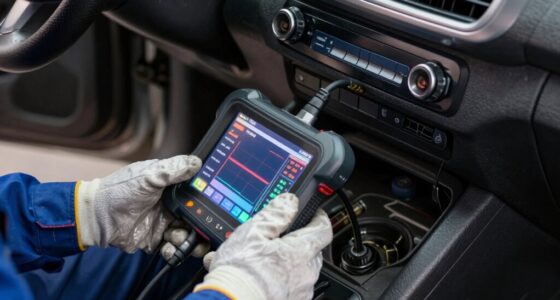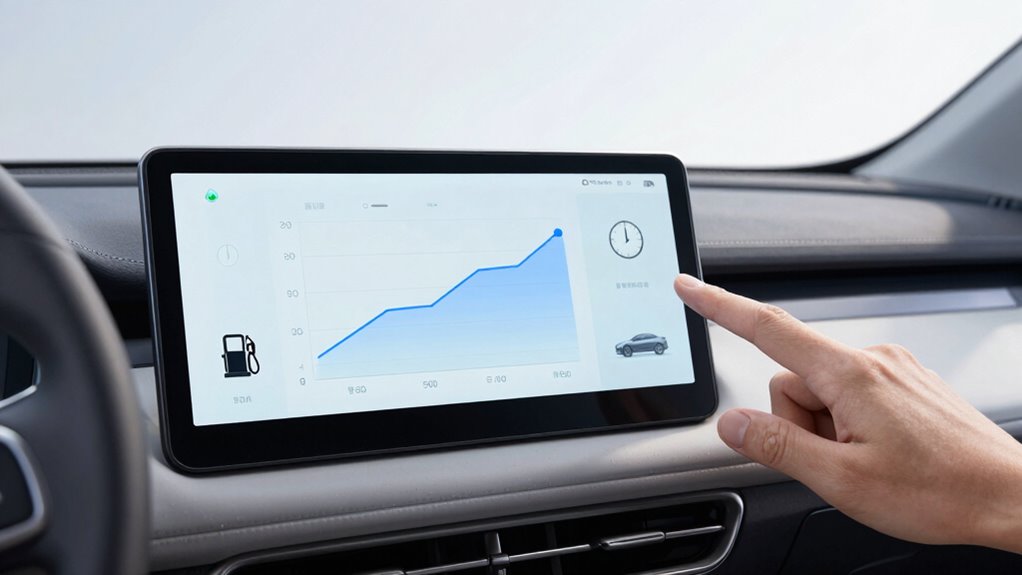

To improve your fuel economy using simple data, start by tracking your fuel purchases and miles driven to spot patterns and habits that waste or save fuel. Avoid aggressive driving, maintain steady speeds, and limit idling by turning off the engine during long stops. Regularly check tire pressure, oil, and filters to keep your vehicle running efficiently. Small ongoing adjustments based on this data can lead to noticeable savings—a smarter approach that gets better over time.
Listen free for 30 days with Audible
Thousands of audiobooks and originals — cancel anytime.
As an affiliate, we earn on qualifying purchases.
Key Takeaways
- Track fuel purchases and mileage to identify consumption patterns and areas for improvement.
- Analyze driving habits, such as acceleration and speed, to adopt more fuel-efficient behaviors.
- Monitor vehicle maintenance data like tire pressure and oil levels to ensure optimal engine performance.
- Use data to adjust routes and driving times, avoiding traffic and reducing stop-and-go conditions.
- Implement small, data-driven habit changes consistently to achieve long-term fuel savings.
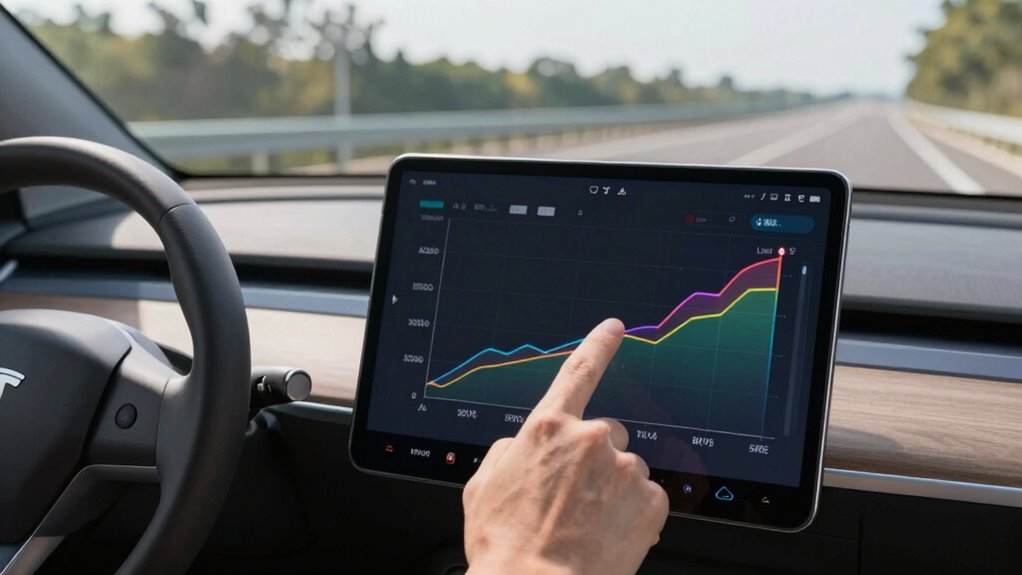
Improving your fuel economy doesn’t have to involve complex tools or expensive gadgets. Sometimes, the simplest data can lead to the biggest savings. By paying close attention to your driving habits and maintenance routines, you can make small adjustments that add up over time, helping you get more miles out of every gallon.
Start by tracking your fuel consumption regularly. Keep a simple log of how much fuel you buy and how far you drive between fill-ups. Over time, you’ll notice patterns that reveal which driving habits waste fuel and which ones optimize efficiency. For example, rapid acceleration and hard braking tend to burn more fuel, so if you notice you’re doing a lot of that, you can consciously ease off and drive more smoothly. Maintaining a steady speed, especially on highways, helps your engine operate more efficiently. Using cruise control when appropriate can assist in keeping your speed consistent, saving fuel and reducing unnecessary wear on your vehicle.
Track fuel use and drive smoothly to save money and reduce vehicle wear.
Your driving habits play a essential role in fuel economy. Avoid aggressive driving; instead, aim for gentle acceleration and deceleration. If your data shows frequent stop-and-go traffic, consider altering your route or timing to avoid heavy congestion. Additionally, reducing your speed slightly on highways—say, sticking to the speed limit or just below—can considerably improve your miles per gallon. Also, remove unnecessary weight from your car, like heavy tools or extra luggage, as extra weight makes your engine work harder. Avoid idling for long periods, and if you anticipate being stopped for more than a minute, turn off your engine to conserve fuel.
Maintenance routines are just as important, and tracking simple data can help you stay on top of them. Regularly check your tire pressure and keep it at the recommended level; under-inflated tires increase rolling resistance, which wastes fuel. Monitoring your oil levels and changing your oil as recommended ensures your engine runs smoothly and efficiently. A clean air filter can improve airflow into your engine, boosting fuel efficiency. Also, listen for unusual sounds or vibrations that might indicate mechanical issues. Addressing these early prevents more serious problems that could reduce your fuel economy.
As an affiliate, we earn on qualifying purchases.
Frequently Asked Questions
What Types of Simple Data Are Most Effective for Monitoring Fuel Economy?
You should focus on simple data like your vehicle’s fuel consumption, mileage, and driving habits. Guarantee data accuracy by regularly recording fuel fill-ups and trip distances. Interpret this data to identify patterns, such as frequent idling or aggressive acceleration, that hurt fuel economy. By consistently monitoring accurate data and understanding what it reveals, you can make informed adjustments to improve your vehicle’s efficiency over time.
How Often Should I Review My Vehicle’s Fuel Efficiency Data?
You should review your vehicle’s fuel efficiency data at least once a month. This quick check helps you spot trends that impact fuel cost and keep maintenance schedules on track. Some might think it’s too time-consuming, but regular reviews save money in the long run by preventing costly repairs and improving fuel economy. Making it a routine guarantees you stay informed and maximize your vehicle’s efficiency effortlessly.
Can Simple Data Help Identify Specific Driving Habits Affecting Fuel Economy?
Yes, simple data can help you identify which driving habits affect your fuel economy. By analyzing your driving data, you might notice patterns like rapid acceleration, hard braking, or excessive idling that lower efficiency. Monitoring this data regularly allows you to adjust your driving habits, such as smooth acceleration and maintaining steady speeds, ultimately improving your fuel economy over time. Data analysis becomes a practical tool for smarter driving decisions.
What Tools or Apps Are Recommended for Tracking Fuel Consumption?
Imagine your car whispering secrets of efficiency — that’s where fuel tracking tools shine. You might consider apps like Fuelly, Drivvo, or a dedicated vehicle dashboard that logs your fuel consumption effortlessly. These app recommendations help you monitor patterns, identify waste, and make smarter driving choices. By keeping an eye on your fuel data, you’re empowering yourself to optimize your mileage and extend every gallon’s journey.
How Long Does It Typically Take to See Improvements Using Simple Data?
You’ll typically start seeing improvements within a few weeks if you consistently track your fuel consumption, maintenance records, and weather impact. Regularly analyzing this simple data helps identify patterns like how weather affects your mileage or which maintenance tasks boost efficiency. As you adjust your driving habits based on these insights, you’ll notice gradual improvements in fuel economy, often within a month or two, depending on your driving frequency.
As an affiliate, we earn on qualifying purchases.
Conclusion
By tracking simple data like your fuel stops and driving habits, you can steadily boost your car’s fuel economy—kind of like a modern-day Leonardo tinkering in his garage. Just as he experimented with designs to improve his inventions, you can tweak your driving style based on the data you gather. Over time, these small adjustments will add up, helping you save money and reduce your carbon footprint—making every mile as efficient as a well-oiled machine.
As an affiliate, we earn on qualifying purchases.
As an affiliate, we earn on qualifying purchases.
Labor Day sales Picks
labor day deals
As an affiliate, we earn on qualifying purchases.