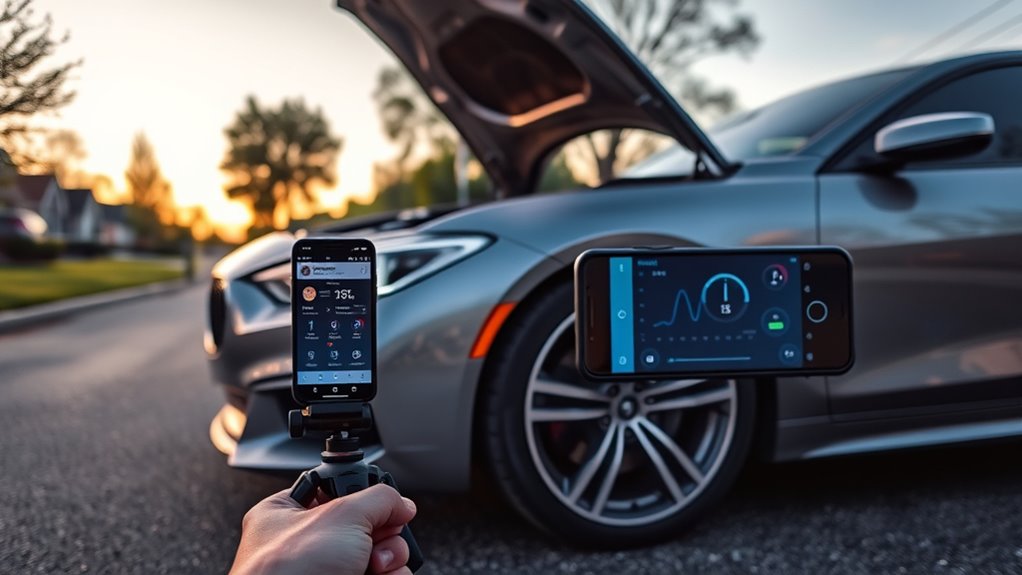

You can estimate your car’s horsepower at home using smartphone apps that leverage built-in sensors like the accelerometer and GPS. To get accurate results, find a flat, straight road with little traffic and perform multiple smooth accelerations. Make sure your vehicle is well-maintained and warmed up before testing. While these apps provide rough estimates, following proper testing tips will help you gather meaningful data—continue exploring for detailed steps and tips to improve accuracy.
Key Takeaways
- Use smartphone apps that utilize built-in sensors like GPS and accelerometers to estimate horsepower during controlled acceleration tests.
- Conduct tests on flat, straight roads with minimal traffic, ensuring the vehicle is properly warmed up and well-maintained for accuracy.
- Input your vehicle details into the app, perform multiple smooth acceleration runs, and record data for analysis.
- Follow safety protocols, avoid busy roads, and ensure all unnecessary accessories are turned off to prevent sensor interference.
- Remember that smartphone-based measurements are approximate; use them as performance indicators and track changes over time.

Ever wondered how much horsepower your vehicle truly has without heading to a professional? Thanks to modern smartphone apps, you can now get a pretty good estimate of your car’s performance right from your driveway. These apps work by analyzing data from your vehicle’s onboard sensors, often using the accelerometer, GPS, and other built-in features. While they may not replace a professional dyno test, they’re convenient, affordable, and give you a solid starting point to understand your car’s power output. To guarantee accurate results, you should perform the test on a flat, straight road with minimal traffic, making sure to follow all safety precautions. Never attempt a horsepower test on busy streets or in unsafe conditions, as rushing or distractions can lead to accidents.
Before you start, it’s a good idea to do some engine tuning to make certain your vehicle is running at its best. A well-tuned engine provides more consistent and reliable performance data. Check your air filter, spark plugs, and fluid levels, and make sure your tires are properly inflated. These steps help eliminate variables that could skew your results. Once your car is in good shape, warm up the engine to its normal operating temperature for the most accurate readings. Then, turn off any unnecessary accessories like the AC or radio to avoid interference with the sensors. Remember, safety precautions are crucial—wear your seatbelt, stay alert, and keep a safe distance from other vehicles or obstacles. Understanding vehicle sensors can help you better interpret the app’s data and improve your testing accuracy.
Using the app is straightforward. You’ll typically need to input your vehicle’s details, such as make, model, and year. Once set, follow the instructions—usually, you’ll accelerate smoothly from a standstill to a designated speed while the app records data. After that, the app analyzes the acceleration and other parameters to estimate your horsepower. It’s best to perform multiple runs to get an average value, which accounts for slight variations in each attempt. Keep in mind, though, that smartphone sensors aren’t as precise as professional equipment, so your results are best viewed as an approximation or a fun way to track performance changes over time.
Frequently Asked Questions
Can Smartphone Apps Accurately Measure Horsepower on All Vehicle Types?
Smartphone apps can give you a rough estimate of horsepower, but they aren’t perfectly accurate across all vehicle types. Your engine calibration and the app’s compatibility with your car’s sensors play big roles in measurement accuracy. For some vehicles, especially those with complex engine setups, the data might be off. Use these apps as a general guide, but don’t rely on them for precise horsepower figures for every vehicle type.
What Are the Best Smartphone Apps for Measuring Car Performance?
You should try apps like DynoVet or Dragy, which use engine noise analysis and GPS tracking to measure your car’s performance. These apps analyze engine sound to estimate horsepower and use GPS to track acceleration, providing you with real-time data. Make sure your phone is stable and calibrated properly for accurate results. They’re user-friendly and great for getting a good sense of your vehicle’s power without professional tools.
How Do Weather Conditions Affect Smartphone-Based Horsepower Readings?
Weather impact can considerably affect your smartphone’s sensitivity during horsepower tests. Temperature, humidity, and air pressure influence engine performance and how accurately your app reads data. For consistent results, conduct tests in stable weather conditions, ideally on clear, dry days. Extreme weather can skew readings, so be mindful of the environment to guarantee your smartphone-based measurements remain as accurate as possible.
Is There a Calibration Process Needed for These Apps?
Yes, you should calibrate your smartphone app to guarantee accurate readings. Sensor calibration helps improve app accuracy by aligning measurements with known standards or reference points. Most apps guide you through a calibration process, which might involve running the car at specific speeds or conditions. Regular calibration is essential for consistent results, especially if your phone or the app updates, so you get reliable horsepower measurements every time.
Can Smartphone Apps Replace Professional Dynamometer Testing?
Smartphone apps can’t fully replace professional dynamometer testing, but they’re useful for quick estimates. You need to guarantee proper sensor calibration and check app compatibility with your device for accurate results. While apps are handy for monitoring performance, they lack the precision of a professional test. Use them as a complementary tool, not a substitute, especially when making critical decisions about your car’s health or tuning.
Conclusion
Think of your smartphone as a trusty compass in uncharted territory. Just like explorers rely on their tools to navigate the unknown, you can harness these apps to gauge your car’s true strength. While they may not replace a professional map, they guide you through the journey, revealing hidden treasures beneath the hood. Embrace this modern compass, and let your vehicle’s performance be a story written with the confidence of a seasoned traveler.