When your car detects a fault, it takes a secret snapshot called freeze frame data, recording real-time info like engine temperature, speed, and RPM at that moment. This snapshot helps you understand exactly what was happening when the error occurred, making diagnosis much easier. Using a diagnostic tool, you can access this data to pinpoint underlying issues more accurately. Keep going to uncover how this valuable info can make repairs quicker and more effective.
Key Takeaways
- Freeze frame data captures a vehicle snapshot at the moment a fault code is triggered, showing real-time parameter values.
- It provides critical context like engine temperature, speed, and RPM, helping diagnose the root cause of issues.
- Accessing this data requires a compatible diagnostic tool connected via the OBD-II port during vehicle inspection.
- Interpreting freeze frame data enables targeted repairs, reducing unnecessary troubleshooting and repairs.
- Proper use of freeze frame info enhances diagnostic accuracy, safety, and efficiency in vehicle maintenance.
Freeze frame data captures a snapshot of a vehicle’s critical parameters at the exact moment a fault occurs. When your car’s check engine light comes on, this data isn’t just a random set of numbers; it’s a detailed record of what was happening right before and during the fault. This snapshot helps you or a mechanic diagnose the underlying problem with precision. Instead of guessing, you can rely on the specific information stored in the vehicle’s computer to pinpoint issues quickly and accurately.
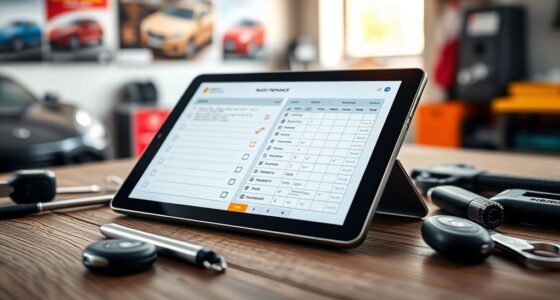
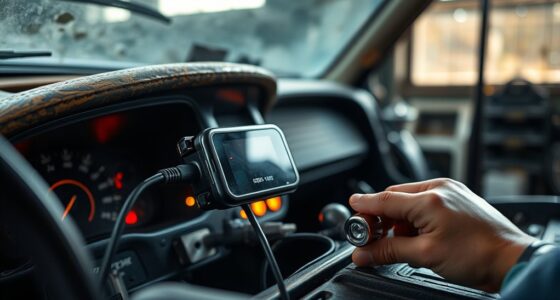
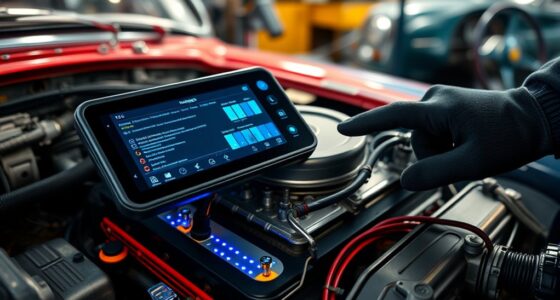
Using the right diagnostic tools is essential to access this freeze frame data. Modern scan tools connect to your vehicle’s OBD-II port and retrieve detailed fault codes along with the associated freeze frame information. These tools interpret the data, revealing parameters like engine RPM, coolant temperature, vehicle speed, throttle position, and more. With this information, you can see what was happening at the moment the fault code was set, giving you context that might be missing from the code alone.
Access freeze frame data with diagnostic tools to see real-time engine parameters when faults occur.
When working with freeze frame data, safety procedures should always be a priority. Before connecting diagnostic tools, ensure your vehicle is parked on a flat surface with the parking brake engaged. Turn off the ignition and disconnect any accessories that could interfere with the diagnostic process. Always follow the manufacturer’s instructions for your diagnostic equipment to prevent electrical issues or damage to vehicle systems. Handling vehicle electronics with care minimizes risks, especially if you’re working under the hood or near sensitive components.
Understanding what to do with freeze frame data is just as important as collecting it. Once you retrieve the data, analyze it carefully. For example, if you notice the fault occurred when the engine temperature was unusually high, your mechanic might focus on cooling system components. If the vehicle speed was zero, the problem might be related to a sensor or a specific driving condition. This targeted approach saves time and reduces unnecessary repairs.
In addition, knowing how to interpret freeze frame data enhances your safety procedures during diagnostics. It helps you avoid unnecessary runs or test drives that could exacerbate a fault or cause further damage. Instead, you can plan a precise, informed approach to troubleshooting. By combining the power of diagnostic tools with proper safety procedures, you minimize risks and ensure that your vehicle’s issues are addressed efficiently. Ultimately, freeze frame data is a valuable resource that empowers you to understand your vehicle better, making repairs faster, safer, and more accurate.
Furthermore, understanding the contrast ratio of your home cinema projector can significantly improve image quality during diagnostics or setup, as it affects how well images are rendered in dark scenes.
Frequently Asked Questions
Can Freeze Frame Data Predict Future Car Failures?
Freeze frame data doesn’t predict future car failures directly, but it plays a key role in predictive maintenance. By analyzing this data, you can identify patterns or anomalies that might signal upcoming problems. However, its effectiveness depends on data accuracy; inaccurate info could lead to false alarms. So, while freeze frame data helps you spot potential issues early, it’s best used alongside other diagnostic tools for reliable predictions.
How Often Is Freeze Frame Data Automatically Recorded?
You’ll find freeze frame data is automatically recorded each time your vehicle’s sensor detects a fault, often multiple times during ongoing issues. The system’s sensor accuracy guarantees precise data collection, but data storage limitations mean only recent events are saved. Usually, this data is stored temporarily until the vehicle’s system or a mechanic clears it. So, it’s a regular, automatic process designed to capture essential info for diagnostics.
Is Freeze Frame Data Accessible Without Diagnostic Tools?
You can’t access freeze frame data without diagnostic software, as it’s locked behind a digital vault. Think of it as a secret diary only accessible with the right key—your scanner or diagnostic tool. These tools guarantee data accuracy, revealing the precise moment your car threw a code. Without them, you’re left in the dark, missing out on crucial clues that could pinpoint the root cause of your vehicle’s trouble.
Can Freeze Frame Data Vary Between Different Vehicle Makes?
Yes, freeze frame data can vary between different vehicle makes due to vehicle manufacturer differences. You’ll notice diagnostic data variation because each manufacturer may record different parameters and formats when an issue occurs. This means that the data captured during a fault can differ, making it important to use the right diagnostic tools compatible with your vehicle. Understanding these differences helps you interpret the freeze frame data more accurately for effective troubleshooting.
Does Freeze Frame Data Include Driver Behavior Information?
Freeze frame data doesn’t include driver behavior information like habits or accident history. Instead, it captures technical details about the vehicle at the moment a malfunction occurs, such as engine temperature, RPM, and speed. While this data helps mechanics diagnose issues, it doesn’t track how you drive or record past accidents. Your driver habits and accident history are stored separately in insurance or driving records, not in freeze frame data.
Conclusion
So, next time your car throws a code, remember that tiny snapshot it’s secretly capturing. That freeze frame data might seem like just another number, but it’s actually your vehicle’s way of revealing what’s really happening under the hood. Ironically, while it’s trying to help you fix the problem, most drivers overlook it until it’s too late. Don’t wait for a breakdown—peek into that snapshot before your car decides to make a bigger scene.