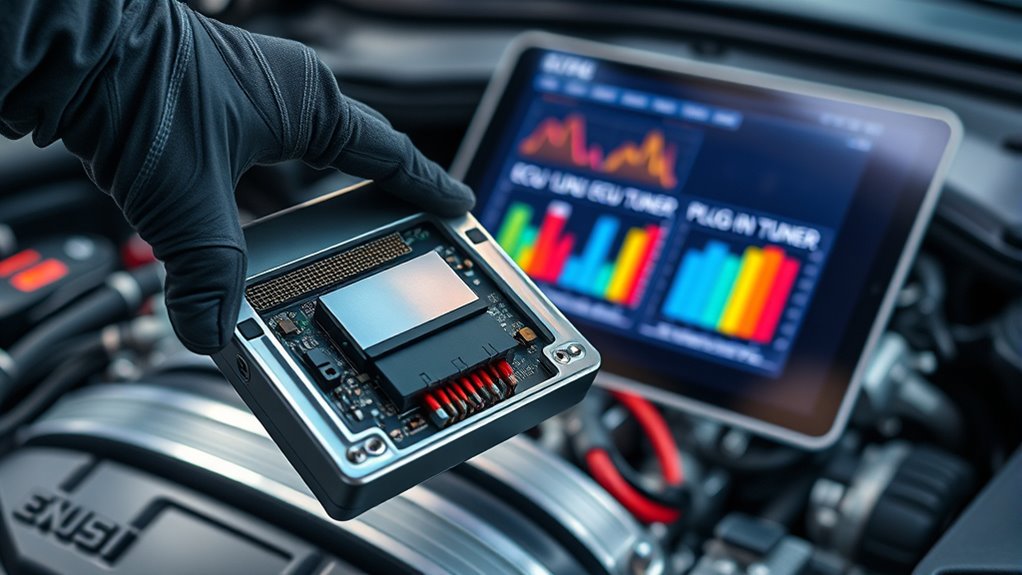

Choosing between ECU tuning and a plug-in tuner depends on your safety concerns. ECU tuning offers maximum performance but involves permanent software changes that can void your warranty and increase risks if misconfigured. Plug-in tuners are safer since they’re removable, don’t alter your ECU permanently, and are easier to revert. If you want to protect your engine while still gaining some benefits, a plug-in tuner could be the better option—keep going to see why.
Key Takeaways
- Plug-in tuners are generally safer, easier to remove, and less likely to void warranty compared to ECU tuning.
- ECU tuning involves permanent software modifications, increasing potential risks if not done properly.
- Reversibility favors plug-in tuners, as they can be disconnected before servicing or inspections.
- ECU tuning offers maximum performance gains but carries higher risks of engine issues and warranty voids.
- For safety and warranty protection, plug-in tuners are the more conservative choice.

When it comes to enhancing your vehicle’s performance, understanding the difference between ECU tuning and plug-in tuners is essential. Both methods aim to boost your car’s power, torque, and overall responsiveness, but they do so in different ways, which impacts not only performance gains but also warranty risks. ECU tuning involves reprogramming your vehicle’s engine control unit directly, often through specialized software and hardware. This process allows for precise adjustments to various parameters like fuel maps, ignition timing, and boost levels, resulting in significant performance improvements. However, because it alters the factory settings, it can void your warranty if the manufacturer detects unauthorized modifications. The risk increases if you’re planning to keep the vehicle under warranty, as a more aggressive tune might push the engine beyond its designed limits, potentially leading to issues that aren’t covered by warranty.
On the other hand, plug-in tuners are designed as simple, portable devices you can connect to your car’s OBD-II port. They typically come with pre-set maps that claim to enhance performance without the need for complex software or permanent modifications. These devices are marketed as safer options because they often retain the original factory settings or allow you to revert to stock easily. While plug-in tuners can offer noticeable performance gains, they generally don’t provide the same level of customization as ECU tuning. The advantage here is that they are less likely to trigger warranty risks, especially if you choose reputable brands and use them correctly. Many manufacturers design plug-in tuners to be removable, so if you need to take your vehicle in for service, you can disconnect them quickly, minimizing the chance of warranty claims being denied.
Additionally, the impact of tuning methods on color accuracy and overall image quality is an important consideration for vehicle displays and dashboard screens, which can be affected by modifications to electronic systems. That said, neither method is entirely risk-free. Even with a plug-in tuner, if the device pushes your engine too hard or causes abnormal wear, it could still lead to warranty complications. Similarly, ECU tuning, while offering the most performance potential, is inherently riskier because it involves deep alterations to your vehicle’s software. If you value warranty protection and want a safer route, starting with a quality plug-in tuner might be your best bet. But if you’re an enthusiast willing to accept some risks for maximum gains, ECU tuning provides unmatched customization and performance improvements. Ultimately, understanding how each method affects your vehicle and warranty coverage helps you make an informed decision aligned with your goals.
Frequently Asked Questions
Can ECU Tuning Damage My Vehicle’s Warranty?
Yes, ECU tuning can damage your vehicle’s warranty if it involves software modifications that aren’t approved by your manufacturer. Many dealerships may see these modifications as voiding your warranty, especially if issues arise from the tuning. To avoid warranty implications, check your vehicle’s warranty policy and consider professional tuning services that offer warranties on their work. Always weigh the risks before proceeding with ECU tuning.
Is a Plug-In Tuner Easily Reversible?
Yes, a plug-in tuner offers a reversible adjustment, making it easy to revert to your vehicle’s original settings. You simply unplug the device, and your car’s ECU returns to its factory state without any permanent modifications. This convenience makes plug-in tuners a popular choice for those wanting to tweak performance temporarily or test changes without risking damage or warranty issues. Just guarantee you follow the manufacturer’s instructions for a smooth, reversible adjustment.
How Does Tuning Affect Fuel Economy?
Tuning can improve your fuel economy by optimizing your engine’s performance and efficiency. When you adjust the ECU or use a plug-in tuner, you may see benefits like better fuel efficiency and reduced emissions, especially if the tune is tailored to your driving habits. However, improper tuning can negatively impact fuel economy, so it’s vital to work with a professional to guarantee you get tuning benefits without risking your engine’s health.
What Are the Long-Term Risks of ECU Tuning?
You risk compromising engine longevity with ECU tuning, especially if you push performance gains too far. Over time, increased stress on components can lead to faster wear and potential failures. Poor tuning or frequent adjustments may also cause inconsistent performance, reducing your engine’s lifespan. To protect your engine, guarantee your tuning is done professionally and within safe limits, balancing performance improvements with long-term reliability.
Are There Specific Vehicle Models Better Suited for Plug-In Tuners?
Did you know that nearly 60% of vehicles on the road are best suited for plug-in tuners? You’ll find that vehicle compatibility plays a vital role in tuner effectiveness. Some models, especially those with simpler ECUs, face fewer tuner limitations and respond better to plug-in devices. Check your vehicle’s make and model before choosing a tuner to guarantee peak performance without risking damage or voided warranties.
Conclusion
Choosing between ECU tuning and a plug-in tuner is like selecting a trusted guide for your car’s journey. ECU tuning offers a customized map, carefully steering your engine through the twists and turns of performance. A plug-in tuner feels more like a quick detour, easy but less precise. Whichever you pick, remember it’s about keeping your engine’s road smooth and safe. So, choose wisely, and enjoy the ride without risking a bump in the road.